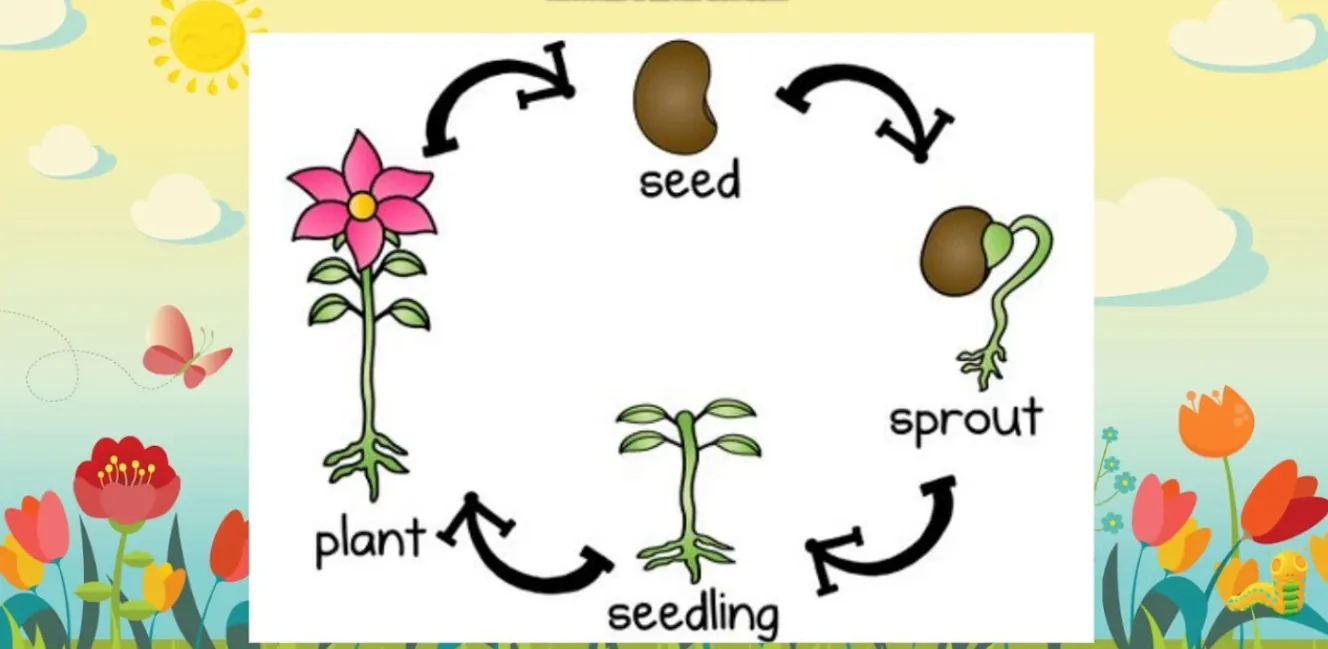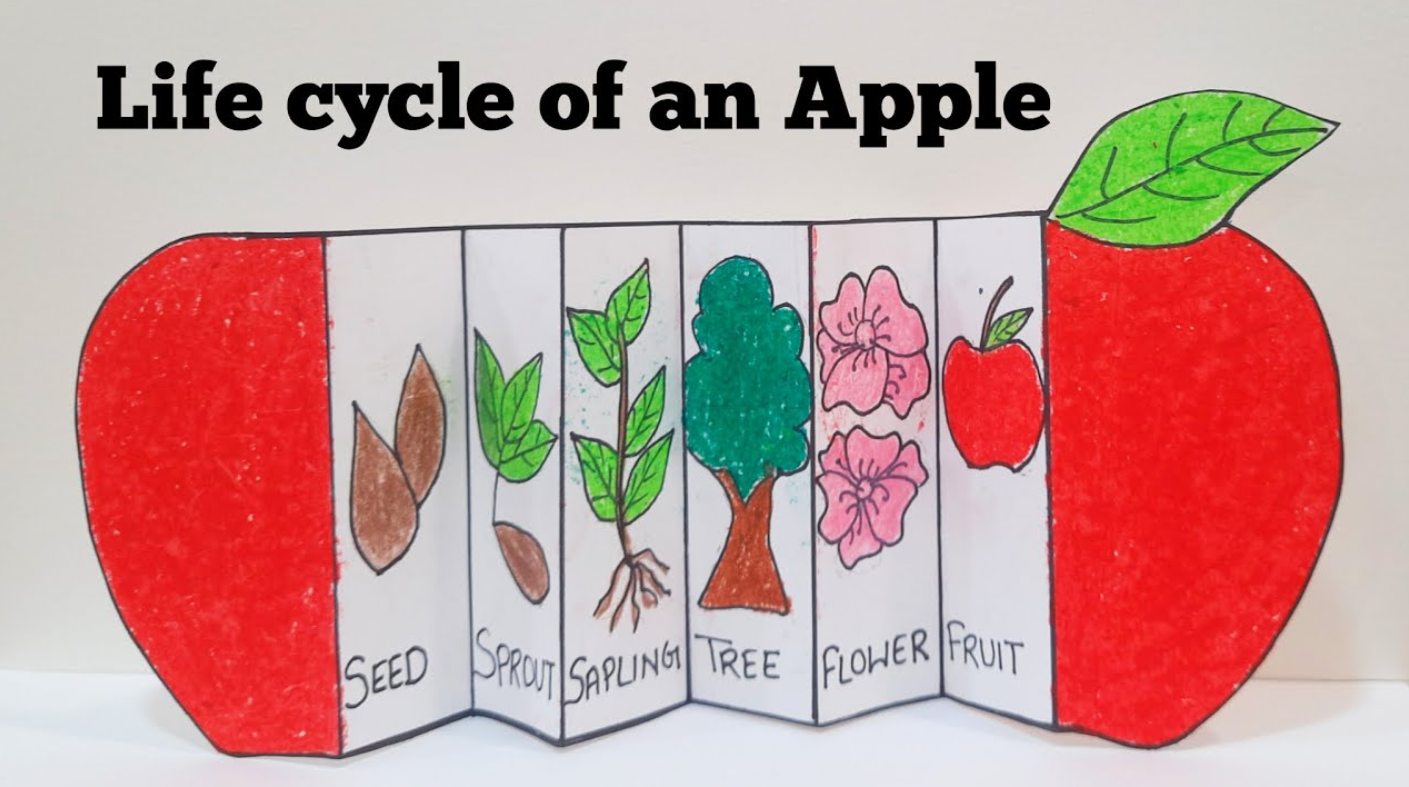
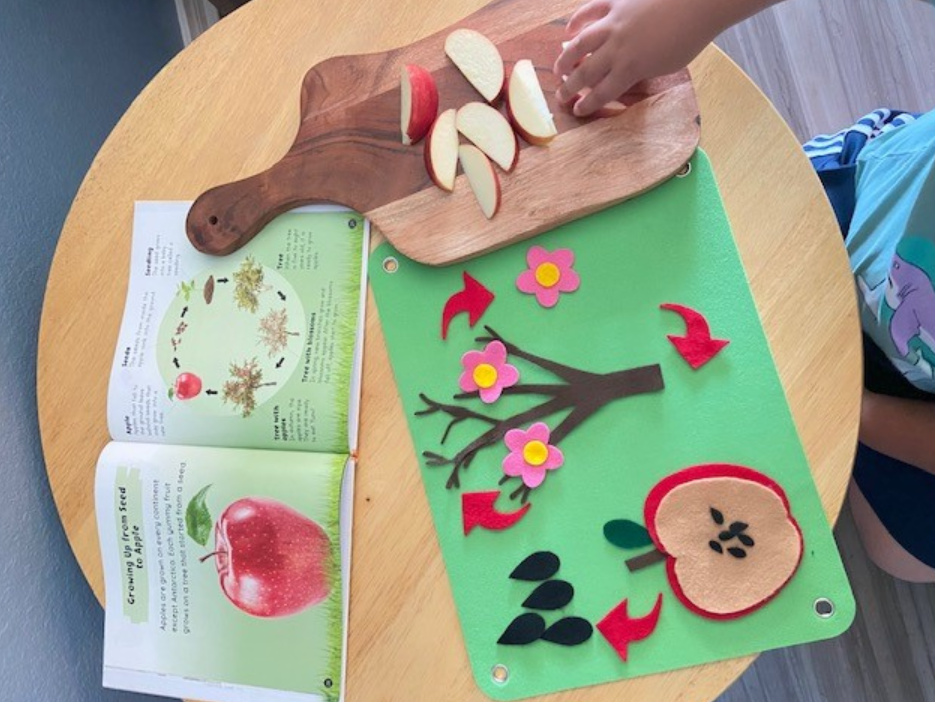
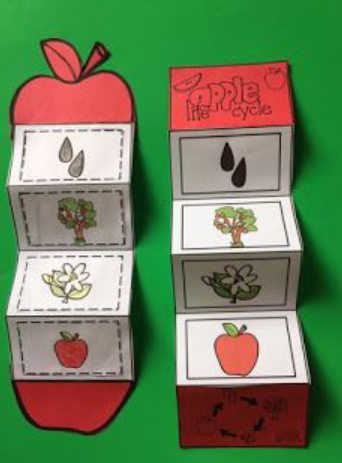
The life cycle of an apple is the natural journey of an apple seed becoming a young plant, growing into an apple tree, producing flowers, making fruit, and creating new seeds again. This cycle is simple to understand, but it is also full of amazing natural processes, such as germination, photosynthesis, pollination, and fruit development.
An apple does not appear suddenly on a tree. It begins with a seed inside a fruit. When the seed receives the right amount of moisture, temperature, air, and soil support, it can begin to grow. Over time, the seed becomes a seedling, then a strong tree. When the tree becomes mature, it produces blossoms. These blossoms need pollinators, especially bees, to help form fruit.
The cultivated apple is known scientifically as Malus domestica. It is believed to have come mainly from Malus sieversii, a wild apple species from Central Asia’s Tian Shan mountains. Modern apples spread widely through human cultivation and trade over thousands of years.
Q: How many stages are in the life cycle of an apple?
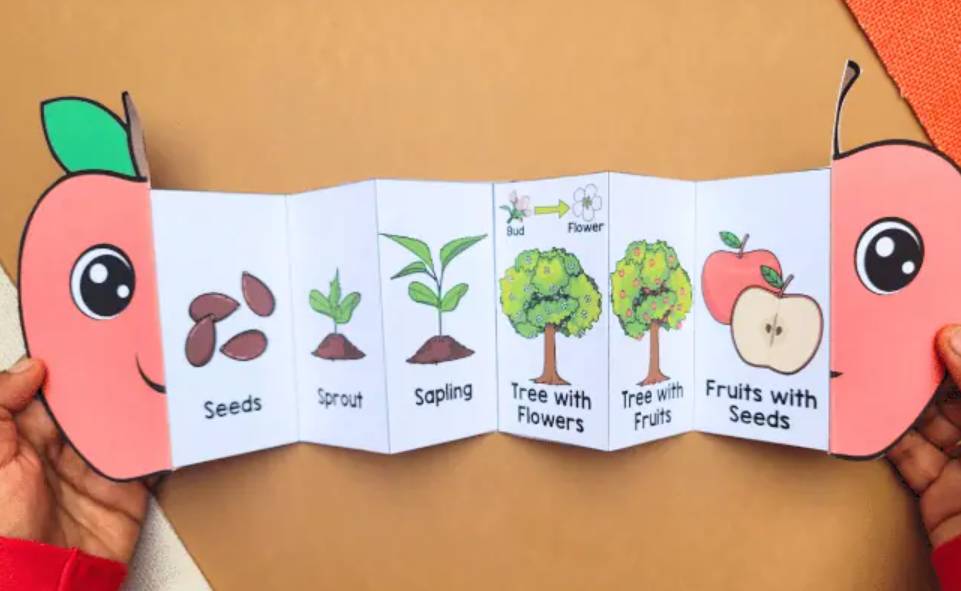
A: The main stages are seed, germination, seedling, young tree, mature tree, flower, fruit, and new seeds.
Q: How long does an apple tree take to produce fruit?
A: Dwarf apple trees may produce fruit in about 2 to 3 years, while standard apple trees can take up to 8 years.
Q: Does an apple tree need another tree to make fruit?
A: Most apple trees need cross-pollination from another compatible apple variety or crabapple tree for better fruit production.
Quick Life Cycle Table
| Stage | What Happens | Simple Meaning |
| Seed | The apple seed holds the baby plant inside | Starting point |
| Germination | Roots and shoots begin to grow | Seed wakes up |
| Seedling | Small leaves and stems appear | Young plant stage |
| Young Tree | Trunk, branches, and roots become stronger | Growth stage |
| Mature Tree | The tree becomes ready to flower | Adult stage |
| Blossom | Flowers open and attract pollinators | Reproduction starts |
| Pollination | Pollen moves from flower to flower | Fruit can develop |
| Fruit | Apple grows around seeds | Seed protection stage |
| New Seeds | Seeds can grow into new trees | The cycle begins again |
Important Things That You Need To Know
The word apple can mean the fruit, the tree, or even the seed inside the fruit. In this article, apple mainly means the fruit and the tree that produces it. The apple tree belongs to the rose family, called Rosaceae, and its scientific name is Malus domestica.
One important thing about an apple is that it protects its seeds. When animals or humans eat apples, the seeds may be moved to new places. In nature, this helps the plant spread, though modern orchard apples are usually grown from grafts rather than seed because seeds do not always produce the same type of fruit.
Another important fact is that an apple tree needs sunlight, water, air, soil nutrients, and pollination. Apple trees usually need at least 8 hours of sunlight during the growing season, and wide varieties need another apple variety nearby for successful pollination.
The apple also has a strong link with human history. Apples were carried along trade routes and improved through farming for thousands of years. Today, apples are grown in many temperate regions of the world because they are useful, nutritious, easy to store, and valuable in farming.
So, when we study the life cycle of an apple, we are not only learning about one fruit. We are also learning how plants survive, reproduce, support pollinators, feed animals, and remain important in human agriculture.
The History of Their Scientific Naming
The scientific name of the cultivated apple is Malus domestica. The word Malus is the genus name. It includes apples and crabapples. The word domestica means “domesticated” or “cultivated,” indicating that humans have cultivated this plant for a long time.
Apple trees are part of the plant family Rosaceae, also known as the rose family. This family includes many familiar fruit plants, such as pears, cherries, peaches, plums, strawberries, and raspberries. Because of this, apples are not only linked to food production but also to a large group of flowering plants.
The naming of apples became more organized after the development of modern scientific classification. In science, using names like Malus domestica helps avoid confusion because common names can change from country to country.
Some important points are:
- Kingdom: Plantae
- Family: Rosaceae
- Genus: Malus
- Species: Malus domestica
- Common name: Apple
The scientific name also distinguishes the cultivated apple from its wild relatives, such as Malus sieversii, which is considered one of the main ancestors of modern apples.
Their Evolution And Their Origin
The origin of the modern apple is closely linked to Central Asia. Scientists believe that the cultivated apple originated from the wild species Malus sieversii, which grew naturally in the Tian Shan mountains, especially in modern Kazakhstan and nearby regions.
Over thousands of years, wild apples were eaten by animals and humans. Seeds were spread across forests, valleys, and trade routes. As people began to select better-tasting fruits, larger apples, sweeter apples, and more useful trees became more common.
The spread of apples was also helped by the Silk Road, a historic trade network connecting Asia and Europe. As apples moved across different regions, they mixed with other wild apple species. This natural and human-assisted mixing helped create the wide diversity of apples we see today.
Evolution made apple trees strong in several ways. Their flowers attract pollinators. Their fruits protect seeds and encourage animals to spread them. Their roots help them survive cold seasons by storing energy. Their leaves collect sunlight and produce food through photosynthesis.
Modern apple varieties are the result of both natural evolution and human selection. Farmers, gardeners, and plant breeders chose trees with better fruit color, taste, storage life, disease resistance, and productivity. This is why apples now come in many sizes, colors, textures, and flavors.
Their main food and its collection process
An apple tree does not eat food like animals. It makes its own food through photosynthesis. This is one of the most important processes in the life cycle of an apple.
During photosynthesis, the leaves take in carbon dioxide from the air. The roots absorb water from the soil. The green parts of the leaves use sunlight to turn carbon dioxide and water into sugar. This sugar gives the tree energy to grow roots, stems, leaves, flowers, and fruit.
The collection process happens in different parts of the tree:
- Leaves collect sunlight and make food through photosynthesis.
- Roots collect water and minerals from the soil.
- Stems and branches transport food and water around the tree.
- Bark protects the tree from damage, disease, and weather.
- Flowers use stored energy to support pollination and fruit formation.
- Fruit receives sugar and nutrients as it grows from the flower base.
Apple trees also need soil nutrients such as nitrogen, phosphorus, potassium, calcium, and magnesium. These nutrients help with leaf growth, root strength, flower formation, and fruit quality.
For healthy growth, apple trees need good sunlight, suitable soil, water, pruning, and proper care. Apple trees generally need at least 8 hours of sunlight during the growing season to support strong photosynthesis and fruit development.
Their life cycle and ability to survive in nature
Seed Stage
The life cycle begins inside the apple seed. Each seed contains a tiny young plant and stored nutrients. If the seed reaches a suitable place, it may begin to grow.
In nature, seeds may spread when animals eat apples and disperse them to new areas. However, not every seed becomes a tree. Many seeds dry out, get eaten, or fall in poor soil.
Germination Stage
Germination begins when the seed gets moisture, oxygen, and the right temperature. The first root grows downward into the soil. Then the shoot grows upward toward the light.
This stage is risky because the young plant is weak. It needs enough water, but not too much. It also needs protection from insects, animals, and harsh weather.
Seedling and Young Tree Stage
After germination, the plant becomes a seedling. It grows small leaves, a thin stem, and young roots. The leaves begin making food through photosynthesis.
Over time, the seedling becomes a young apple tree. Its roots spread deeper, its trunk thickens, and its branches become stronger.
Mature Tree Stage
A mature apple tree can produce flowers and fruit. Apple trees survive in nature by entering dormancy during cold seasons. During dormancy, growth slows, helping the tree conserve energy.
Their ability to survive depends on sunlight, water, soil, pollinators, climate, and resistance to pests and diseases.
Their Reproductive Process and raising their children
The reproductive process of an apple tree begins with flowers, also called blossoms. These blossoms contain the plant’s reproductive parts. When pollination happens successfully, fruit can begin to develop.
Apple trees usually need help from pollinators. Bees are especially important because they move pollen from one flower to another while collecting nectar. The average apple bloom period for pollination is about 9 days, but cool weather can lengthen it, and warm weather can shorten it.
Important steps in apple reproduction are:
- Flower bud formation: The tree prepares flower buds before the blooming season.
- Blossom opening: Flowers open, attracting bees and other insects.
- Pollination: Pollen moves from one flower to another compatible flower.
- Fertilization: Male and female plant cells join inside the flower.
- Fruit formation: The flower base grows into an apple.
- Seed development: New seeds form inside the fruit.
- Fruit maturity: The apple becomes larger, sweeter, and ready to fall or be eaten.
- Seed spreading: Seeds may be spread by animals, humans, or natural dropping.
Apple trees do not “raise children” like animals. Instead, they protect their offspring through the fruit. The apple fruit surrounds the seeds, helping them survive until they are ready to spread.
In orchards, most apple trees are not grown from seed because seeds do not produce identical trees. Farmers usually use grafting, where a branch from a selected apple variety is joined to a strong rootstock. This keeps the fruit quality more predictable.
The importance of them in this Ecosystem
Food Source for Animals and Humans
The apple is an important food source. Humans eat apples fresh, cooked, dried, juiced, or processed into many products. In nature, fallen apples can also feed birds, insects, deer, and small mammals.
The fruit contains water, natural sugar, fiber, and plant compounds. It provides energy to animals and supports food chains.
Support for Pollinators
Apple blossoms are useful for pollinators such as bees. During blooming season, flowers provide nectar and pollen. In return, pollinators help apple trees reproduce by moving pollen between flowers.
This relationship is important because many fruit plants depend on pollinators for strong fruit production. Apple trees often need cross-pollination from another compatible variety or crabapple tree.
Soil and Habitat Value
Apple trees can provide shade, leaf litter, and habitat for insects and birds. When leaves fall and decompose, they return organic matter to the soil.
Old apple trees may also create small habitats for insects, fungi, moss, birds, and other organisms. In a balanced ecosystem, this supports biodiversity.
Human Agriculture and Economy
Apples are one of the most familiar cultivated fruits in the world. They support farmers, orchard workers, food sellers, transport systems, and food industries.
Because apples can be stored, transported, and used in many foods, they have strong agricultural value.
What to do to protect them in nature and save the system for the future
To protect apple trees and the natural system around them, people need to care for soil, pollinators, water, and plant diversity. Apple trees do not survive alone. They depend on a healthy environment.
- Protect pollinators: Avoid unnecessary pesticide use during flowering, as bees and other insects are essential for pollination.
- Plant different apple varieties: Growing more than one variety supports cross-pollination and improves fruit production.
- Save wild apple species: Wild relatives like Malus sieversii are important because they hold useful genetic diversity for future apple breeding.
- Use healthy soil practices: Add compost, protect soil organisms, and avoid soil erosion.
- Water wisely: Young apple trees need regular watering, but overwatering can damage roots.
- Prune trees properly: Annual pruning helps apple trees stay healthy, productive, and open to sunlight and air.
- Reduce chemical pressure: Use integrated pest management rather than relying solely on chemical sprays.
- Protect natural habitats: Keep nearby flowering plants, hedgerows, and native vegetation to support insects and birds.
- Choose climate-suitable varieties: Plant apple varieties that match the local climate to reduce stress and disease risk.
- Avoid wasting fruit: Fallen apples can be composted, used for animal feed where safe, or managed properly to reduce disease buildup.
By protecting apple trees, people also protect pollinators, soil life, biodiversity, and future food systems.
Frequently Asked Questions (FAQs)
Q1: What is the life cycle of an apple?
A: The life cycle of an apple includes seed, germination, seedling, young tree, mature tree, flower, fruit, and new seeds. The cycle repeats when seeds grow into new plants.
Q2: What is the first stage of an apple’s life cycle?
A: The first stage is the seed stage. The seed is found inside the apple fruit and contains the tiny young plant.
Q3: How does an apple seed grow?
A: An apple seed grows through germination. It needs moisture, oxygen, the right temperature, and suitable soil. First, the root grows downward, then the shoot grows upward.
Q4: How long does it take for an apple tree to grow fruit?
A: A dwarf apple tree may produce fruit in about 2 to 3 years, while a standard apple tree may take up to 8 years.
Q5: Do apple trees need bees?
A: Yes, bees are very important for apple pollination. They move pollen between flowers, helping the tree produce fruit.
Q6: Can I grow an apple tree from a store-bought apple seed?
A: Yes, it is possible, but the new tree may not produce the same type of apple. Apple seeds are genetically different from the parent fruit, so orchards usually use grafting.
Q7: Why do apple trees produce flowers before fruit?
A: Flowers are the reproductive part of the tree. After pollination and fertilization, the flower develops into a fruit.
Q8: What is the scientific name of the apple?
A: The scientific name of the cultivated apple is Malus domestica. It belongs to the Rosaceae family.
Conclusion
The life cycle of an apple is a beautiful example of how nature works step by step. It starts with a small apple seed, grows into a seedling, becomes a strong tree, produces blossoms, forms fruit, and creates new seeds again. Each stage has a purpose.
The apple tree survives by using sunlight, water, soil nutrients, and pollination. Its flowers support bees, its fruits feed humans and animals, and its seeds continue the next generation. The apple is also important in farming, food systems, and biodiversity.
To protect apple trees for the future, we need to protect pollinators, conserve wild apple species, improve soil health, reduce the use of harmful chemicals, and grow climate-suitable varieties. When we understand the life cycle of an apple, we also understand the deep connection between plants, animals, people, and the Ecosystem.
Also Read: life cycle of a monarch