The grasshopper insect’s life cycle is a fascinating example of nature’s efficiency and adaptability. Grasshoppers are among the most common insects found in fields, gardens, and grasslands worldwide. Known for their powerful hind legs and ability to jump long distances, these insects play a crucial role in ecosystems.
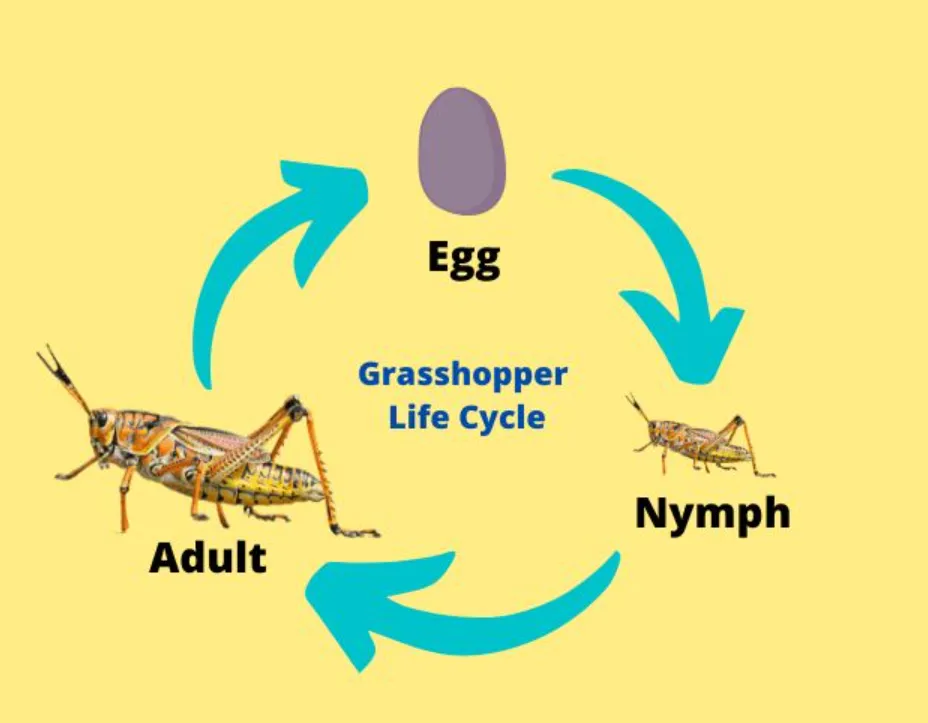
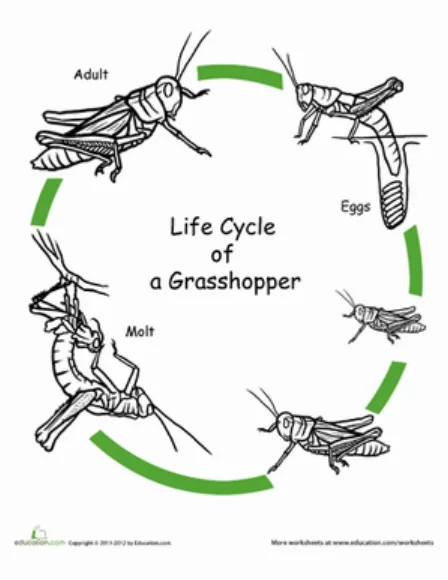
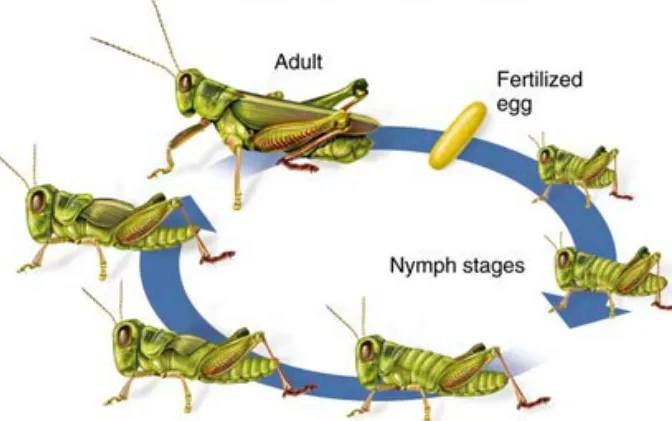
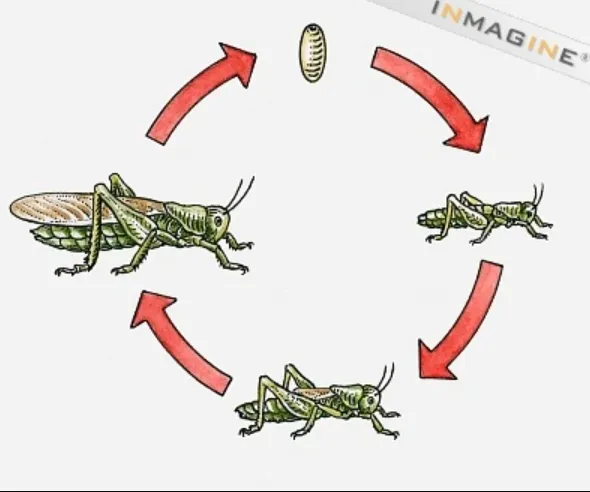
Unlike butterflies, grasshoppers undergo incomplete metamorphosis, meaning they develop through three main stages: egg, nymph, and adult. Each stage has unique characteristics that help it survive in changing environments.
Quick Answers (Most Common Questions)
1. What are the stages of the grasshopper insect life cycle?
The life cycle includes three stages: egg → nymph → adult.
2. How long does a grasshopper live?
Most grasshoppers live for about one year, depending on species and environmental conditions.
3. Do grasshoppers change shape completely like butterflies?
No, they undergo incomplete metamorphosis, so nymphs look like small versions of adults.
Grasshoppers are not just agricultural pests—they are essential parts of the food chain. Understanding their life cycle helps us appreciate their ecological role and manage their populations responsibly.
Quick Life Cycle Table
| Stage | Description | Duration | Key Features |
| Egg | Laid in soil in pods | 2–10 months | Protected by a frothy covering |
| Nymph | Young grasshopper (no wings yet) | 4–8 weeks | Molts several times |
| Adult | Fully developed grasshopper | 2–4 months | Can reproduce and fly |
The History Of Their Scientific Naming
The scientific naming of grasshoppers falls under the order Orthoptera, which also includes crickets and locusts. The term “Orthoptera” comes from Greek words meaning “straight wings.”
- Grasshoppers belong mainly to the suborder Caelifera
- The naming system follows binomial nomenclature, developed by Carl Linnaeus
- Common species include Schistocerca gregaria (desert locust) and Melanoplus differentialis
Historically, scientists classified grasshoppers based on their wing structure, feeding habits, and sound-producing abilities. Over time, genetic studies have refined their classification.
Modern taxonomy uses DNA analysis to understand relationships between species better. This has helped distinguish grasshoppers from similar insects like crickets.
The scientific naming system ensures that researchers worldwide can identify species accurately. It also helps in studying their behavior, ecology, and role in agriculture.
Their Evolution And Their Origin
Grasshoppers have an ancient evolutionary history that dates back over 250 million years, making them one of the oldest groups of insects still alive today.
They evolved during the Triassic period, a time when Earth’s ecosystems were rapidly diversifying. Early ancestors of grasshoppers were primitive insects that adapted to feeding on plants.
Over millions of years, grasshoppers developed key features:
- Strong hind legs for jumping
- Chewing mouthparts for herbivorous diets
- Camouflage abilities for survival
Their evolution is closely tied to the rise of grasslands, which provided abundant food sources. As flowering plants spread across continents, grasshoppers diversified into thousands of species.
Natural selection played a significant role in shaping their adaptability. For example:
- Some species evolved to blend perfectly with green grass
- Others developed brown coloration to survive in dry regions
Grasshoppers are also closely related to locusts, which can form massive swarms under certain conditions.
Today, there are over 11,000 species of grasshoppers worldwide. Their ability to adapt to different climates—from tropical forests to arid deserts—demonstrates their evolutionary success.
Their Main Food and Its Collection Process
Grasshoppers are herbivores, meaning they primarily feed on plants. Their diet plays a major role in shaping ecosystems.
Main Food Sources
- Grasses (their primary food source)
- Leaves of plants and crops
- Flowers and stems
- Occasionally, small insects (rare cases)
How They Collect Food
Grasshoppers use their strong mandibles (jaws) to chew plant material efficiently.
- They locate food using antennae and vision
- Their mouthparts are designed for cutting and grinding
- They feed during warm daylight hours
Feeding Behavior
- Prefer soft, green vegetation
- Consume large amounts relative to their body size
- Can become agricultural pests when populations increase
Adaptations for Feeding
- A specialized digestive system to break down plant fibers
- Ability to survive on low-nutrient plants
- Quick feeding to avoid predators
Grasshoppers play a dual role: while they may damage crops, they also help in nutrient cycling by breaking down plant material.
Important Things That You Need To Know
When studying the grasshopper insect, it is important to understand related concepts and variations often searched online. These LSI keywords provide deeper insights into their characteristics.
Grasshopper Insect Image and Close-Up Details
A grasshopper insect image often highlights their segmented body, long hind legs, and antennae. Close-up views reveal compound eyes and textured wings.
Grasshopper Insect Photo Observations
A detailed grasshopper insect photo shows camouflage patterns. These patterns help them blend into grasslands, protecting them from predators.
Grasshopper vs Cricket Differences
Though often confused with the grasshopper insect grasshopper cricket differs in:
- Antennae length (crickets have longer ones)
- Sound production methods
- Habitat preferences
Key Characteristics of the Grasshopper Insect
- Powerful jumping legs
- Green or brown body for camouflage
- Ability to produce sounds (stridulation)
Why Visual Study Matters
Studying a grasshopper insect close up helps researchers understand:
- Feeding behavior
- Wing structure
- Adaptation strategies
Understanding these aspects enhances knowledge of their life cycle and ecological importance.
Their Life Cycle and Ability to Survive in Nature
Grasshoppers undergo incomplete metamorphosis, which includes three main stages.
Egg Stage
Female grasshoppers lay eggs in the soil in clusters called pods.
- Each pod contains 10–100 eggs
- A frothy substance protects eggs
- They remain dormant during winter
Nymph Stage
Nymphs hatch from eggs and resemble small adults.
- No wings initially
- Undergo 5–6 molts
- Gradually develop wings
Adult Stage
After the final molt, grasshoppers become adults.
- Fully developed wings
- Capable of reproduction
- Can travel long distances
Survival Strategies
- Camouflage to avoid predators
- Jumping ability for quick escape
- Rapid reproduction during favorable conditions
Their life cycle is closely tied to seasonal changes, ensuring maximum survival.
Their Reproductive Process and Raising Their Children
Grasshoppers reproduce through sexual reproduction, ensuring the continuation of their species.
Reproductive Process
- Males attract females using sound
- Mating occurs during warm seasons
- Females lay eggs in soil using an ovipositor
Egg Protection
- Eggs are covered with a protective foam
- This prevents drying and protects from predators
No Parental Care
- Grasshoppers do not care for their young
- Nymphs are independent from birth
High Reproductive Rate
- Females can lay multiple egg pods
- Each pod contains dozens of eggs
Survival of Offspring
- Only a few survive to adulthood
- Natural selection ensures the strongest individuals survive
This strategy helps maintain population balance in nature.
Importance of Them in this Ecosystem
Grasshoppers play a vital role in maintaining ecological balance.
Food Chain Contribution
- Serve as food for birds, reptiles, and mammals
- Essential link in the food web
Plant Population Control
- Help regulate plant growth
- Prevent overgrowth in ecosystems
Nutrient Cycling
- Break down plant material
- Return nutrients to the soil
Indicator Species
- Their presence indicates ecosystem health
- Sensitive to environmental changes
Impact on Agriculture
- Can damage crops when populations increase
- Important for studying pest control methods
Despite being pests at times, grasshoppers are crucial for ecosystem stability.
What to Do to Protect Them in Nature and Save the System for the Future
Protecting grasshoppers helps maintain ecological balance.
- Preserve natural grassland habitats.
- Avoid excessive pesticide use.
- Promote organic farming practices.
- Maintain biodiversity in ecosystems.
- Protect predator species that control populations.
- Reduce pollution in natural habitats
- Encourage environmental awareness
- Support conservation programs
These steps ensure a balanced ecosystem where grasshoppers can thrive without harming agriculture.
Frequently Asked Questions (FAQs)
1. What is the life cycle of a grasshopper insect?
It includes three stages: egg, nymph, and adult.
2. How long does each stage last?
The egg stage can last months, the nymph stage weeks, and the adult stage a few months.
3. Where do grasshoppers lay eggs?
They lay eggs in soil in protected pods.
4. Do grasshoppers have wings from birth?
No, wings develop during the nymph stage.
5. What do grasshoppers eat?
They mainly eat grasses and plant leaves.
6. Are grasshoppers harmful to crops?
Yes, large populations can damage crops.
7. How do grasshoppers survive predators?
Through camouflage and jumping abilities.
8. What is incomplete metamorphosis?
A development process without a pupal stage.
Conclusion
The grasshopper insect’s life cycle is a remarkable example of nature’s efficiency and adaptability. From eggs hidden in the soil to active adults hopping across fields, each stage is carefully designed for survival.
Grasshoppers may sometimes be seen as pests, but they are essential to ecosystems. They contribute to nutrient cycling, support food chains, and help maintain plant balance.
Understanding their life cycle helps us manage their populations responsibly while preserving their ecological importance. By protecting their habitats and promoting sustainable practices, we can ensure that grasshoppers continue to play their vital role in nature.
Also Read: butterfly life cycle for kids