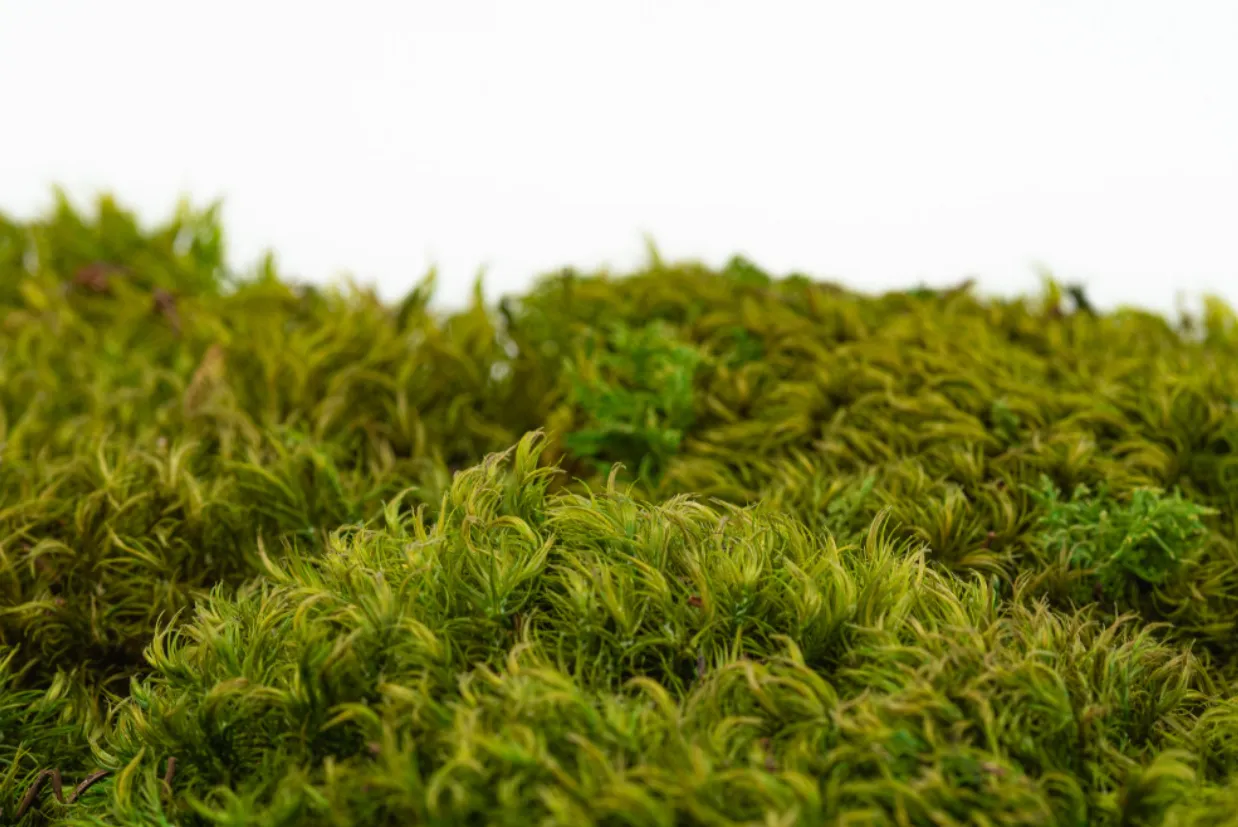
The moss life cycle is one of the most interesting examples of how simple plants survive, reproduce, and support ecosystems without flowers, seeds, or deep roots. Moss belongs to the plant group Bryophyta, a group of small, nonvascular plants that usually grow in moist, shaded places such as forest floors, rocks, tree bark, old walls, wetlands, and stream edges.
Unlike flowering plants, moss does not produce seeds. Instead, it reproduces through spores, tiny reproductive cells that can spread through the wind, water, or nearby surfaces. Britannica describes mosses as small, nonvascular, spore-bearing land plants with at least 12,000 known species distributed worldwide, except in saltwater.
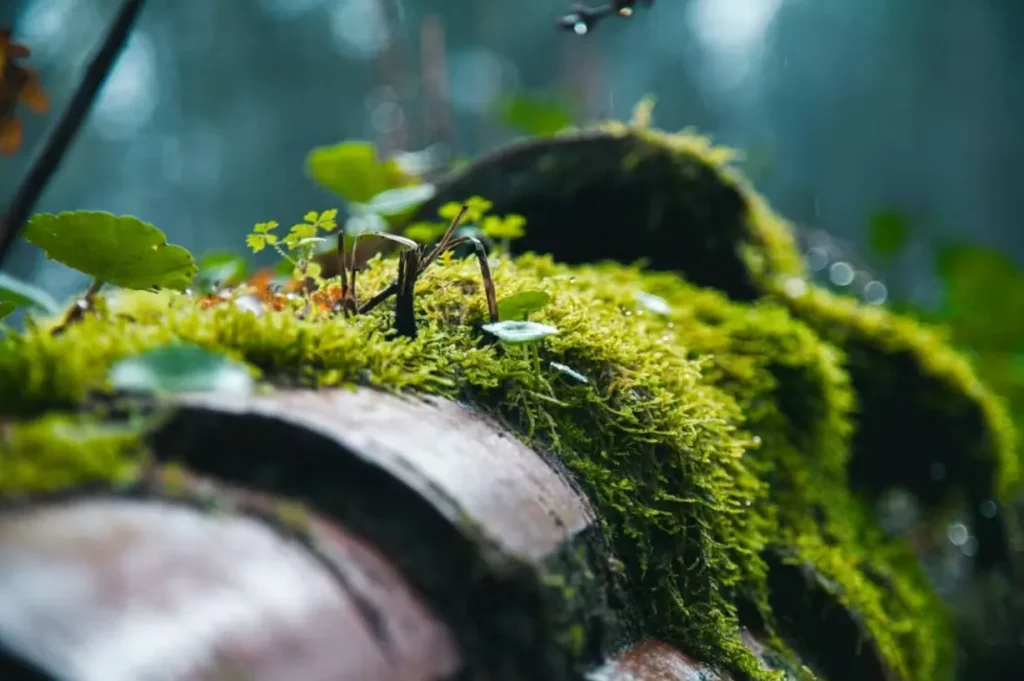
The most important thing to understand about the moss life cycle is that the green, soft carpet we usually recognize as moss is mainly the gametophyte stage. This differs from many familiar plants, where the larger, visible plant is usually the sporophyte. In mosses, the sporophyte grows attached to the gametophyte and produces spores in a capsule.
Q: What is the moss life cycle?
A: The moss life cycle is the process by which moss grows from a spore, becomes a protonema, develops into a leafy gametophyte, produces sex organs, forms a sporophyte, and releases new spores.
Q: Does moss grow from seeds?
A: No. Moss does not make seeds, flowers, or fruits. It reproduces mainly through spores and can also spread by fragmentation.
Q: Why does moss need water to reproduce?
A: Moss needs water because male sperm cells must swim from the antheridia to the female archegonia for fertilization.
Quick Life Cycle Table
| Stage | What Happens | Key Feature |
| Spore | Tiny spores land on a moist surface | Starts new moss growth |
| Protonema | Spore germinates into green thread-like growth | Young early moss stage |
| Gametophyte | The leafy green moss plant develops | Main visible stage |
| Sex Organs | Male and female organs form | Produces sperm and eggs |
| Fertilization | Sperm swim to the egg when water is present | Creates a diploid zygote |
| Sporophyte | The stalk and capsule grow from the gametophyte | Produces spores |
| Spore Release | Capsule opens and releases spores | The cycle begins again |
The History of Their Scientific Naming
The scientific naming of moss is closely connected with the word Bryophyta. The term “bryophyte” comes from Greek roots commonly linked with moss-like plants. In modern botanical use, Bryophyta refers to mosses in the strict sense, while the broader word bryophytes may include mosses, liverworts, and hornworts. The word “bryophyte” is recorded from Modern Latin Bryophyta, meaning a group of moss-like plants.
Scientifically, mosses are placed in the plant kingdom because they are photosynthetic organisms with cell walls and a life cycle that alternates between generations. However, they are different from vascular plants because they lack true roots, flowers, seeds, and advanced water-conducting tissues such as xylem and phloem.
Important naming points:
- Moss belongs to the division Bryophyta.
- The study of mosses and related plants is called bryology.
- Mosses are called nonvascular plants because they lack true vascular tissue.
- Their scientific classification helps separate them from algae, fungi, lichens, and flowering plants.
Their Evolution And Their Origin
The origin of mosses is closely linked to the early history of land plants. Mosses are considered among the simpler land plants because they do not have true roots, flowers, seeds, or woody stems. Their structure suggests a very ancient adaptation to life on land, especially in moist environments where water helps reproduction.
The fossil record of moss is limited because its tissues are soft and fragile, making fossil preservation difficult. However, scientific summaries note that clear moss fossils are known from very ancient geological periods, and some possible moss-like remains may be even older. This shows that mosses have been part of Earth’s plant history for hundreds of millions of years.
From an evolutionary perspective, moss represents a successful survival strategy. Instead of becoming tall and woody like trees, mosses stayed small, flexible, and moisture-efficient. They can grow on rocks, soil, bark, and other surfaces where many larger plants cannot easily survive.
This simple body design helped mosses become pioneer plants. In many natural places, mosses are among the first plants to colonize bare surfaces. Over time, they help break down exposed materials, trap dust and organic particles, hold moisture, and prepare the surface for other plants. Britannica notes that mosses help break down exposed substrates and release nutrients for more complex plants that later grow there.
Their long survival also proves that evolution does not always mean becoming larger or more complex. Mosses survived because of their small size, spore-based reproduction, and ability to tolerate drying, which made them highly adaptable.
Their main food and its collection process
The main food of moss is not collected like animals collect food. Moss is a plant, so it makes its own food through photosynthesis. During photosynthesis, moss uses sunlight, carbon dioxide, and water to produce sugars that give it energy for growth and survival.
Unlike many plants, moss does not have true roots. Instead, it has small root-like structures called rhizoids. These mainly help attach the moss to surfaces such as soil, stone, tree bark, or walls. Moss absorbs water and minerals through its surface, especially through its tiny leaf-like structures.
Key points about moss food and nutrient collection:
- Photosynthesis: Moss uses sunlight to create food.
- Water absorption: Moss absorbs water directly through its body surface.
- Nutrient intake: Minerals can come from rainwater, dust, decaying organic matter, and the surface where moss grows.
- Rhizoids: These help anchor moss but do not work like true roots.
- Moisture dependence: Moss grows better when enough moisture is available.
- No flowers or fruits: Moss does not need nectar, fruits, or seeds for food production.
Mosses are nonvascular plants, meaning they lack the advanced internal transport system found in many larger plants. Because of this, they usually stay small and grow close to moist surfaces.
This simple food-making system is one reason moss can survive in places where other plants struggle. A thin layer of moss can live on rocks, old walls, shaded soil, tree trunks, and even on poor, nutrient-poor surfaces.
Important Things That You Need To Know
When people search for moss, they may think it is just a green carpet on rocks or soil. But scientifically, moss is much more important. Moss is a living plant, not a fungus or a lichen. It belongs to Bryophyta, a group of small, spore-producing plants that have a unique life cycle.
The most visible form of moss is the gametophyte, the green, leafy stage. This stage produces reproductive organs. After fertilization, a small sporophyte grows from the gametophyte and releases spores. That is why understanding the moss life cycle is important for learning how these plants spread naturally.
Important LSI-related terms to understand are moss, moss life cycle, moss spores, moss gametophyte, and moss sporophyte. These words help explain how moss grows, reproduces, and survives.
Moss also plays a major role in soil and ecosystem health. A global study on soil mosses found that moss-covered soils are associated with stronger carbon storage, enhanced nutrient cycling, increased organic matter decomposition, and lower levels of some soil-borne plant pathogens compared with bare soils.
In simple words, moss may look small, but it supports water retention, soil protection, microhabitats, and early plant colonization. In forests, wetlands, gardens, and rocky landscapes, moss acts as a natural green blanket, protecting the ground and supporting life.
Their life cycle and ability to survive in nature
Spore Germination
The moss life cycle begins when a tiny spore lands on a suitable moist surface. If conditions are right, the spore germinates and grows into a thin green structure called protonema. This stage looks like fine green threads or a soft green film.
Protonema to Gametophyte
From the protonema, small buds develop into the leafy green gametophyte. This is the stage most people recognize as moss. It is usually soft, low-growing, and forms mats or cushions.
Fertilization and Sporophyte Growth
The gametophyte produces reproductive organs. Male organs are called antheridia, and female organs are called archegonia. When water is present, sperm can swim to the egg. After fertilization, a sporophyte grows attached to the gametophyte. The sporophyte usually has a stalk and a capsule.
Survival Ability in Nature
Moss survives by staying small, absorbing moisture quickly, and tolerating dry periods. Many mosses can dry out and become inactive, then recover when water returns. This makes moss successful in forests, on rocks, in wetlands, and in shaded urban spaces.
Moss also survives because it does not depend on seeds or flowers. Spores are light and can travel easily, helping moss colonize new habitats.
Their Reproductive Process and raising their children
The reproductive process in mosses is very different from that of animals or flowering plants. Moss does not raise children in the sense of the word. It does not produce babies, eggs in nests, fruits, or seeds. Instead, it produces spores and undergoes alternation of generations between the gametophyte and sporophyte stages.
Key reproductive points:
- Male organs: The male reproductive organs are called antheridia.
- Female organs: The female reproductive organs are called archegonia.
- Water requirement: Sperm need a thin layer of water to swim to the egg.
- Fertilization: When sperm reaches the egg, a diploid zygote forms.
- Sporophyte: The zygote grows into a sporophyte attached to the gametophyte.
- Capsule formation: The sporophyte forms a capsule where spores are produced.
- Spore release: Spores are released and spread to new places.
- New growth: Spores germinate into protonema, which initiates the next generation.
The closest thing to “raising their children” in moss is the way the sporophyte remains attached to the gametophyte. The sporophyte depends on the gametophyte for water and nutrients during its development. Britannica notes that the sporophyte generation develops from the gametophyte and remains dependent on it to varying degrees.
This system is simple but effective. Instead of protecting young plants like animals protect their offspring, moss releases many spores, increasing the chance that some will land in suitable places and grow.
The importance of them in this Ecosystem
Soil Protection
Moss helps protect soil from erosion. Its dense mats hold small soil particles in place and reduce the force of rain hitting bare ground. This is especially useful on slopes, forest floors, and fragile landscapes.
Water Retention
Moss works like a natural sponge. It can hold moisture and release it slowly into the surrounding environment. This supports nearby microorganisms, small invertebrates, and sometimes young plants.
Carbon and Nutrient Cycling
Mosses contribute to carbon and nitrogen cycling. Research on soil mosses shows they are associated with greater carbon sequestration, nutrient pools, and organic matter decomposition compared with bare soils.
Pioneer Plant Role
Moss often grows where other plants cannot. It helps break down exposed surfaces and creates better conditions for future plant growth. This makes moss important in ecological succession.
Habitat Creation
Moss mats create tiny habitats for microorganisms, insects, and other small life forms. In forests and wetlands, these microhabitats support biodiversity at a small but important scale.
Global Ecological Value
A 2023 global study reported that soil mosses cover more than 9.4 million square kilometers of Earth’s surface, underscoring moss’s much larger ecological role than many people realize.
What to do to protect them in nature and save the system for the future
Protecting moss is important because moss supports soil health, moisture balance, biodiversity, and natural regeneration. Although moss looks simple, removing it carelessly can damage small ecosystems.
- Avoid removing wild moss unnecessarily: Moss grows slowly in many natural places. Taking it from forests or rocks can disturb habitats.
- Protect shaded and moist areas: Moss needs suitable moisture and shade. Keeping natural shade helps moss communities survive.
- Reduce soil disturbance: Heavy walking, digging, or construction can destroy moss mats and compact soil.
- Use sustainable gardening practices: If using moss in gardens, choose cultivated or responsibly sourced moss instead of wild-collected moss.
- Limit chemical pollution: Pesticides, strong herbicides, and polluted runoff can harm moss and the microorganisms living with it.
- Protect wetlands and forests: Many moss species thrive in these ecosystems. Conserving these habitats protects moss diversity.
- Keep fallen logs and natural stones: Moss often grows on dead wood, rocks, and bark. Removing all natural materials reduces the habitat for moss.
- Educate people about moss: Many people think moss is useless, but it helps soil, water, and biodiversity. Awareness supports conservation.
- Avoid over-cleaning natural walls and rocks: In some places, moss growth is part of the natural landscape and should not always be removed.
- Support ecosystem restoration: Moss can help restore damaged soil by stabilizing surfaces and improving moisture conditions.
Frequently Asked Questions (FAQs)
Q1: What is the moss life cycle in simple words?
A: The moss life cycle starts with a spore, grows into protonema, develops into a leafy gametophyte, produces reproductive organs, forms a sporophyte, and releases new spores.
Q2: Does moss have seeds?
A: No. Moss does not produce seeds. It reproduces through spores and can also spread by small plant fragments.
Q3: What is the main stage of moss life?
A: The main visible stage is the gametophyte. This is the green moss mat, or cushion, that people usually see.
Q4: Why does moss need water for reproduction?
A: Moss needs water because male sperm must swim through water to reach the female egg inside the archegonium.
Q5: What is protonema in moss?
A: Protonema is the early growth stage that forms after a moss spore germinates. It often looks like green threads or a thin green layer.
Q6: Is moss harmful to trees?
A: Usually, moss is not harmful to trees. It mostly grows on the bark surface and uses the tree as a place to attach, not as a food source.
Q7: Where does moss grow best?
A: Moss grows best in moist, shaded, stable places such as forest floors, rocks, walls, wetlands, and tree bark.
Q8: Why is moss important in nature?
A: Moss helps retain moisture, protect soil, support microorganisms, store carbon, cycle nutrients, and prepare surfaces for other plants.
Conclusion
The moss life cycle shows how a small, simple plant can survive within a powerful natural system. Moss does not need flowers, seeds, fruits, or deep roots. Instead, it grows from spores, forms a protonema, develops into the visible gametophyte, produces reproductive organs, and creates a sporophyte that releases new spores.
Beyond its life cycle, moss is highly valuable for the environment. It protects soil, holds moisture, supports tiny habitats, helps nutrient cycling, and plays a role in carbon storage. Its ability to grow on rocks, bark, soil, and shaded surfaces makes it one of nature’s most adaptable plant groups.
Protecting moss means protecting small but essential parts of the Ecosystem. When we understand moss better, we can see that this soft green plant is not just decoration. It is a living system that supports soil, water, biodiversity, and the future health of natural landscapes.
Also Read: life cycle of an apple