Hymenoptera is one of the most important insect orders in nature. It includes bees, wasps, ants, and sawflies. These insects may look different from each other. Still, they share some key features, such as complete metamorphosis, usually two pairs of thin membranous wings, chewing mouthparts, and, in many females, an ovipositor that may be used for egg-laying, sawing plant tissue, piercing hosts, or stinging.
The keyword hymenoptera life cycle byjus is often searched by students because they want a simple, exam-friendly explanation of how these insects grow. The basic life cycle follows four stages: egg, larva, pupa, and adult. This is called complete metamorphosis, where the early stage looks very different from the adult stage.
Hymenoptera are also very important for ecosystems. Bees help pollinate, parasitic wasps help control pest insects, ants improve soil structure, and sawflies are part of plant-based food chains. Some members of the order Hymenoptera can cause a sting allergy, especially bees, wasps, and ants, so understanding them is useful for both biology and public safety.
Q: What is Hymenoptera?
A: Hymenoptera is an insect order that includes bees, wasps, ants, and sawflies.
Q: What are the four stages of the Hymenoptera life cycle?
A: The four stages are egg, larva, pupa, and adult.
Q: Why are Hymenoptera important?
A: They help in pollination, natural pest control, soil health, and food-web balance.
Quick Life Cycle Table
| Stage | What Happens | Simple Example |
| Egg | A female lays eggs in a nest, plant tissue, soil, host insect, or protected cell. | A bee lays an egg in a wax cell. |
| Larva | The young form hatches and feeds. It may look like a grub, maggot, or caterpillar-like larva. | Workers feed bee larvae; sawfly larvae feed on leaves. |
| Pupa | The larva changes inside a cocoon or protected cell. Adult body parts develop. | Wings, legs, eyes, and body shape form. |
| Adult | The adult emerges, feeds, mates, builds nests, hunts, pollinates, or lays eggs. | Adult ants work in colonies; adult bees collect nectar and pollen. |
This table shows the basic Hymenoptera life cycle, but the details can change depending on the group. For example, sawflies usually lay eggs on plants, solitary bees collect pollen and nectar for their larvae, and parasitic wasps lay eggs in or on host insects.
Important Things That You Need To Know
Before studying the life cycle deeply, it is useful to understand some related terms. Hymenoptera means an insect order that includes bees, wasps, ants, and sawflies. The word comes from Greek roots meaning “membrane wings,” referring to their thin wings.
Hymenoptera is defined simply as insects with complete metamorphosis and many specialized lifestyles. Some are pollinators, some are predators, some are plant-feeders, and many are parasitoids.
Hymenoptera stings mainly come from certain bees, wasps, and ants. In many species, their ovipositor has evolved into a stinger; however, not all Hymenoptera sting. Sawflies, for example, do not sting humans in the same way as wasps or bees.
Hymenoptera allergy and Hymenoptera sting allergy happen when a person’s immune system overreacts to venom from insects such as honeybees, vespids, or ants. Severe reactions can be dangerous and may need emergency treatment.
Hymenoptera allergenic extract is a medical term linked with allergy diagnosis and treatment. Venom extracts are used in venom immunotherapy, which can reduce the risk of future serious sting reactions in suitable patients under specialist care.
The History of Their Scientific Naming
The scientific name Hymenoptera comes from Greek words. Hymen means membrane, and ptera means wings. So, the name points to the thin, membranous wings found in many members of this insect order.
Important naming points:
- Hymenoptera is the order name used for bees, wasps, ants, and sawflies.
- The name is linked to their membranous wings, although some members, such as many worker ants, lack them.
- The order is commonly divided into two major suborders: Symphyta and Apocrita.
- Symphyta includes sawflies, which usually have no narrow waist.
- Apocrita includes most wasps, bees, and ants, which usually have a narrow waist between body sections.
This naming history is important because it helps students understand classification. Instead of only memorizing examples, we can connect the name Hymenoptera with body structure, wings, and evolutionary grouping.
Their Evolution And Their Origin
The origin of Hymenoptera dates back very far in Earth’s history. Recent evolutionary studies estimate that the crown group of Hymenoptera began around 280 million years ago, during the Permian period. Another major study also estimated that diversification occurred around 281 million years ago.
The earliest Hymenoptera were likely plant-feeding insects, similar to modern sawflies and woodwasps. This is why sawflies are often seen as a more primitive branch of the order. Their larvae commonly feed on plant tissue, and adults lack the narrow “wasp waist” found in Apocrita.
Later, the group became more diverse. Some lineages evolved parasitoid lifestyles, in which larvae feed on or within other insects. This became one of the major reasons for the huge diversity of Hymenoptera. Parasitic wasps, for example, can lay eggs in the larvae or pupae of host insects, and the young develop by feeding on the host.
Another major evolutionary step was the rise of Aculeata, the group in which the ovipositor was modified into a stinger. This helped many wasps, bees, and ants defend themselves, capture prey, and protect colonies.
Over time, some Hymenoptera also evolved eusocial life, especially ants, honeybees, and some wasps. Eusocial species have organized colonies with queens, workers, and sometimes soldiers. This social system helped them survive in many habitats.
Their main food and its collection process
The food of Hymenoptera depends on the group, life stage, and habitat. They do not all eat the same thing. Some are plant-feeders, some are nectar feeders, some are predators, some are parasitoids, and some are broad generalists.
Main food and collection process:
- Bees mostly collect nectar and pollen from flowers. Nectar gives energy, while pollen provides protein for larvae.
- Worker bees use body hairs and special pollen-carrying structures to collect and move pollen from flowers to the nest. In social bees, pollen may be carried in a pollen basket.
- Solitary bees often build individual nest cells. Each cell is filled with pollen and honey-like food before the female lays an egg and closes the cell.
- Wasps may feed on nectar as adults, but many hunt insects or spiders to feed their larvae.
- Spider wasps often capture and paralyze spiders, then feed them to their young larvae.
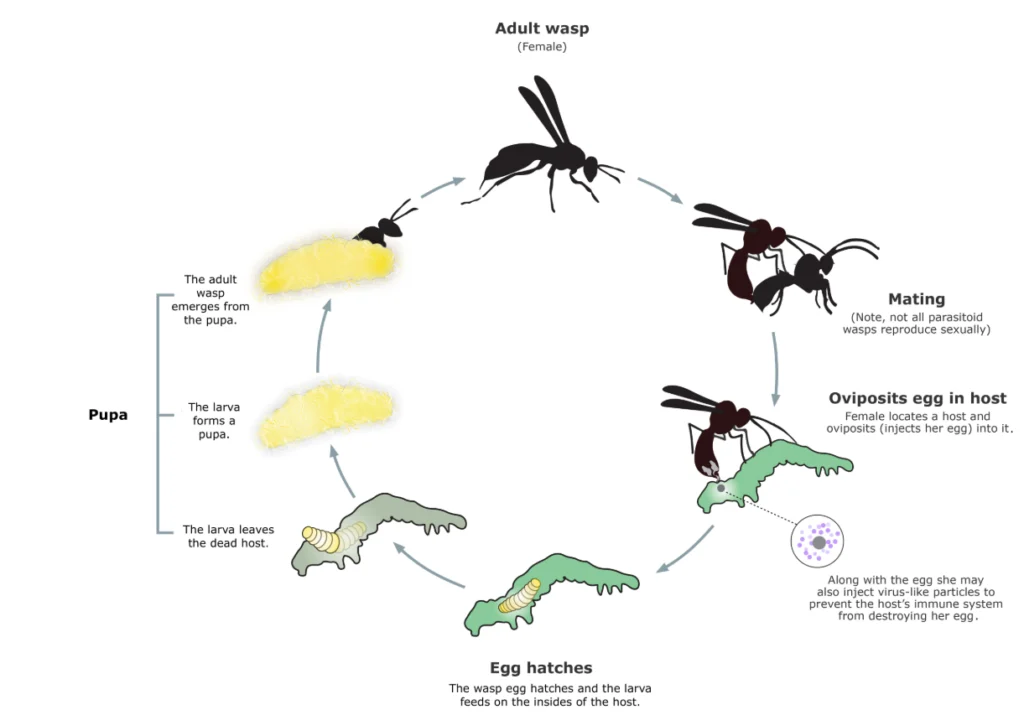
- Parasitic wasps lay eggs in or on host insects. Their larvae feed on the host’s body fluids and tissues.
- Sawfly larvae usually feed on leaves, stems, or other plant tissue.
- Ants are very flexible feeders. They may collect seeds, hunt insects, farm aphids for honeydew, scavenge dead animals, or eat plant material.
So, the food-collection process in Hymenoptera is highly specialized. This is one reason they are successful in almost every land ecosystem.
Their life cycle and ability to survive in nature
Egg Stage
The egg stage begins when a female lays eggs in a safe place. This may be a nest cell, plant tissue, soil, wood, or even the body of another insect.
In sawflies, females may cut small openings in plants and place eggs inside. In parasitic wasps, eggs may be placed in or on a host insect. In bees, eggs are often laid in prepared cells with food nearby.
Larva Stage
The larva is the main feeding stage. It grows quickly and stores energy for the next stage.
In Apocrita, larvae are usually maggot-like. In sawflies, larvae are often caterpillar-like and feed on plant tissue.
Pupa Stage
The pupa is the transformation stage. Adult structures such as wings, legs, and eyes develop. Many Hymenoptera form a cocoon, although some ants may not form one.
Adult Stage
The adult stage focuses on survival, mating, nesting, foraging, colony work, pollination, hunting, or egg-laying.
Their survival ability comes from flexible feeding, nest-building, chemical communication, defense through stings or group behavior, and strong adaptation to different habitats.
Their Reproductive Process and raising their children
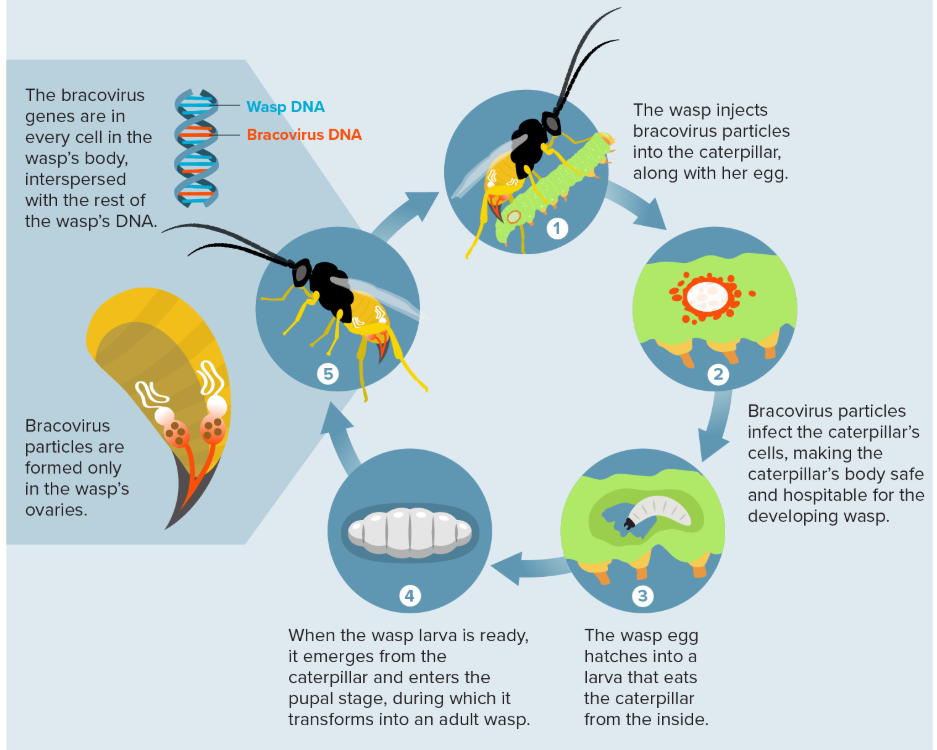
The reproductive process of Hymenoptera is one of the most interesting parts of their biology. In many species, females use an ovipositor to lay eggs in protected places. This structure may be used for sawing plant tissue, piercing hosts, or stinging.
Important points:
- Mating usually happens when adult males and females meet during flight, near nests, or in the environment.
- In many species, the female selects the best place to lay her eggs.
- Solitary bees prepare a cell with pollen and nectar, lay one egg, and close the cell. The larva then has food ready after hatching.
- Parasitic wasps lay eggs in or on host insects. The larva feeds on the host and later pupates.
- Social bees, ants, and some wasps raise young inside colonies.
- In social colonies, a queen usually lays eggs, while workers feed larvae, clean the nest, defend the colony, and collect food.
- In ants, workers may move eggs and larvae to safer or warmer areas inside the nest.
- In honeybee colonies, worker bees feed larvae and seal cells when larvae are ready to pupate.
Not all Hymenoptera “raise children” in the same way. Some provide food before laying eggs, some actively care for young, and some use hosts as living food sources for their larvae.
The importance of them in this Ecosystem
Pollination and Plant Reproduction
Bees are among the most important pollinators in nature. When they visit flowers for nectar and pollen, they transfer pollen from one flower to another. This helps plants produce fruits and seeds.
Pollination supports wild plants, crops, forests, and many animals that depend on fruits and seeds for food. Honeybees and wild bees both contribute to this service, and bee pollination has significant economic value.
Natural Pest Control
Many parasitic wasps and predatory wasps control pest insects. Their larvae may develop inside pest larvae, pupae, or eggs. This reduces pest populations naturally.
Because of this, many Hymenoptera are considered effective natural enemies in biological control.
Soil Health and Decomposition
Ants improve soil structure by digging tunnels. These tunnels help air and water move through soil.
Ants also break down organic material, move seeds, and recycle nutrients. Their activities support healthier soil and plant growth.
Food Web Balance
Hymenoptera are food for birds, reptiles, amphibians, spiders, and other insects. At the same time, many Hymenoptera are predators or parasitoids.
What to do to protect them in nature and save the system for the future
Protecting Hymenoptera means protecting pollination, natural pest control, and ecosystem balance. Many useful species are affected by habitat loss, pesticide use, pollution, and climate stress.
- Plant more native flowering plants in gardens, farms, schools, and parks.
- Keep flowers blooming throughout the seasons so bees and wasps have a continuous supply of food.
- Avoid unnecessary pesticide spraying, especially during flowering periods.
- Use integrated pest management rather than relying solely on chemicals.
- Leave small natural areas with soil, dry stems, dead wood, and leaf litter for nesting insects.
- Protect old trees, hedges, grasslands, and wild plant borders.
- Do not destroy nests unless they create a real safety risk.
- Keep water sources available for insects in hot seasons.
- Support organic and wildlife-friendly farming.
- Teach children that not all wasps, bees, and ants are harmful.
- If someone has a known Hymenoptera allergy, keep safety in mind while still avoiding unnecessary insecticide use.
- Encourage local conservation programs for pollinators and beneficial insects.
Saving Hymenoptera is not only about saving insects. It is also about protecting food production, biodiversity, and future ecosystem stability.
Frequently Asked Questions (FAQs)
Q1: What is Hymenoptera in simple words?
A: Hymenoptera is an insect order that includes bees, wasps, ants, and sawflies.
Q2: What is the Hymenoptera life cycle?
A: The Hymenoptera life cycle has four stages: egg, larva, pupa, and adult.
Q3: Is Hymenoptera complete metamorphosis?
A: Yes. Hymenoptera go through complete metamorphosis, where the larva looks very different from the adult.
Q4: What is the difference between Symphyta and Apocrita?
A: Symphyta includes sawflies, usually without a narrow waist. Apocrita includes most wasps, bees, and ants, and is characterized by a narrow waist.
Q5: Do all Hymenoptera sting?
A: No. Many bees, wasps, and ants can sting, but not all Hymenoptera sting. Sawflies do not have the same kind of defensive sting.
Q6: What is a Hymenoptera sting allergy?
A: Hymenoptera sting allergy is an allergic reaction to venom from insects such as bees, wasps, or ants. It can be mild or severe.
Q7: What is the Hymenoptera allergenic extract?
A: Hymenoptera allergenic extract refers to venom-based material used in allergy testing or venom immunotherapy under medical supervision.
Q8: Why are Hymenoptera important for humans?
A: They help with pollination, pest control, soil health, and ecosystem balance. Bees also support agriculture by pollinating many crops.
Conclusion
The Hymenoptera life cycle is a powerful example of complete metamorphosis in insects. From egg to larva, then to pupa, and finally to adult, each stage plays a clear role in survival and reproduction. This order includes bees, wasps, ants, and sawflies, making it one of the most diverse and useful insect groups on Earth.
Their importance goes far beyond their small size. Bees help plants reproduce through pollination. Parasitic wasps control pests naturally. Ants improve soil and support nutrient recycling. Sawflies connect plant life with wider food webs.
At the same time, some members can cause Hymenoptera stings and allergic reactions, so awareness is important. The best approach is balance: protect beneficial species, manage risks safely, and conserve their natural habitats. By protecting Hymenoptera, we also protect food systems, biodiversity, and the future health of ecosystems.
Also Read: malaria life cycle