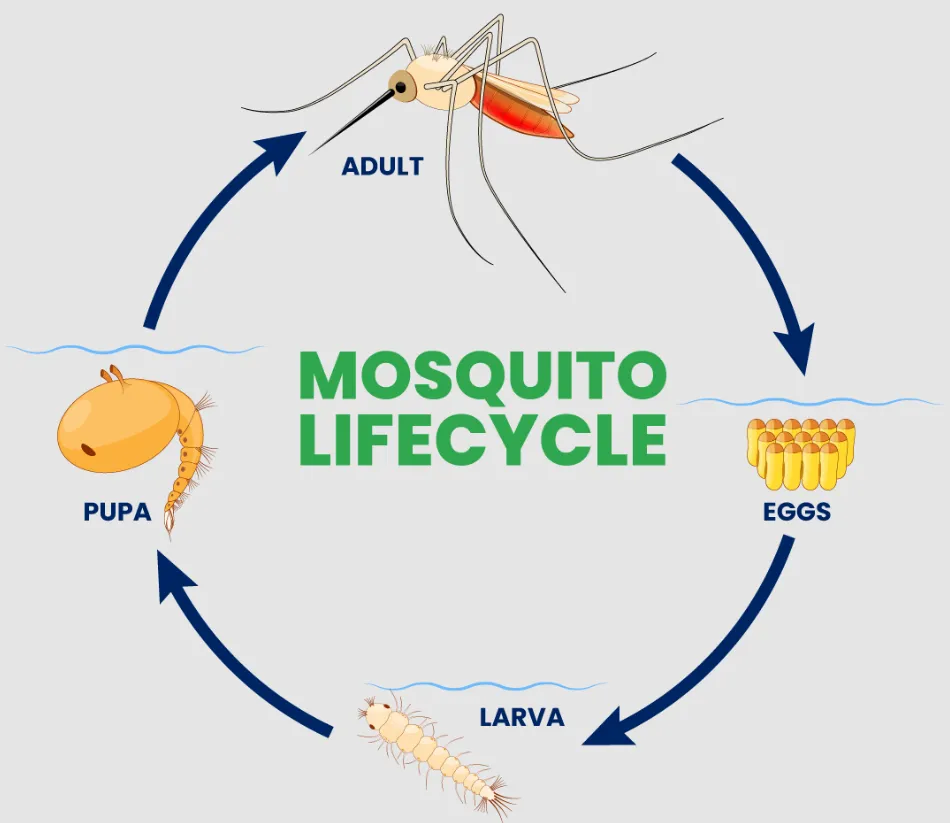
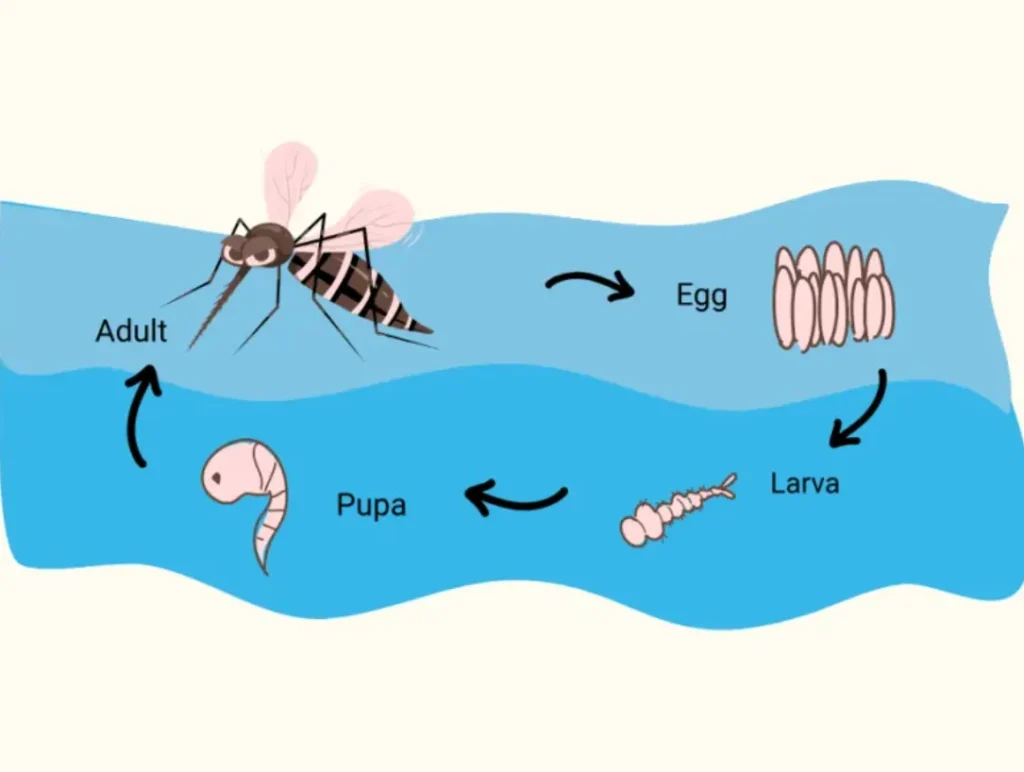
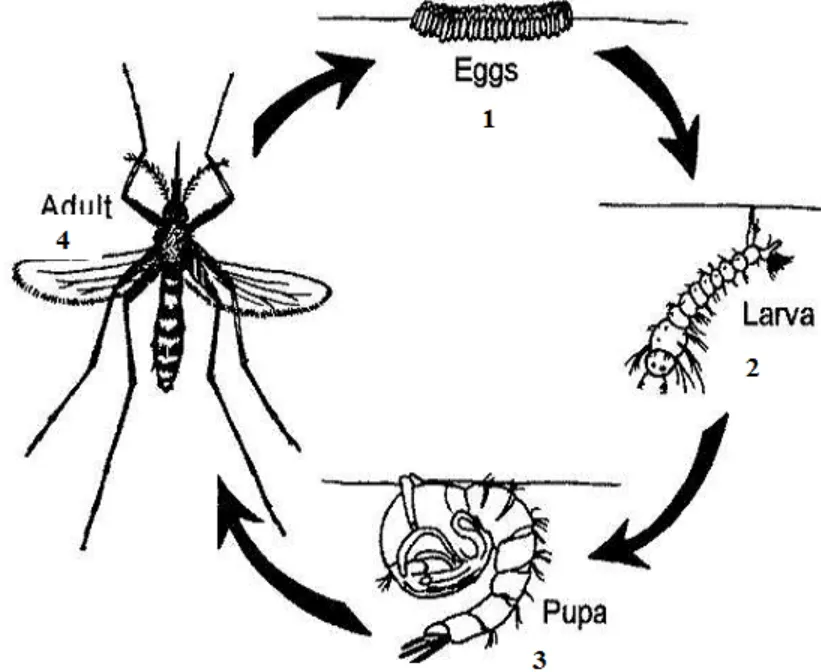
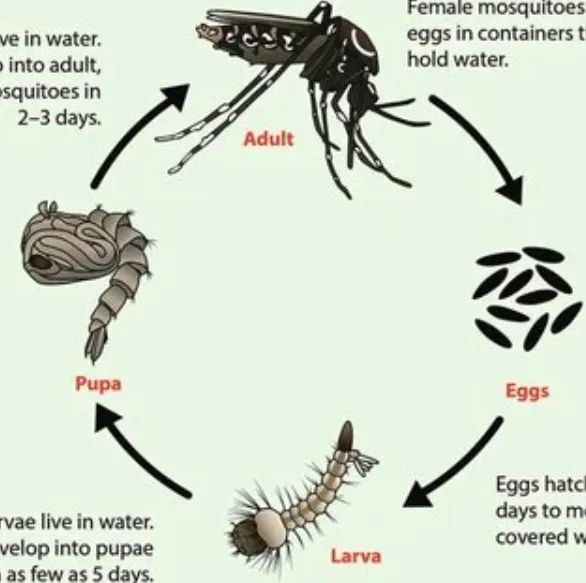
The life cycle of a mosquito is a fast and fascinating natural process that moves through four main stages: egg, larva, pupa, and adult. Most mosquitoes need standing water to complete the early stages of their life cycle. That is why buckets, tires, flower pots, drains, ponds, and even small water-filled containers can become mosquito breeding sites.
A mosquito is a small flying insect from the family Culicidae. There are about 3,500 mosquito species worldwide, but not all of them spread disease. In fact, only a smaller portion of mosquito species are major disease vectors, although some can transmit illnesses such as malaria, dengue, Zika, chikungunya, yellow fever, and West Nile virus.
The complete mosquito life cycle can be very quick. For Aedes mosquitoes, development from egg to adult can take around 7–10 days, while Anopheles mosquitoes often take around 10–14 days, depending on temperature, water quality, food, and species.
Quick Answers: Most Common Questions
Q: What are the 4 stages in the life cycle of a mosquito?
A: The 4 stages are egg, larva, pupa, and adult mosquito.
Q: How long does it take for a mosquito egg to become an adult?
A: Many mosquitoes can develop from egg to adult in about 7–14 days, depending on species and environmental conditions.
Q: Do all mosquitoes bite humans?
A: No. Only female mosquitoes bite because many species need blood protein to develop eggs. Male mosquitoes mainly feed on nectar and plant juices.
Quick Life Cycle Table
| Stage | Where It Happens | Key Details |
| Egg | On or near water | Laid singly, in rafts, or on container walls, depending on species |
| Larva | In water | Called wigglers; feed and molt several times |
| Pupa | In water | Called tumblers; do not feed; adult forms inside |
| Adult | Air, vegetation, homes, outdoors | Mates, feeds, lays eggs, and repeats the cycle |
The History of Their Scientific Naming, Evolution, and Origin
Scientific Name and Family
Mosquitoes belong to the insect family Culicidae, within the order Diptera, meaning “two-winged flies.” The common word mosquito comes from Spanish and Portuguese roots meaning “little fly.” Important mosquito groups include Aedes, Anopheles, and Culex.
Origin and Evolution
Mosquitoes are ancient insects. Fossil evidence shows that the mosquito family has existed for millions of years, with confirmed fossil mosquitoes known from the Cretaceous period. Scientific fossil studies also note that the fossil record of mosquitoes is relatively sparse, indicating that researchers are still refining our understanding of mosquito evolutionary history.
Why Their Evolution Matters
Their evolution is closely linked to water, climate, host animals, and feeding behavior. Over time, mosquitoes adapted to many habitats, from forests and wetlands to urban containers. This flexibility explains why modern mosquito control is difficult: mosquitoes can breed in both natural wetlands and small artificial water sources around homes.
Their Reproductive Process, Giving Birth, And Rising Their Children
Mosquitoes Do Not Give Birth Like Mammals
Mosquitoes do not give live birth. Instead, female mosquitoes reproduce by laying eggs. The eggs later hatch into larvae when conditions are suitable, usually when water is present.
Blood Meal and Egg Production
In many mosquito species, females require a blood meal before producing eggs. This is why mosquito bites happen. Blood provides proteins and nutrients needed for egg development, while sugar from nectar gives energy for flying and survival.
Egg-Laying Behavior
Different mosquito genera lay eggs in different ways. Aedes mosquitoes often lay eggs on the inner walls of water-holding containers, just above the waterline. These eggs can stick strongly and may survive dry conditions for months.
Anopheles mosquitoes, including malaria-related species, lay eggs directly on water, often in marshy or shallow-water areas. A female Anopheles mosquito may lay 50–200 eggs at a time.
No Parental Care
Mosquitoes do not “raise” their young. Once the female lays eggs, the young develop independently. The larvae feed in water, become pupae, and finally emerge as flying adults.
Stages of the Life Cycle of a Mosquito
Stage 1: Egg
The first stage of the life cycle of a mosquito begins when the female lays eggs in or near water. Some eggs float directly on the water surface, while others are placed on damp container walls.
Aedes mosquito eggs are especially tough. They can survive for up to 8 months without water, making them difficult to control in homes, gardens, and urban areas.
Stage 2: Larva
After hatching, the mosquito becomes a larva. Mosquito larvae live in water and are commonly called wigglers because of their active movement. They feed on tiny organic matter, algae, microorganisms, and particles in the water.
Larvae grow by molting. In many mosquitoes, the larval stage includes several molts before the insect becomes a pupa.
Stage 3: Pupa
The pupa is the transformation stage. Mosquito pupae also live in water, but they do not feed. They are often called tumblers because they move with a tumbling action when disturbed.
Inside the pupal case, the adult mosquito develops. For some species, this stage may last only a few days in warm conditions.
Stage 4: Adult Mosquito
The adult mosquito emerges from the pupa at the water’s surface. After its body hardens and its wings dry, it flies away.
Adult males usually search for nectar and mates. Adult females may also feed on nectar, but many species need blood to produce eggs. After mating and feeding, the female lays eggs and begins the cycle again.
Their main diet, food sources, and collection process are explained
Nectar and Plant Sugars
Both male and female mosquitoes feed on nectar, plant sap, and other sugary liquids. These foods provide energy for flying, mating, and survival.
Male mosquitoes do not bite people. Their diet is mainly plant-based.
Blood Feeding in Females
Female mosquitoes of many species take blood from humans, birds, mammals, reptiles, or amphibians. Blood is not their “daily food” in the same way nectar is; it is mainly used for egg production.
This is why a mosquito bite is usually linked with reproduction. The female uses her specialized mouthparts to pierce the skin, feed on the blood, and later digest it so the eggs can develop.
Larval Food Sources
Mosquito larvae feed in water. Their diet may include:
- Algae
- Bacteria
- Tiny organic particles
- Microorganisms
- Decaying plant material
Food Collection Process
Larvae use mouth brushes to filter small food particles from water. Adults use their proboscis to drink liquids. Females use the same mouthpart system to take blood when needed.
Important Things That You Need To Know
Understanding mosquitoes is not only about learning biology. It also helps with health protection, home hygiene, and smart environmental management.
First, mosquito breeding often starts in small water collections. A bottle cap, clogged gutter, bucket, old tire, plant tray, or bird bath can support larvae if water stays long enough. This is why removing standing water is one of the simplest and most effective home-level control methods.
Second, mosquito bites are caused by female mosquitoes, not males. Itching usually occurs because the body reacts to mosquito saliva. Some mosquitoes are only annoying, but others can spread disease-causing germs.
Third, mosquito repellent is useful when people are outdoors, especially at dawn and dusk or in mosquito-heavy areas. Wearing long sleeves, using screens, and sleeping under mosquito nets can also reduce bites.
Fourth, mosquito control is most effective when it targets the water stage. Killing adults may reduce immediate biting, but removing breeding sites stops the next generation.
Fifth, mosquito dunks are a common larval-control option. Many contain Bti, a naturally occurring bacterium used against mosquito larvae in standing water. The U.S. EPA states that Bti targets mosquito, blackfly, and fungus gnat larvae and does not pose a risk to humans when used a
s directed.
How long does the life cycle of a Mosquito Live
The lifespan of a mosquito depends on species, sex, temperature, humidity, predators, and habitat quality. A mosquito may complete its early life stages quickly, but adult survival varies widely.
- Egg stage:
- Mosquito eggs may hatch within days when water and temperature are suitable. Some species, especially Aedes, can remain dry and viable for months before hatching.
- Larval stage:
- The larval stage can last several days or longer. Warm water, enough food, and fewer predators speed up growth.
- Pupal stage:
- This stage is usually short. Pupae do not feed and mainly prepare for adult emergence.
- Adult male lifespan:
- Male mosquitoes generally live shorter lives than females. Their main role is mating, and they usually feed on nectar.
- Adult female lifespan:
- Female mosquitoes often live longer than males because they may go through several feeding and egg-laying cycles.
- Average full life cycle time:
- Many mosquitoes can go from egg to adult in about 1 to 2 weeks, but the exact timing varies by species and climate. Aedes may develop in about 7–10 days, while Anopheles may take about 10–14 days.
- Environmental effect:
- Warm, humid weather usually supports faster development and higher survival. Dryness, cold temperatures, predators, and lack of water reduce survival.
- Why lifespan matters for control:
- A short life cycle means mosquito populations can increase quickly. That is why weekly water checks around homes are important.
Life Cycle of a Mosquito Lifespan in the Wild vs. in Captivity
Lifespan in the Wild
In the wild, mosquitoes face many risks. Fish, dragonfly larvae, birds, bats, spiders, frogs, and other predators eat them. Rain can create breeding water, but storms can also flush larvae away.
Wild mosquitoes also face heat, dryness, wind, disease, and human control methods. Because of these pressures, many mosquitoes die before completing their life cycle.
Lifespan in Captivity
In controlled laboratory or insectary conditions, mosquitoes may survive longer because temperature, humidity, food, and water are managed. They are also protected from predators and sudden environmental stress.
Scientists raise mosquitoes in captivity to study disease transmission, insecticide resistance, reproduction, and behavior.
Main Difference
The wild is unpredictable, while captivity is controlled. In nature, survival depends on luck and conditions. In captivity, mosquitoes can be monitored through each stage, making their development more stable and easier to study.
Importance of the Life Cycle of a Mosquito in this Ecosystem
Food for Other Animals
Mosquitoes are part of many food webs. Fish, amphibians, turtles, and other aquatic insects eat their eggs and larvae. Bats, birds, spiders, frogs, lizards, and predatory insects eat adult mosquitoes.
Role in Pollination
Many mosquitoes feed on nectar, and some contribute to pollination. Male mosquitoes especially depend on plant sugars rather than blood.
Part of Aquatic Nutrient Cycles
Mosquito larvae help process tiny organic particles in water. They feed on microorganisms and decaying matter, becoming food for larger animals.
Balance and Public Health
Mosquitoes have ecological value, but some species create serious health risks. A balanced view is important: protect ecosystems while controlling disease-vector mosquitoes near humans.
The goal should not be careless destruction of nature. The smarter goal is targeted mosquito control that reduces breeding around homes while protecting beneficial insects and natural habitats.
What to do to protect them in nature and save the system for the future
Protect Natural Wetlands Carefully
- Wetlands support birds, fish, amphibians, insects, and plants.
- Avoid destroying natural wetlands only because mosquitoes are present.
- Use ecological management instead of unnecessary chemical spraying.
Control Mosquitoes Without Damaging the Ecosystem
- Use targeted larval control in problem areas.
- Avoid broad pesticide use when not needed.
- Choose safer methods such as habitat management and approved larvicides.
Remove Artificial Breeding Sites
- Empty buckets, tires, cans, and unused containers.
- Clean clogged gutters.
- Change water in bird baths and plant trays regularly.
Support Natural Predators
- Healthy ponds with fish and dragonfly larvae can reduce mosquito larvae.
- Avoid polluting water bodies where natural predators live.
Educate Communities
- Community awareness is essential.
- People searching for mosquito control near me should look for services that use integrated mosquito management, not only adult spraying.
Fun & Interesting Facts About the Life Cycle of a Mosquito
- Only female mosquitoes bite in most biting species because blood helps egg production.
- Male mosquitoes usually feed on nectar and plant sugars.
- A mosquito can complete its life cycle in about 7–14 days under suitable conditions.
- Aedes eggs can survive for months in dry conditions, making them hard to eliminate.
- Mosquito larvae are called wigglers because they move actively in water.
- Mosquito pupae are called tumblers because of their tumbling movement.
- Not all mosquitoes spread diseases. Many species rarely interact with humans.
- Mosquitoes are found in many parts of the world and can survive in tropical, subtropical, and temperate regions.
- Some mosquitoes prefer birds, some prefer mammals, and some prefer humans.
- A tiny amount of standing water can become a breeding site.
Frequently Asked Questions (FAQs)
Q: What is the life cycle of a mosquito?
A: The life cycle of a mosquito has four stages: egg, larva, pupa, and adult. The first three stages usually happen in water, while the adult stage is the flying stage.
Q: How fast do mosquitoes reproduce?
A: Mosquitoes can reproduce quickly. Some species can develop from egg to adult in about 7–10 days, especially in warm conditions with standing water.
Q: Why do mosquito bites itch?
A: A mosquito bite can itch because the female mosquito injects saliva while feeding. The body reacts to that saliva, causing itching, swelling, or redness.
Q: Are mosquito dunks safe to use?
A: Many mosquito dunks use Bti, a biological larvicide. The EPA states that Bti targets mosquito larvae and poses no risk to humans when used properly.
Q: What is the best mosquito control method at home?
A: The best home method is to remove standing water. Empty containers, clean gutters, cover water tanks, use screens, and consider larval control for water that cannot be drained.
Conclusion
The life cycle of a mosquito is short, efficient, and strongly connected to water. From egg to larva, pupa, and finally adult, mosquitoes can develop quickly when conditions are suitable: the temperature, moisture, and food. This rapid cycle explains why mosquito numbers can suddenly rise after rain or in areas with poor water management.
Mosquitoes are not only biting pests. They are also part of food webs and can support pollination and nutrient cycling in aquatic ecosystems. However, some species pose serious public health concerns because they can spread diseases.
The best approach is balanced and informed action. Remove artificial standing water, protect yourself from mosquito bites, use mosquito repellent when needed, and choose targeted mosquito control methods. By understanding their life cycle, you can reduce mosquito problems while still respecting nature’s role.
Also Read: moss life cycle