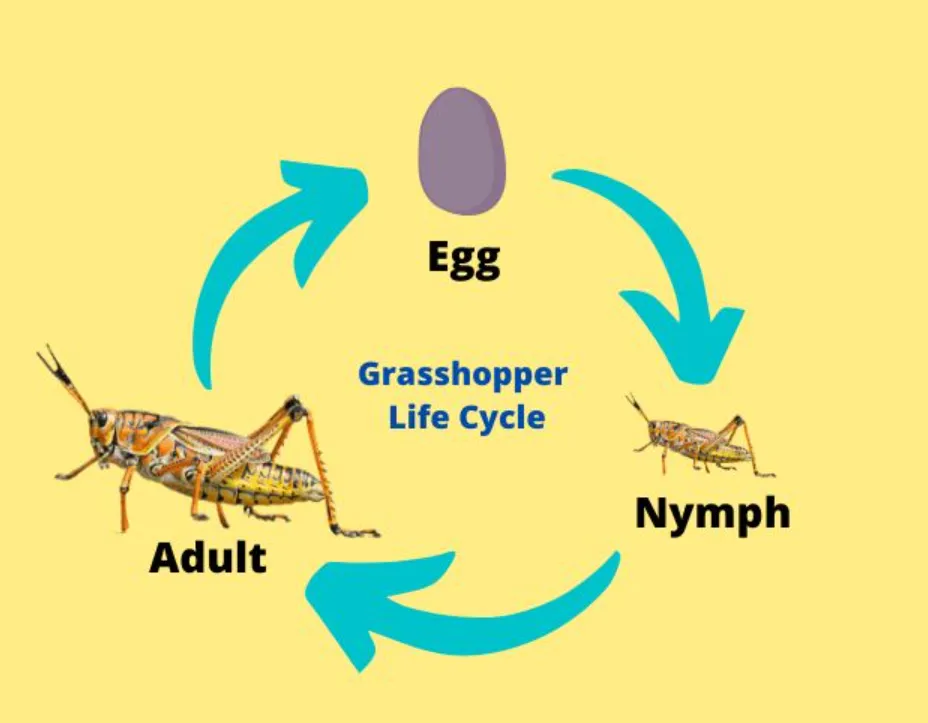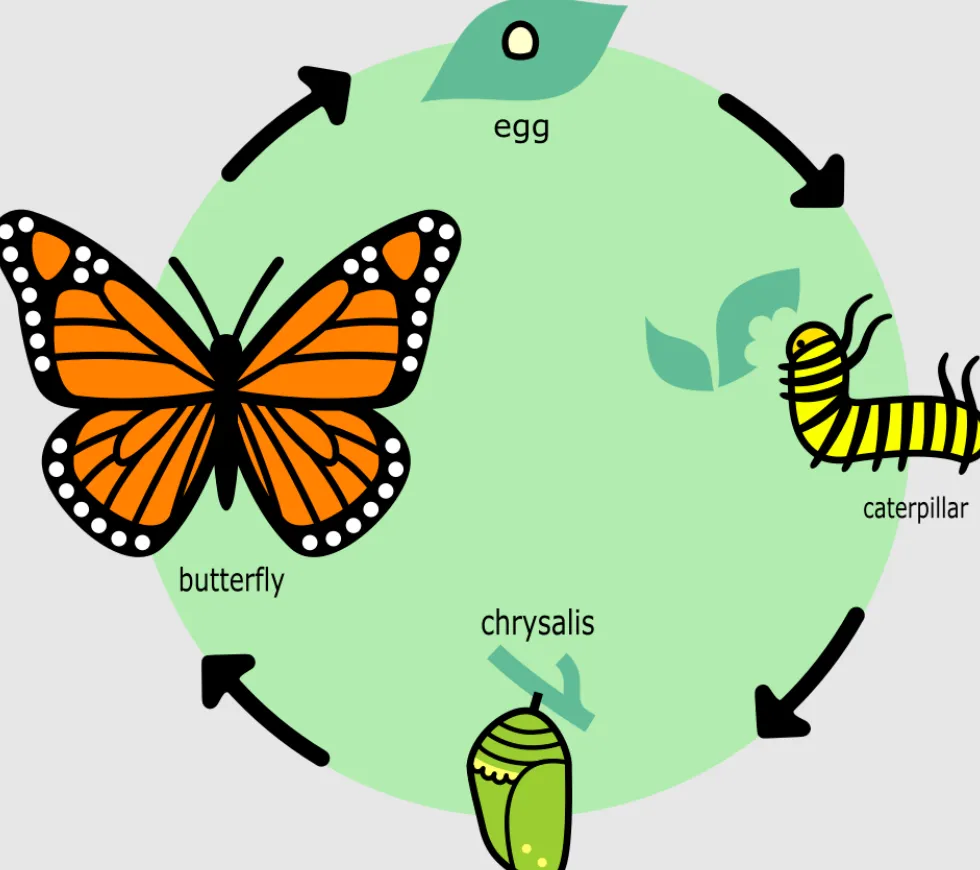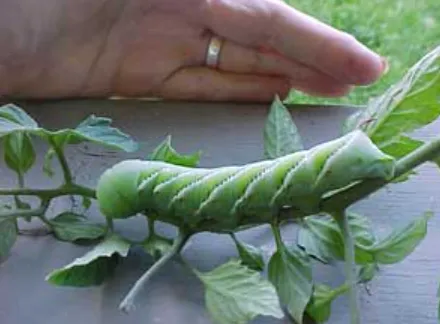
The hornworm life cycle is the complete development process of a hornworm caterpillar as it changes into a large sphinx or hawk moth. The most common garden hornworms are the tomato hornworm and the tobacco hornworm. These are not worms in the true biological sense; they are the larval stage of moths in the family Sphingidae.
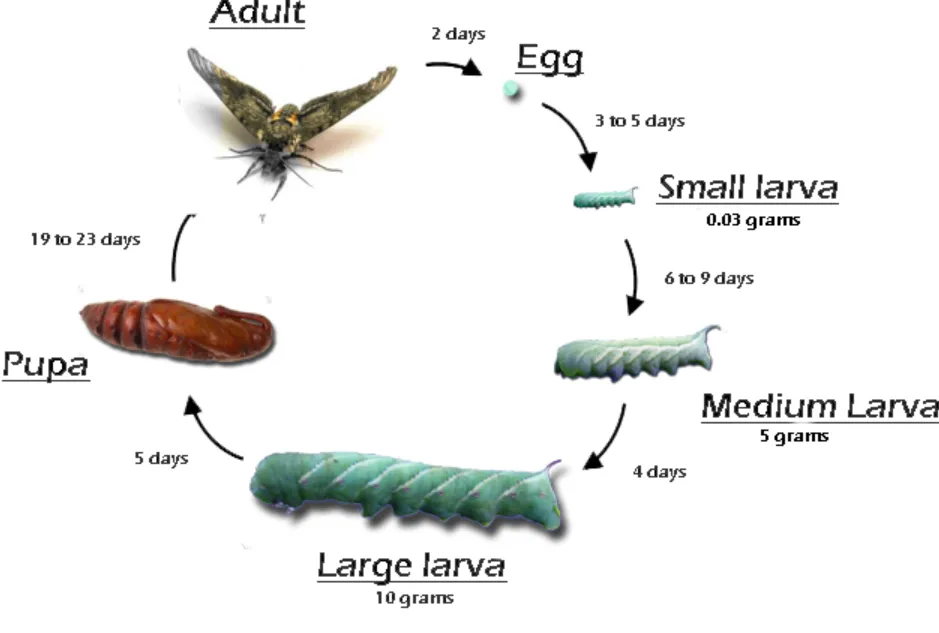
A hornworm passes through complete metamorphosis, which means it develops through four main stages: egg, larva, pupa, and adult moth. The green caterpillar stage is the most visible and destructive because it feeds heavily on tomato, tobacco, pepper, eggplant, potato, and other nightshade-family plants. Extension sources describe hornworms as larvae that feed for about three to four weeks before dropping to the soil to pupate.
The hornworm moth stage is very different from the caterpillar stage. Adult moths are strong night fliers and feed mainly on nectar. In many regions, hornworms overwinter as pupae in the soil, then adults emerge in spring or early summer to mate and lay eggs. Depending on the climate, there may be one, two, or more generations per year.
Q: What is the hornworm life cycle?
A: The hornworm life cycle includes four stages: egg, caterpillar larva, pupa, and adult moth.
Q: How long does a hornworm stay as a caterpillar?
A: A hornworm caterpillar usually feeds and grows for about 3 to 4 weeks, depending on temperature and food quality.
Q: What does a hornworm turn into?
A: A hornworm turns into a large sphinx moth, such as a tomato hornworm moth or tobacco hornworm moth.
Quick Life Cycle Table
| Stage | What Happens | Typical Duration | Where It Happens |
| Egg | Female moth lays single pale-green eggs on host leaves | About 2–7 days | Leaf surface, often the underside |
| Larva / Hornworm Caterpillar | Caterpillar eats leaves, flowers, and sometimes green fruit | About 3–4 weeks | Tomato, tobacco, pepper, potato, eggplant plants |
| Pupa | Mature larvae burrow into the soil and transform | About 2 weeks or longer; may overwinter | Soil |
| Adult Hornworm Moth | Moth emerges, mates, drinks nectar, and lays eggs | Often 2–3 weeks in field conditions | Around host plants and flowers |
The timing varies with temperature. Warmer conditions usually speed up development, while cooler weather can slow the cycle. Tobacco hornworms raised around 27°C / 81°F may complete development from egg to adult in about 30 days, while cooler temperatures can extend development to 39–48 days.
The History Of Their Scientific Naming, Evolution, and Their Origin
Scientific Naming of Hornworms
The two best-known garden hornworms are Manduca quinquemaculata, commonly called the tomato hornworm, and Manduca sexta, commonly called the tobacco hornworm. The tobacco hornworm was originally described by Carl Linnaeus in 1763, while the tomato hornworm is commonly listed as Manduca quinquemaculata (Haworth, 1803).
Why They Are Called Hornworms
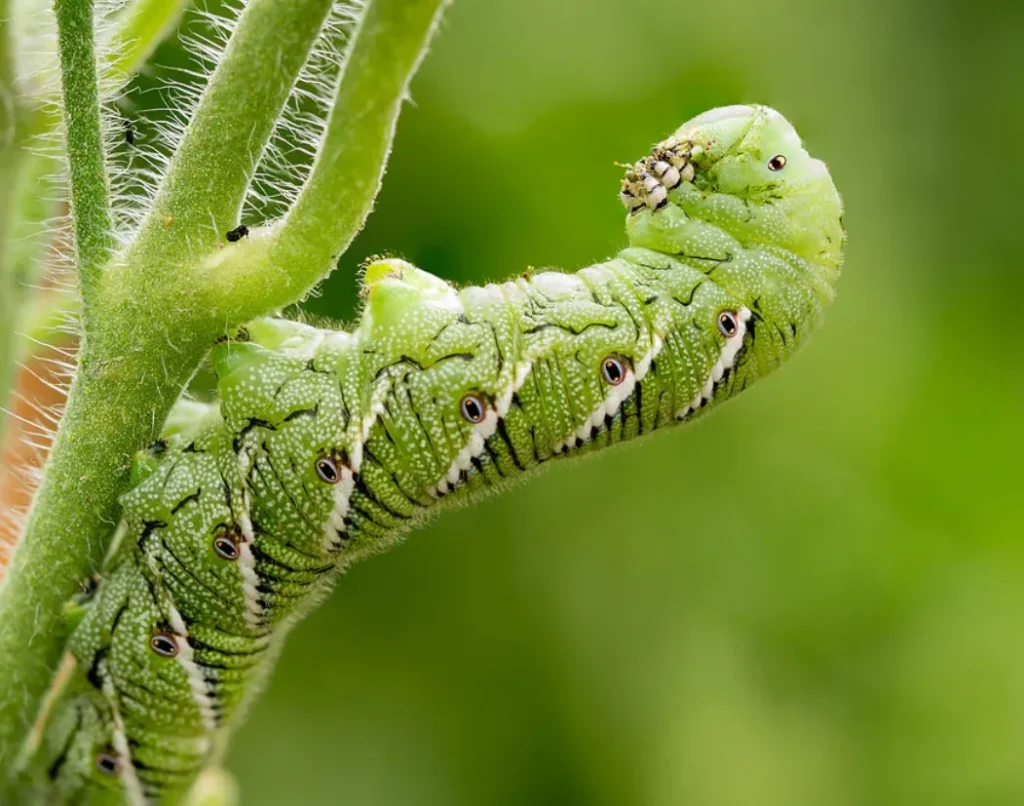
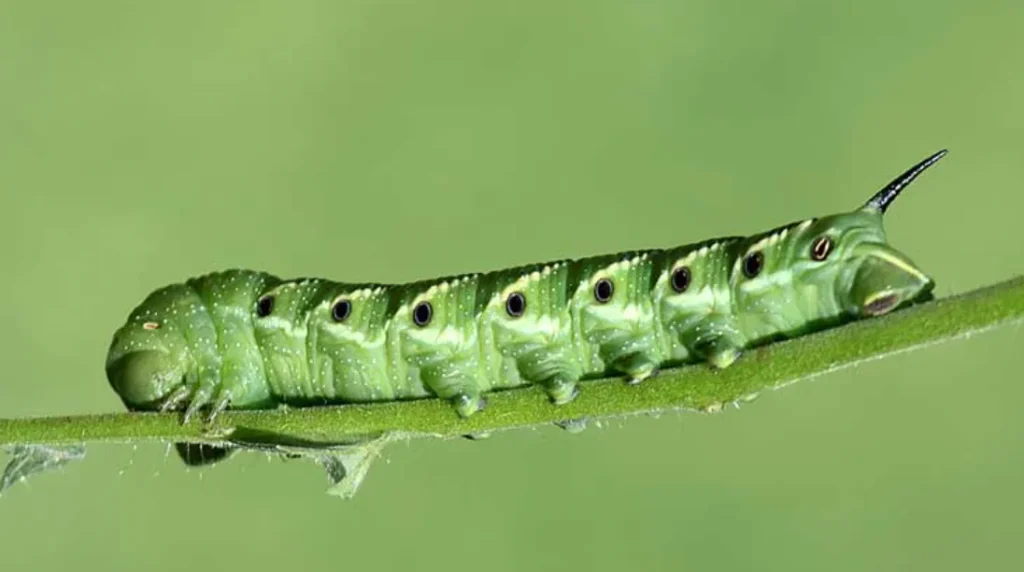
They are called hornworms because the caterpillar has a soft, pointed horn-like projection at the rear end of its body. This horn looks threatening, but it is not a stinger and does not make the caterpillar poisonous to humans.
Evolutionary Background
Hornworms belong to the moth family Sphingidae, a group known for strong flight, hovering behavior, and long feeding mouthparts in many adult species. Their evolution is closely linked with host plants, especially Solanaceae plants such as tomato, tobacco, pepper, eggplant, and potato. These plants contain defensive chemicals, but hornworm larvae have adapted to feed on them successfully.
Origin and Distribution
The major Manduca hornworms are native to the Americas and are widely found in gardens, farms, and wild plant habitats where nightshade-family plants grow. Their life cycle makes them highly successful because the larva grows quickly, the pupa survives underground, and the adult moth can fly to locate new host plants.
Their Reproductive Process, Giving Birth, And Rising Their Children
Hornworms Do Not Give Live Birth
Hornworms do not give birth like mammals. The adult hornworm moth reproduces by laying eggs. After mating, the female moth places eggs singly on host plant leaves. Tomato hornworm eggs are often described as smooth, oval, and light green, and they may be placed on upper or lower leaf surfaces.
Mating Behavior of Adult Moths
Adult moths usually become active in the evening or at night. The female releases chemical signals called pheromones to attract males. After mating, she searches for suitable host plants where her larvae will have enough food after hatching.
Egg-Laying Process
A female moth does not lay all her eggs in one cluster. Instead, eggs are usually laid singly on leaves. This reduces competition between newly hatched larvae and spreads risk across several plants. Oklahoma State Extension notes that eggs may be deposited on leaf undersides at night, and a female may lay many eggs across her reproductive period.
No Parental Care After Egg Laying
Hornworm moths do not raise their young. Once the eggs are laid, the offspring develop independently. The tiny larvae hatch, begin feeding immediately, molt several times, and grow into large green caterpillars. Their survival depends on camouflage, food availability, temperature, and protection from predators and parasitoids.
Stages of Hornworm Life Cycle
1. Egg Stage
The egg stage begins when a female hornworm moth lays eggs on the leaves of host plants. These eggs are small, pale green, smooth, and easy to miss unless the plant is inspected carefully. Eggs are commonly placed on tomato, tobacco, pepper, eggplant, potato, or wild nightshade plants.
Depending on the species and temperature, the eggs may hatch in a few days to about a week. Warmer temperatures usually speed up hatching. Once the egg opens, a tiny larva emerges and begins eating.
2. Larva Stage: Hornworm Caterpillar
The hornworm caterpillar stage is the most famous part of the life cycle. This is when gardeners usually notice missing leaves, chewed stems, green fruit damage, or dark droppings called frass.
During this stage, the caterpillar passes through several growth phases called instars. Sources describe hornworms as developing through about five larval instars, with the later instars causing most of the feeding damage.
A full-grown hornworm can become very large, often reaching around 3–4 inches or more. The caterpillar’s green body helps it blend with plant leaves, making it difficult to spot.
3. Pupa Stage
After feeding for several weeks, the mature caterpillar drops from the plant and burrows into the soil. There, it forms a pupal chamber and becomes a brown pupa.
The pupa is the transformation stage. Inside, the caterpillar’s body changes into an adult moth. In some seasons, the adult emerges after a few weeks. In colder regions, the pupa may overwinter in the soil and emerge the following spring or early summer.
4. Adult Moth Stage
The adult stage is the hornworm moth stage. The tomato hornworm moth is also known as the five-spotted hawkmoth, while the tobacco hornworm moth is commonly called the Carolina sphinx moth.
Adult moths are strong fliers and feed on nectar. They do not chew tomato leaves like caterpillars. Their main role is reproduction: mating, locating host plants, and laying eggs to begin the next generation.
Important Things That You Need To Know
Several related terms are important when learning about the hornworm life cycle. The word hornworm often refers to the caterpillar stage, not the adult moth. The adult form is usually a sphinx or hawk moth.
The tobacco hornworm and tomato hornworm life cycles are very similar, but the caterpillars can be distinguished. A tomato hornworm usually has eight V-shaped markings and a dark horn, while a tobacco hornworm usually has seven diagonal white stripes and a red horn. Kansas State Research and Extension gives the same practical distinction for home gardeners.
The hornworm moth is not the damaging stage. The damage is mainly caused by the hornworm caterpillar, especially in the final larval stages, when feeding increases rapidly. The moth stage feeds on nectar and can contribute to pollination.
Many gardeners ask, ” Should I kill tomato hornworm? The best answer is balanced. If the caterpillar is actively destroying food crops, it can be removed by hand. However, if it is covered with white rice-like cocoons, it has been parasitized by beneficial wasps. In that case, leaving it in the garden can support natural biological control.
Their Main Diet, Food Sources, and Collection Process Explained
Main Diet of Hornworms
The main diet of hornworms is soft plant tissue from the nightshade family, also called Solanaceae. Their preferred food sources include:
- Tomato leaves
- Tobacco leaves
- Pepper plants
- Eggplant leaves
- Potato foliage
- Wild nightshade weeds
- Datura and related wild host plants
Tobacco hornworms are recorded as pests of plants in the Solanaceae family, including tobacco, tomato, pepper, eggplant, and related ornamentals and weeds.
How Hornworms Feed
The caterpillar uses chewing mouthparts to cut leaf tissue. Young larvae make small holes, but older larvae can remove whole leaves, stems, blossoms, and sometimes green fruit. Utah State Extension notes that hornworms feed on leaves, stems, blossoms, and fruits of host plants.
Food Collection Process
Hornworms do not collect and store food. Instead, they feed directly from the plant. They often stay hidden along stems or under leaves during the day. Gardeners can find them by looking for chewed leaves and dark droppings below feeding sites.
Why They Eat So Much
The larval stage is a growth stage. The caterpillar must gather enough energy to complete pupation and become a moth. This is why the final instars feed heavily and can quickly damage a tomato plant.
How Long Does A Hornworm Live
The lifespan of a hornworm depends on species, temperature, food quality, climate, and whether it is in the wild or captivity. In everyday gardening language, people often call only the caterpillar a hornworm, but biologically the full life cycle includes egg, larva, pupa, and adult moth.
- Egg stage: The egg usually lasts only a few days. In warm conditions, tobacco hornworm eggs may hatch in about 2–4 days, while in other field conditions, hatching may extend closer to a week.
- Caterpillar stage: The visible hornworm caterpillar stage usually lasts about 3–4 weeks. This is the main feeding period and the stage where most plant damage happens.
- Pupal stage: The pupa may last around two weeks in warm, suitable conditions. However, if the insect enters overwintering diapause, the pupal stage can last for months until the next season.
- Adult moth stage: Adult hornworm moths often live around 2–3 weeks in the field life-cycle descriptions, though laboratory and environmental conditions may affect survival.
- Complete life cycle: A tobacco hornworm may complete development from egg to adult in about 30 days at warm laboratory temperatures, but cooler temperatures can extend the cycle to 39–48 days.
- Seasonal survival: In many climates, hornworms survive winter as pupae in the soil. This means a single generation may appear to “pause” for months before adults emerge in spring.
- Number of generations: Many regions have one or two generations per year, while warmer southern climates can support more generations. North Carolina Extension notes two to three generations depending on temperature.
In simple terms, the active caterpillar may live only a few weeks, but the complete biological cycle can stretch much longer when overwintering is included.
Hornworm Lifespan in the Wild vs. in Captivity
Hornworm Lifespan in the Wild
In the wild, the hornworm life cycle is strongly affected by predators, parasitoids, temperature, host plant quality, rainfall, and seasonal change. Small predators can eat eggs. Birds, wasps, insects, and spiders may attack larvae. Pupae can be disturbed in the soil.
Wild hornworms may complete a generation in about a month under warm conditions, but many do not survive to adulthood. In colder regions, pupae remain underground through winter and emerge later when conditions improve.
Hornworm Lifespan in Captivity
In captivity, especially when hornworms are reared as feeder insects or laboratory organisms, survival can be more controlled. Food, humidity, temperature, and protection from predators are managed. Tobacco hornworms are widely used in teaching and laboratory settings because they grow quickly and exhibit complete metamorphosis.
At about 27°C / 81°F, tobacco hornworms may develop from egg to adult in about 30 days, while lower temperatures can extend development.
Main Difference
The wild lifespan is less predictable but ecologically meaningful. A captive lifespan is more stable because the insect is protected from natural enemies and environmental stressors.
Importance of Hornworm in this Ecosystem
Food Source for Wildlife
Hornworms are important prey for birds, predatory insects, spiders, and parasitoid wasps. Their large, soft bodies provide a rich food source. Even when gardeners dislike them, hornworms help support food webs.
Host for Beneficial Parasitoid Wasps
One of the most important ecological roles of hornworms is supporting parasitoid wasps such as Cotesia congregata. These wasps lay eggs in hornworm larvae. Their larvae develop inside the hornworm and later form white cocoons on its body. Extension sources recommend leaving parasitized hornworms in the garden so adult wasps can emerge and help control future hornworms.
Adult Moths and Pollination
The adult hornworm moth feeds on nectar. Many sphinx moths are strong fliers and visit flowers at dusk or night. This makes them part of nocturnal pollination systems.
Natural Plant–Insect Balance
Hornworms also show how plant-eating insects influence plant communities. They feed on nightshade plants, but natural enemies prevent them from overwhelming ecosystems under balanced conditions.
Scientific Importance
The tobacco hornworm is also important in biology education and research because it is large, grows quickly, and undergoes complete metamorphosis.
What to Do to Protect Them in Nature and Save the System for the Future
1. Protect Beneficial Wasps and Natural Predators
- Avoid unnecessary broad-spectrum pesticides.
- Leave hornworms with white rice-like cocoons because they support parasitoid wasps.
- Grow small flowering plants that provide nectar for beneficial insects.
2. Use Balanced Pest Management
- Do not destroy every caterpillar without checking the situation.
- Remove only those causing serious crop damage.
- Relocate a few hornworms to wild nightshade plants to protect biodiversity.
3. Keep Some Native and Wild Host Plants
- Wild nightshade-family plants can support natural hornworm populations away from vegetable crops.
- This helps maintain food for moths, birds, and beneficial insects.
4. Reduce Chemical Pressure in Gardens
- Use handpicking, monitoring, and biological control before chemical control.
- If treatment is necessary, target young larvae rather than spraying heavily.
5. Support Night Pollinators
- Plant evening-blooming flowers.
- Reduce unnecessary outdoor lighting.
- Keep some nectar plants available for adult hornworm moths and other night-flying pollinators.
The goal is not to let hornworms destroy crops. The goal is to manage them wisely while protecting the wider garden ecosystem.
Fun & Interesting Facts About Hornworm
- Hornworms are not true worms. They are caterpillars, which means they are the larval stage of moths.
- The rear horn is not a stinger. It may look dangerous, but it is soft and harmless to humans.
- Tomato and tobacco hornworms look similar. A tomato hornworm usually has V-shaped side marks, while a tobacco hornworm has diagonal stripes.
- They are camouflage experts. Their green color makes them blend almost perfectly with tomato leaves and stems.
- They grow very fast. A tiny larva can become a large caterpillar in only a few weeks.
- Their droppings help gardeners find them. Dark pellets under damaged leaves often reveal where the caterpillar is hiding.
- The moth stage is beautiful. The adult tomato hornworm moth and tobacco hornworm moth are large, powerful fliers.
- Parasitized hornworms look unusual. White cocoons on the caterpillar’s back are not hornworm eggs; they are wasp cocoons.
- They are useful in science. The tobacco hornworm is commonly used in biology teaching because its life cycle is easy to observe.
- They show complete metamorphosis. Their transformation from caterpillar to moth is one of nature’s clearest examples of biological change.
Frequently Asked Questions (FAQs)
Q: What are the four stages of the hornworm life cycle?
A: The four stages are egg, larva, pupa, and adult moth. This process is called complete metamorphosis.
Q: What does a hornworm caterpillar turn into?
A: A hornworm caterpillar turns into a sphinx or hawk moth. The tomato hornworm becomes the five-spotted hawkmoth, and the tobacco hornworm becomes the Carolina sphinx moth.
Q: Should I kill the tomato hornworm?
A: If it is actively damaging tomato plants, you can remove it by hand. However, if it has white cocoons on its body, leave it because beneficial parasitoid wasps are developing there and can help control future hornworms.
Q: How long does the tomato hornworm life cycle take?
A: Under warm conditions, the full cycle can take about 30–50 days, but it may take longer in cooler weather or when the pupa overwinters in soil.
Q: Are hornworms harmful to humans?
A: Hornworms are not harmful to humans. They do not sting or bite aggressively. Their main problem is plant damage during the caterpillar stage.
Conclusion
The hornworm life cycle is a fascinating example of complete metamorphosis, moving from egg to hornworm caterpillar, then to pupa, and finally to a powerful hornworm moth. Although hornworms can be serious pests on tomato, tobacco, pepper, eggplant, and potato plants, they also play valuable roles in the ecosystem.
The tomato hornworm life cycle and tobacco hornworm life cycle are especially important for gardeners because the caterpillar stage can remove leaves quickly. Still, not every hornworm should be treated the same way. Active plant-damaging caterpillars can be removed, but parasitized hornworms should be left to support beneficial wasps.
Understanding the difference between the damaging larva and the nectar-feeding adult moth helps create a balanced approach. With careful monitoring, natural enemies, and smart garden management, hornworms can be controlled without harming the wider ecosystem.
Also Read: darkling beetle life cycle