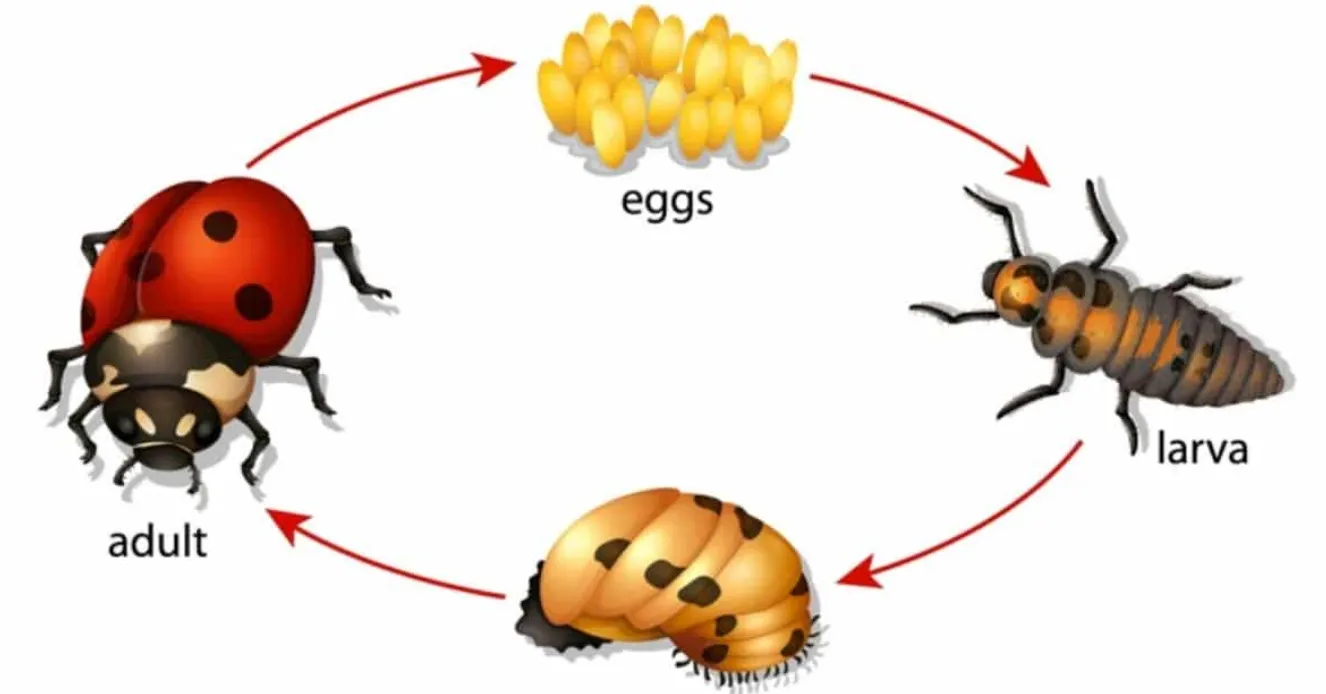
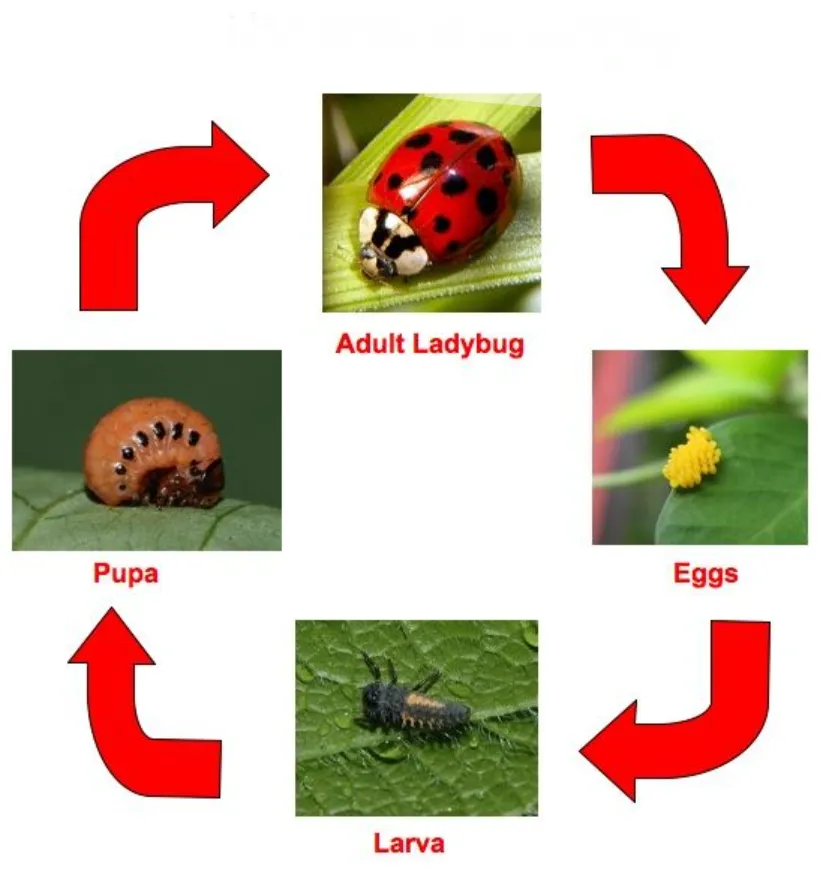
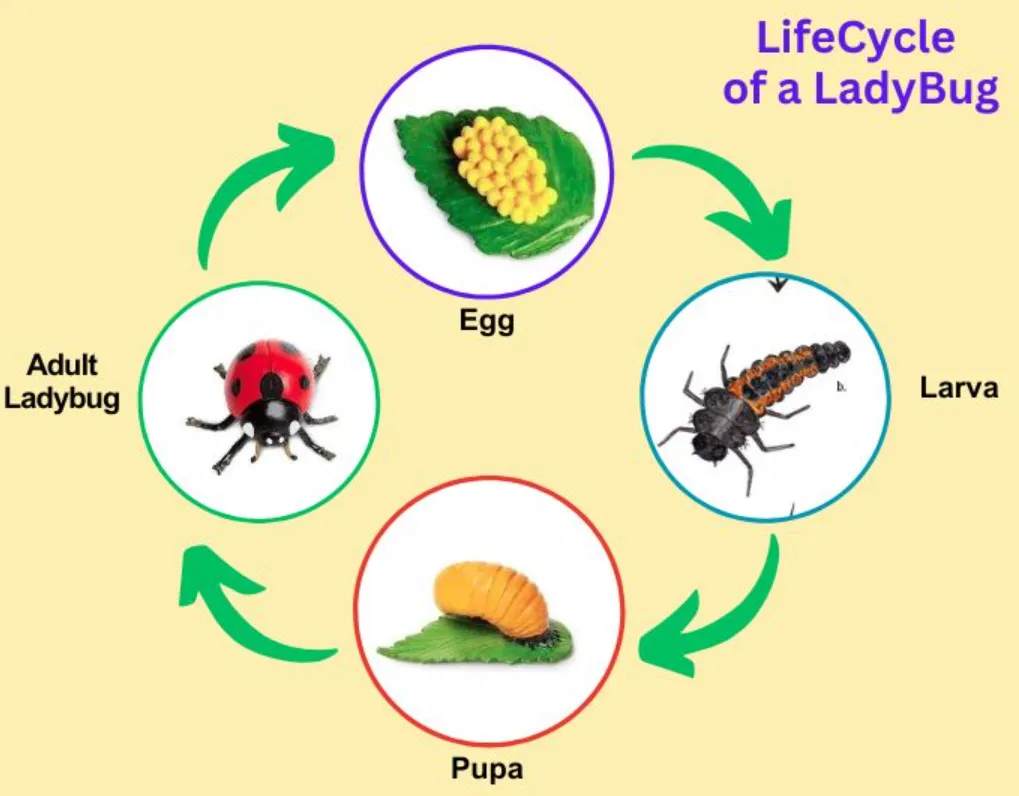
The ladybird’s life cycle is one of the most interesting natural phenomena in the insect world. A ladybird does not grow slowly into an adult form as many animals do. Instead, it undergoes complete metamorphosis, progressing from egg to larva, then to pupa, and finally to the familiar adult beetle with a rounded body and bright warning colors. This four-stage life cycle helps the young and adult forms live in different ways, reducing competition for food.
Many people know the ladybird as a small red insect with black spots, but scientifically, it is not a true bug. It belongs to the beetle family Coccinellidae. Entomologists often call them lady beetles or ladybird beetles to avoid confusion with true bugs. There are more than 6,000 described species of ladybird beetles worldwide, and many of them are important predators of soft-bodied pests such as aphids, scale insects, whiteflies, mites, and mealybugs.
Understanding the ladybird’s life cycle is useful for gardeners, farmers, students, and nature lovers. These small beetles help protect plants, support natural pest control, and maintain balance in the ecosystem. Their larvae may look strange or even a little fierce, but they are often more active pest hunters than the adults.
Quick Answers: Most Common Questions
Q: What are the four stages in the life cycle of the ladybird?
A: The four stages are egg, larva, pupa, and adult. This is called complete metamorphosis.
Q: What does a ladybird larva eat?
A: A ladybird larva mainly eats aphids, but it may also feed on mites, small insect eggs, whiteflies, and other soft-bodied pests.
Q: Why are ladybirds important in nature?
A: Ladybirds are important because they help control pest insects naturally, protect plants, reduce the need for pesticides, and support a healthier ecosystem.
Quick Life Cycle Table
| Life Cycle Stage | What Happens | Main Food | Usual Place | Importance |
| Egg | Females lay small yellow or orange eggs in clusters | No feeding yet | Usually, under leaves near aphids | Starts the next generation |
| Larva | Larva hatches and actively hunts pests | Aphids, mites, insect eggs, whiteflies | Leaves, stems, and plant surfaces | Strongest pest-eating stage |
| Pupa | Larva attaches to a surface and transforms | Does not feed | Leaf surface or plant stem | The body changes into an adult form |
| Adult | Fully formed beetle emerges, feeds, mates, and lays eggs | Aphids, scale insects, pollen, nectar, honeydew | Gardens, fields, shrubs, trees | Reproduction and natural pest control |
The History of Their Scientific Naming
The scientific family name of the ladybird is Coccinellidae. This name is linked to the color of many common species. The word comes from Coccinella, which is connected with the idea of scarlet or red coloring. This fits many well-known ladybirds, especially the red species with black spots.
• Coccinellidae was established as a family name by the French zoologist Pierre André Latreille in 1807.
• The common name ladybird has a cultural history. In Britain, the insect was once connected with Our Lady, meaning the Virgin Mary.
• In North America, many people call it a ladybug, but scientists prefer lady beetle because it belongs to the beetle order Coleoptera, not the true bug order.
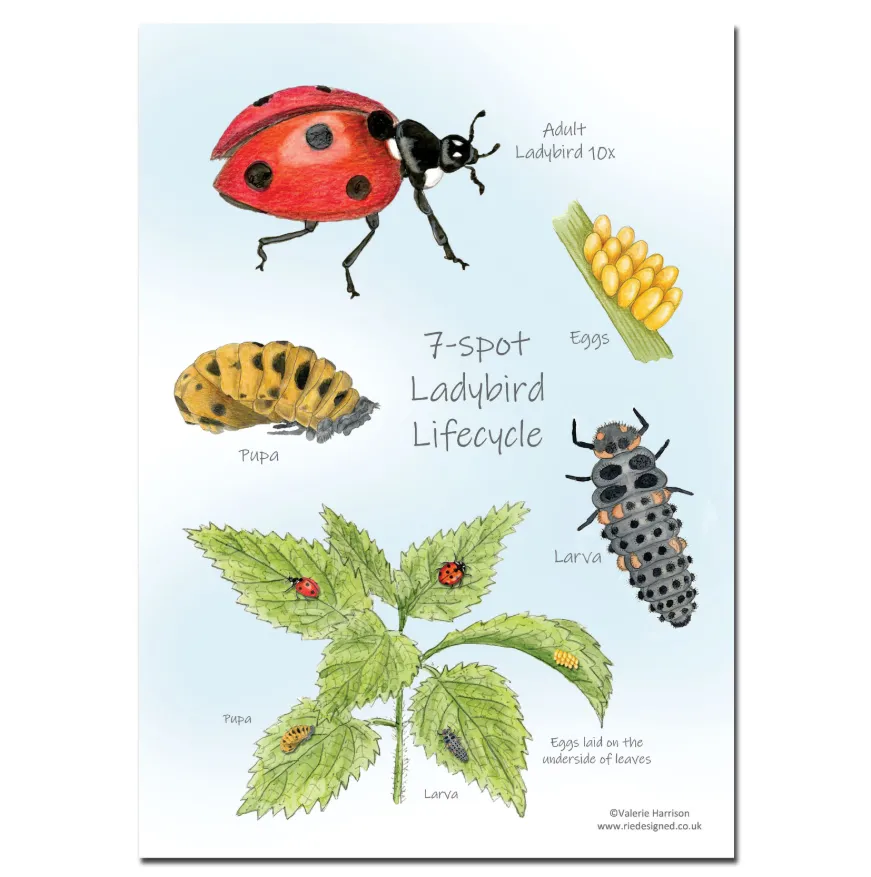
• One famous species is the seven-spot ladybird, scientifically known as Coccinella septempunctata. It was named by Carl Linnaeus in 1758. The species name means “seven-spotted,” referring to the seven black spots on its wing covers.
This naming history shows how science, appearance, and culture have shaped how people identify these helpful beetles.
Their Evolution And Their Origin
The ladybird belongs to the large beetle order Coleoptera, one of the most successful insect groups on Earth. Within this order, ladybirds are placed in the family Coccinellidae. Their evolution is closely linked with their feeding habits, body shape, warning colors, and ability to live in many environments.
Scientific research suggests that the evolutionary history of ladybird beetles is complex. Coccinellidae is a very diverse family, but its classification has been difficult because species differ in diet, shape, habitat, and behavior. Modern studies using both body features and molecular data have helped researchers better understand the relationships among major ladybird groups.
Many ladybirds likely became successful because they adapted to feeding on plant pests. Aphids, scale insects, mealybugs, mites, and other small prey are common on plants, and ladybirds evolved strong hunting behavior to use this food source. Their larvae became fast-feeding predators, while adults gained the ability to fly, search for food, find mates, and spread into new habitats.
Their bright colors also helped their survival. Many adult ladybirds have red, orange, yellow, or black warning patterns. These colors tell predators that they may taste bad or be unpleasant to eat. This natural warning system is called aposematic coloration.
Fossil and molecular evidence suggest that ladybird beetles have ancient roots. Some research places the origin of ladybirds back in the Cretaceous period, although confirmed fossils from that exact period are limited. Eocene fossils have helped scientists study later stages of ladybird evolution and classification.
Over time, ladybirds spread across many regions of the world. Today, they are found in gardens, farms, forests, grasslands, wetlands, orchards, and even urban green spaces. Their origin story is not just about one place. It is a long evolutionary journey shaped by plants, prey insects, predators, climate, and survival.
Important Things That You Need To Know
The life cycle of the ladybird is not only about how a small beetle grows. It is also about how one insect can support a whole natural system. A ladybird is often seen as a symbol of good luck, but in gardens and farms, it is more than a pretty insect. It is a natural pest controller.
The word ladybird is commonly used in the United Kingdom and many other countries. In North America, people often say ladybug, but both names usually refer to insects in the beetle family Coccinellidae. The more scientific common name is lady beetle, because these insects are beetles, not true bugs.
One of the most important things to know is that both adult ladybirds and larvae can eat pests. However, the larval stage is especially valuable because larvae spend much of their time hunting. They may not look like adult ladybirds, but they are powerful predators of aphids and other soft-bodied insects.
Another key point is that not all ladybirds eat the same food. Most are predators, but some species feed on fungi or plant material. This means the family is diverse, and each species has its own role in nature.
To protect ladybirds, lady beetles, ladybugs (Coccinellidae), and aphids in nature, people should avoid unnecessary pesticide use, grow flowering plants, and keep gardens rich in natural shelter.
Their main food and its collection process
The main food of most ladybirds is small, soft-bodied insects. The most common food is aphids. Aphids suck sap from plants and can damage leaves, buds, stems, vegetables, flowers, and crops. Ladybirds help control these pests naturally.
Ladybird larvae and adults use different methods to collect food, but both are active hunters.
• Aphids are the main target
Ladybirds often search plants where aphids gather in colonies. Aphids are slow-moving, soft, and rich in nutrients, so they are ideal food for ladybird larvae and adults.
• Larvae hunt directly on leaves
Ladybird larvae crawl across leaves and stems. They do not fly, so they must search carefully around the plant surface. Their strong appetite makes them very useful in gardens.
• Adults fly to find food
Adult ladybirds can move from one plant to another by flying. This helps them locate aphid colonies across wider areas.
• They also eat other pests
Many species feed on scale insects, whiteflies, mealybugs, mites, thrips, and insect eggs. USDA information notes that many Coccinellidae species are beneficial because they feed on pests such as aphids, scale insects, whiteflies, mealybugs, and mites.
• Adults may use backup foods
When prey is low, some adults feed on pollen, nectar, and honeydew. These foods help them survive until pest numbers increase again.
This food collection process makes the ladybird a natural garden helper. It does not need chemicals to do its work. It simply follows food signals, searches plant surfaces, and eats pests that can harm plant growth.
Their life cycle and ability to survive in nature
Egg Stage
The life cycle of the ladybird starts when the female lays eggs. These eggs are often yellow or orange and are usually clustered on the undersides of leaves. Female ladybirds often choose places near aphid colonies so the larvae can find food quickly after hatching.
This careful egg placement improves survival. If eggs are laid far away from food, young larvae may die before finding prey.
Larva Stage
After hatching, the larva begins feeding. This stage looks very different from the adult. Many larvae are dark, long, slightly spiny, and active. Some people mistake them for harmful insects, but they are actually very helpful.
The larval stage is one of the most important parts of the life cycle of the ladybird. Larvae eat many pests and grow quickly. As they grow, they shed their outer skin several times.
Pupa Stage
When the larva has eaten enough and grown to full size, it attaches itself to a leaf, stem, or another safe surface. Then it becomes a pupa. During this stage, it does not hunt or move much.
Inside the pupal case, the body changes into the adult beetle form. This quiet stage is one of the most dramatic transformations in nature.
Adult Stage
The adult ladybird comes out soft and pale at first. After some time, its body hardens, and its colors become more pronounced. The adult can fly, feed, mate, and lay eggs.
Survival depends on food, weather, shelter, and protection from predators. Many adult ladybirds survive cold seasons by hiding in dry, protected places such as bark, leaf litter, cracks, garden debris, or sheltered buildings. This ability helps them return when warmer weather and food become available again.
Their Reproductive Process and raising their children
The reproductive process of the ladybird is simple but effective. Adult ladybirds mate after they become mature. In temperate regions, breeding often happens in spring and summer when aphids and other prey are available. In tropical regions, breeding may be linked with wetter seasons and food abundance.
• Mating begins when adults are mature
Male and female ladybirds find each other through movement, chemical signals, and suitable feeding areas.
• Females search for safe egg-laying sites
A female usually lays eggs on leaves or stems where prey insects are already present. This gives the young larvae a better chance of survival.
• Eggs are laid in groups
Ladybird eggs are often placed in small clusters. This makes egg laying efficient and helps larvae hatch near the same food source.
• Larvae feed themselves
Ladybirds do not raise their children like birds or mammals. After eggs hatch, the larvae must find food and survive on their own.
• No direct parental care
The mother does not feed the young after hatching. Her main role is to choose a good place for the eggs. This choice is very important because food nearby can decide whether larvae survive.
• Larvae grow through several stages
As larvae eat and grow, they molt. After enough growth, they become pupae and later emerge as adults.
This reproductive strategy works well because ladybirds produce multiple eggs and place them near prey. The young may face danger from weather, predators, and lack of food, but those that survive become strong natural pest controllers.
The importance of them in this Ecosystem
Natural Pest Control
The greatest ecological value of the ladybird is its role in natural pest control. Many ladybirds feed on aphids and other plant-damaging pests. This helps reduce pest pressure in gardens, orchards, farms, and wild plant communities.
Because both adults and larvae can feed on pests, they protect plants at different times in their life cycle. This makes them among the best-known beneficial insects.
Support for Plant Health
When aphid numbers are high, plants can become weak, curled, sticky, and diseased. Aphids may also spread plant viruses. Ladybirds help lower aphid populations, which supports stronger leaves, flowers, fruits, and stems.
Healthier plants also support other insects, birds, and soil life. So the effect of ladybirds spreads beyond one plant.
Reduced Chemical Dependence
Ladybirds help reduce the need for chemical pesticides. When gardeners protect natural predators, pest control becomes more balanced and less harmful to other wildlife.
This is important because strong pesticide use can kill beneficial insects along with pests. A garden with ladybirds, lacewings, bees, butterflies, spiders, and other helpful organisms is more stable.
Food Web Balance
Ladybirds are predators, but they are also prey. Birds, spiders, frogs, wasps, and other animals may eat them. Their warning colors help protect them, but they remain part of the food web.
This means ladybirds connect plants, pest insects, predators, and soil life in a natural cycle.
Biodiversity Value
The family Coccinellidae includes thousands of species. Some live in forests, some in fields, some in wetlands, and some in gardens. This diversity helps ecosystems stay flexible and resilient.
What to do to protect them in nature and save the system for the future
Protecting the ladybird means protecting a small but powerful part of the ecosystem. These beetles need food, shelter, clean habitat, and safe breeding places.
• Avoid unnecessary pesticide use
Chemical sprays can kill ladybirds, their larvae, and their eggs. Use natural pest control first whenever possible.
• Grow flowering plants
Flowers provide pollen and nectar for adult ladybirds when prey is limited. Dill, fennel, coriander, marigold, cosmos, yarrow, and native wildflowers can help attract beneficial insects.
• Do not destroy larvae
Ladybird larvae do not look like adult ladybirds. Learn to identify them so you do not mistake them for pests.
• Leave some natural shelter
Leaf litter, bark, dry plant stems, hedges, and garden edges give ladybirds safe hiding places.
• Protect aphid balance carefully
A small number of aphids can attract ladybirds. Removing every aphid immediately may also remove the food source that brings natural predators.
• Use water sprays before chemical control
For small aphid problems, a gentle water spray can reduce pest populations without harming the entire insect community.
• Plant diverse gardens
A garden with many plant types supports more insects, more food sources, and a more natural balance.
• Avoid collecting wild ladybirds in large numbers
Wild populations should stay in their natural habitats. It is better to create a garden that naturally attracts them.
• Teach children about beneficial insects
Education helps people protect ladybirds rather than kill them out of fear.
When we protect ladybirds, we also protect plants, pollinators, soil organisms, and the wider food web.
Frequently Asked Questions FAQs
Q: What is the life cycle of the ladybird?
A: The life cycle of the ladybird has four stages: egg, larva, pupa, and adult. This process is called complete metamorphosis.
Q: How long does the life cycle of the ladybird take?
A: The full life cycle can vary depending on species, temperature, and food supply. In many common species, development from egg to adult may take several weeks.
Q: Where do ladybirds lay their eggs?
A: Female ladybirds usually lay eggs on the underside of leaves or on plant stems, often near aphid colonies.
Q: What do baby ladybirds look like?
A: Baby ladybirds are called larvae. They do not look like adult ladybirds. They are often dark, long, active, and sometimes spiny.
Q: Do ladybird larvae eat aphids?
A: Yes. Ladybird larvae are strong aphid predators. They also eat other small soft-bodied pests.
Q: Are ladybirds good for gardens?
A: Yes. Ladybirds are very helpful because they naturally reduce aphids, mites, scale insects, and other pests.
Q: Do ladybirds damage plants?
A: Most ladybirds do not damage plants. Most species are beneficial predators, although some species may feed on fungi or plant material.
Q: How can I attract ladybirds naturally?
A: Grow flowering plants, avoid pesticides, leave shelter areas, and keep a diverse garden with natural food sources.
Conclusion
The ladybird’s life cycle is a beautiful example of nature’s design. From tiny eggs to hungry larvae, from quiet pupae to bright adult beetles, every stage has a clear purpose. The larva helps control pests, the pupa transforms the body, and the adult continues the cycle by feeding, flying, mating, and laying eggs.
A ladybird may look small, but its role in nature is large. It protects plants, supports natural pest control, reduces the need for harmful chemicals, and helps maintain a balanced ecosystem. When people understand the value of Coccinellidae, they are more likely to protect these insects rather than harm them.
To save ladybirds for the future, we need safer gardens, fewer pesticides, more flowering plants, and better respect for beneficial insects. Protecting ladybirds is not only good for gardens. It is good for the whole living system around us.
Also Read: life cycle of fungal