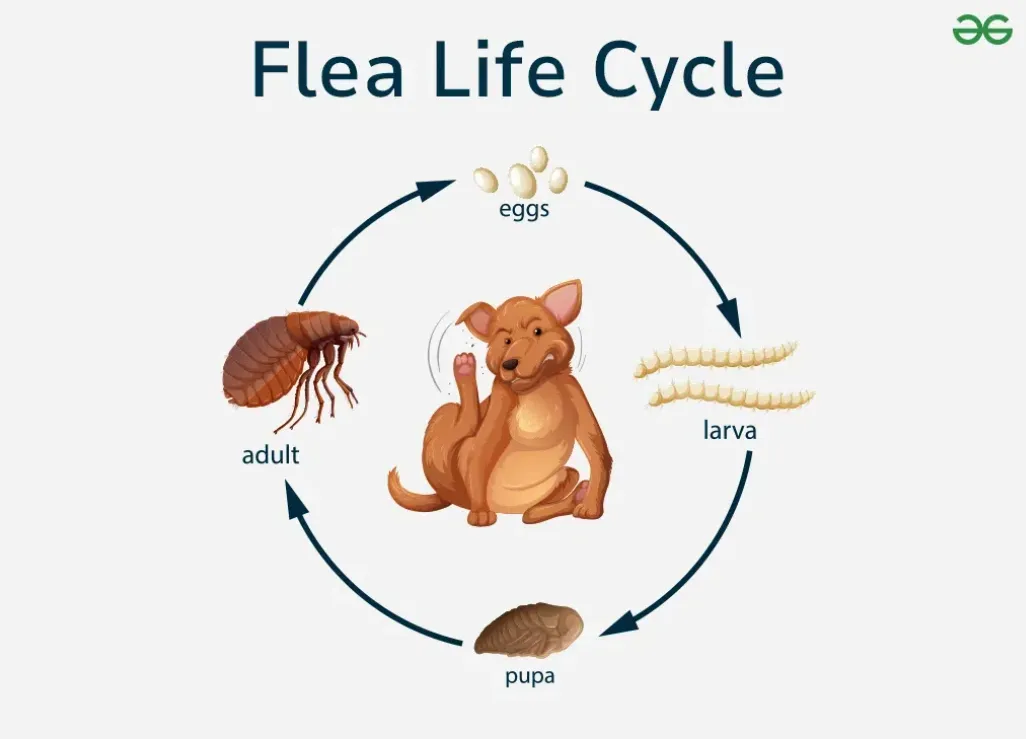
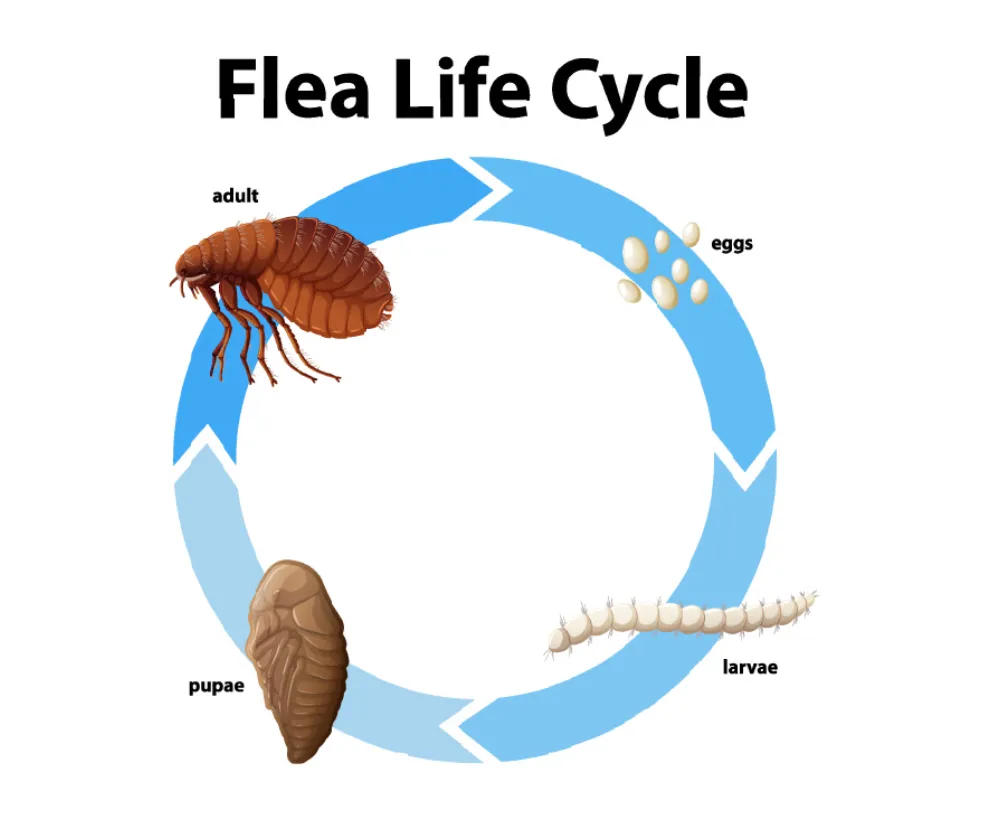
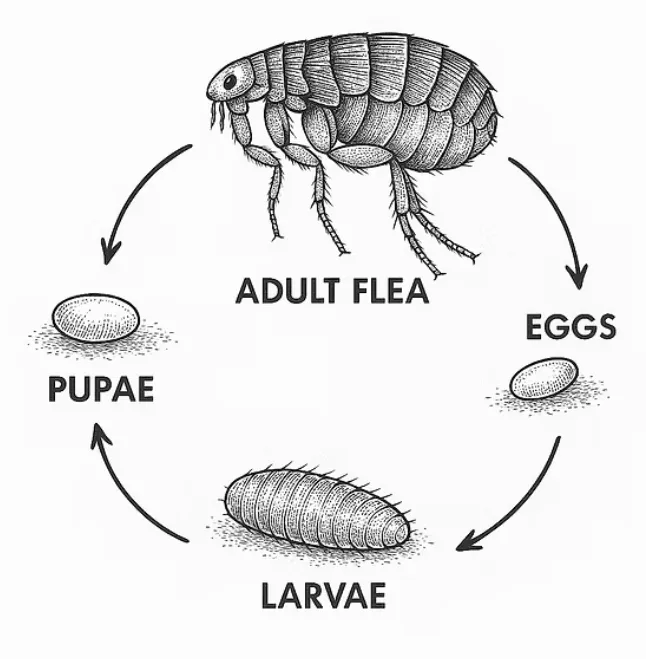
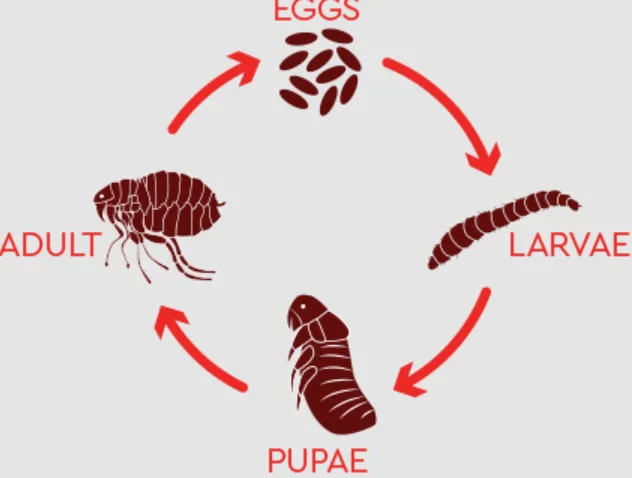
The life cycle of fleas involves complete metamorphosis with four main stages: egg, larva, pupa, and adult. Fleas are tiny, wingless, blood-feeding insects belonging to the order Siphonaptera. They are best known for living on warm-blooded animals such as dogs, cats, rodents, and rabbits, and sometimes on wildlife and sometimes on humans.
A flea problem usually looks simple because people mostly see adult fleas jumping on a pet or biting the skin. However, adult fleas are only one part of the infestation. Many immature fleas may be hidden in carpets, pet bedding, cracks in floors, soil, and shaded resting areas. CDC and extension sources describe the flea life cycle as highly dependent on temperature, humidity, host availability, and environmental conditions. Under favorable conditions, the cycle may finish quickly, but in poor conditions, some stages can remain delayed for months.
Fleas are important to understand because they affect pet comfort, home hygiene, wildlife health, and disease ecology. Knowing their life cycle also explains why getting rid of fleas requires more than killing visible adult fleas.
Q: What are the four stages in the life cycle of fleas?
A: The four stages are egg, larva, pupa, and adult flea.
Q: How long does the flea life cycle take?
A: It may take only a few weeks in warm, humid conditions, but it can stretch for many months when the pupal stage stays dormant.
Q: Why do fleas keep coming back after treatment?
A: Because hidden eggs, larvae, and pupae may survive in carpets, bedding, or floor cracks and later develop into new adult fleas.
Quick Life Cycle Table
| Stage | What Happens | Common Location | Key Point |
| Egg | A female flea lays tiny, white, oval eggs | Pet fur, bedding, carpets, soil | Eggs often fall off the host into the environment |
| Larva | Worm-like larvae hatch and avoid light | Carpet fibers, cracks, and pet sleeping areas | Larvae feed on organic debris and adult flea feces |
| Pupa | Larva forms a cocoon | Hidden protected places | Pupae can wait until vibration, heat, or carbon dioxide signals a host |
| Adult | An adult flea emerges and seeks blood | Dogs, cats, wildlife, humans | Adults bite, feed, mate, and lay eggs |
The History of Their Scientific Naming, Evolution, and Origin
Scientific Name and Classification
Fleas belong to the insect order Siphonaptera. The name comes from Greek roots meaning “tube” and “wingless,” referring to their blood-sucking mouthparts and lack of wings. Common fleas include the cat flea called Ctenocephalides felis, the dog flea called Ctenocephalides canis, and the human flea called Pulex irritans.
Evolutionary Origin
Modern fleas are thought to be related to ancient insect groups, including Mecoptera, commonly known as scorpionflies. Britannica notes that fleas are likely descended from ancestors related to this group, later becoming specialized external parasites of animals.
Adaptation Over Time
Fleas evolved strong hind legs for jumping, flattened bodies for moving through fur, and piercing mouthparts for feeding on blood. These features made them highly successful parasites on mammals and birds.
Why Their Naming Matters
Scientific naming helps separate true fleas from insects commonly called sand fleas, which may refer to different animals depending on the region. This distinction matters for biology, pest control, and medical understanding.
Their Reproductive Process, Giving Birth And Rising Their Children
Fleas Do Not Give Live Birth
Fleas reproduce by laying eggs, not by giving birth to live young. After mating and feeding on blood, a female flea lays small, smooth, white eggs. These eggs are not sticky, so they often fall from the host into bedding, carpets, soil, or resting areas.
Blood Meal and Egg Production
Adult fleas usually need a blood meal before successful reproduction. Once a female flea feeds, she can begin producing eggs. In homes with untreated pets, this can quickly create a large hidden population because eggs spread into the environment.
Egg Placement
Unlike many insects that carefully place eggs on plants or protected surfaces, fleas often lay eggs on the host animal. The eggs then drop off wherever the animal sleeps, walks, or rests. This is why fleas on dogs can lead to fleas in the house.
No Parental Care
Fleas do not raise their young. There is no feeding, guarding, or teaching from adult fleas. The young survive independently. Larvae hatch and feed on organic debris, especially dried blood-rich flea feces left by adult fleas.
Fast Population Growth
This reproductive style allows fleas to multiply rapidly. A few adult fleas on one pet can produce many eggs in the surrounding environment. That is why flea control must target the whole life cycle, not only the adult fleas visible on animals.
Stages of the Life Cycle of Fleas
Stage 1: Egg
The flea life cycle begins when a female flea lays eggs after feeding. Flea eggs are tiny, oval, pale, and difficult to see. They may look like small grains of salt. People who search for what fleas look like often notice adult fleas first, but eggs are usually hidden.
Eggs are commonly laid on pets but fall into carpets, bedding, furniture, soil, kennel areas, and floor cracks. CDC explains that female fleas shed eggs into the environment, where they later hatch into larvae.
Stage 2: Larva
Flea larvae are small, pale, worm-like, and legless. They avoid light and move into dark, protected places. They do not suck blood from animals. Instead, they feed on organic debris, skin particles, and adult flea feces containing dried blood.
This stage is important because larvae are hidden and easy to miss. Vacuuming, washing bedding, and cleaning pet resting areas help reduce larval survival.
Stage 3: Pupa
The larva spins a protective cocoon and becomes a pupa. This is one of the hardest stages to control. The cocoon can collect dust and debris, making it difficult to detect.
Adult fleas may develop inside the cocoon but wait before emerging. Texas A&M AgriLife Extension notes that adult fleas can remain in the cocoon for months and emerge rapidly when stimulated by a passing host.
Stage 4: Adult Flea
The adult flea emerges when it senses signals such as vibration, warmth, pressure, or carbon dioxide. These signs suggest that a host is nearby.
Adult fleas feed on blood, mate, and continue the cycle. This is the stage that bites pets and humans. However, controlling only adult fleas will not solve the problem because eggs, larvae, and pupae may remain in the environment.
Important Things That You Need To Know
Many people use the word ” flea ” for all tiny jumping pests, but not every “flea-like” creature is the same. True fleas are wingless insects in the order Siphonaptera, while sand fleas can mean different organisms depending on location. In some coastal areas, “sand fleas” may refer to small crustaceans or beach hoppers, not true fleas. In other places, it may refer to biting insects or the chigoe flea.
When people ask what fleas look like, the answer is usually: tiny, dark brown, flat from side to side, fast-moving, and excellent at jumping. Adult fleas are commonly seen on pets, but the larger hidden problem is often in the home environment.
For pet owners, fleas on dogs and cats are common because pets provide warmth, movement, and blood meals. If a pet has fleas, the house may also contain eggs, larvae, and pupae.
People searching for how to get rid of fleas should remember that fast control requires a comprehensive plan: treat pets with veterinarian-approved products, wash bedding, vacuum repeatedly, clean resting areas, and manage the environment. Searches like “how to get rid of fleas in the house” and “how to get rid of fleas in the house fast naturally” often focus on home cleaning. Natural steps such as vacuuming, laundering, flea combing, and reducing clutter can help, but heavy infestations often need professional or veterinary guidance.
Their main diet, food sources, and collection process are explained
Adult Fleas Feed on Blood
Adult fleas are blood-feeding parasites. Their main diet is the blood of mammals and birds. Common hosts include dogs, cats, rats, rabbits, squirrels, livestock, wildlife, and humans. Adult fleas use piercing-sucking mouthparts to cut into the skin and take blood.
Larvae Do Not Bite Animals
Flea larvae have a very different diet. They do not live on the host and do not bite. Instead, larvae feed on organic matter, including dead skin, hair particles, and adult flea feces. Adult flea feces contain digested blood, making it an important food source for larval growth.
How Fleas Find Food
Adult fleas detect hosts through movement, warmth, body odor, and carbon dioxide. Once they jump onto a host, they move through fur or hair and begin feeding. Their flattened bodies help them travel between hairs without being easily removed.
Food Sources in Homes
In homes, flea larvae often survive where pets sleep because these areas contain shed skin, hair, flea dirt, and eggs. Carpets, rugs, sofas, cracks in the floor, and bedding can become
breeding grounds for fleas. Diet Matters for Control.
Understanding the flea diet helps explain why cleaning works. Removing flea dirt and organic debris reduces the food available to larvae. Treating pets reduces blood meals for adults. Together, these steps break the life cycle of fleas.
How Long Does A Life Cycle of Fleas Live
The lifespan of a flea depends strongly on species, temperature, humidity, host access, and life stage. A flea is not active in the same way throughout its life because the egg, larva, pupa, and adult stages all behave differently.
- Egg stage: Flea eggs usually hatch within a few days under favorable warm and humid conditions. If the environment is too dry or too cold, survival decreases.
- Larval stage: The larval stage may last around several days to a few weeks. The Merck Veterinary Manual notes that flea larvae commonly last 5–11 days, but this stage can last longer depending on climate and food availability.
- Pupal stage: This stage can be short or very long. In favorable conditions, adult fleas may emerge within one or two weeks. Under less favorable conditions, pupae can wait for months before detecting a host.
- Adult stage on host: Adult fleas can live for weeks or months when they have regular access to blood. Oklahoma State Extension notes that adult fleas may live around 100 days under suitable conditions.
- Adult stage without food: Adult fleas that emerge but cannot find a host may die much sooner. Without blood meals, reproduction cannot continue normally.
- Total life cycle length: The whole flea life cycle may be completed quickly in warm, humid conditions, but CDC notes that the cycle can last many months to years, depending on environmental conditions across the stages.
- Why infestations last: The pupa is the survival stage that makes infestations difficult. Even when adult fleas seem gone, hidden pupae may later emerge.
- Best practical lesson: A flea problem should be managed for several weeks, not just one day, because each stage must be interrupted.
Life Cycle of Fleas Lifespan in the Wild vs. in Captivity
Lifespan in the Wild
In the wild, fleas live on or near wildlife hosts such as rodents, rabbits, birds, foxes, stray cats, and other mammals. Their survival depends on host movement, climate, nesting sites, humidity, and predators.
Wild fleas face many natural pressures. Dry weather can kill eggs and larvae. Host grooming can remove adult fleas. Rain, sunlight, soil conditions, and nest disturbance also affect survival.
Lifespan Indoors or in Controlled Conditions
The phrase “captivity” is not usually used for fleas like it is for zoo animals. For fleas, it means indoor environments such as homes, kennels, laboratories, or pet environments where hosts and shelter are available.
Indoors, fleas may survive better because carpets, bedding, cracks, and furniture provide protection. Pets may also provide regular blood meals. In research or controlled conditions, temperature and humidity can be maintained, allowing development to continue more predictably.
Main Difference
Wild fleas depend on contact with natural hosts and suitable nesting conditions. Indoor fleas often benefit from stable shelter and repeated access to pets. That is why untreated indoor infestations may persist for weeks or months if the entire flea life cycle is not interrupted.
Importance of the Life Cycle of Fleas in this Ecosystem
Part of the Food Web
Fleas may be unpleasant to humans and pets, but they are part of natural ecosystems. Fleas, their larvae, and related small organisms can become food for other small predators, including ants, beetles, spiders, mites, and other invertebrates.
Parasite-Host Balance
Fleas are parasites, and parasites can influence wildlife populations. They may weaken unhealthy animals, affect grooming behavior, and shape host immune responses. In this way, fleas are part of natural host-parasite relationships.
Disease Ecology
Fleas also matter because some species can transmit pathogens. For example, the oriental rat flea has historical importance in plague transmission. NC State Extension notes that fleas can carry disease risks affecting humans and animals, including plague in specific rodent-associated situations.
Nutrient Cycling in Nests
Larval fleas feed on organic debris in animal nests and resting areas. This contributes in a small way to the breakdown of biological material.
Balanced View
Fleas are not pests in every natural setting, but they become a serious concern in homes, kennels, farms, and pet environments. Their ecosystem role should be understood without allowing harmful infestations to spread.
What to do to protect them in nature and save the system for the future
Use Flea Control Responsibly
- Do not overuse chemical treatments without need. Use flea products as directed by your veterinarian and according to the label instructions.
- Responsible use protects pets while reducing unnecessary chemical pressure on the environment.
Protect Wildlife Habitats
- Avoid destroying natural habitats solely because fleas may be present there.
- Healthy ecosystems with birds, insects, reptiles, and small predators help maintain natural balance.
Avoid Unsafe Pesticide Disposal
- Never pour flea chemicals, pet wash water, or pesticide residues into drains, ponds, rivers, or open soil.
- Some flea-control ingredients can affect aquatic life if they enter waterways.
Keep Pets Healthy Without Harming Nature
- Regular grooming, washing bedding, and vacuuming can naturally reduce flea pressure.
- Use targeted treatment rather than unnecessary routine chemical use when the risk is low.
Maintain Clean Human Environments
- Protecting ecosystems does not mean allowing fleas inside homes.
- Keep pet areas clean, seal cracks, manage rodent entry, and treat infestations early to avoid heavy chemical control.
Fun & Interesting Facts About the Life Cycle of Fleas
- Fleas are wingless insects, but they are excellent jumpers.
- Adult fleas are usually the only stage people notice, but eggs, larvae, and pupae often make up most of the hidden infestation.
- Flea larvae do not drink fresh blood from animals. They mainly feed on flea dirt, which is adult flea feces containing digested blood.
- Flea eggs are smooth and often fall off pets onto carpets, bedding, and floors.
- The pupal stage is a major reason fleas return after cleaning or treatment.
- Adult fleas can emerge from cocoons when they sense vibration, heat, or carbon dioxide.
- A home may seem flea-free for a while, then suddenly have fleas when people or pets return after a vacant period.
- Fleas are flattened from side to side, helping them move through fur.
- Cat fleas are one of the most common fleas found on both cats and dogs.
- Fleas are not just a pet issue; they also affect wildlife, livestock, and public health.
Frequently Asked Questions (FAQs)
Q: What is the life cycle of fleas?
A: The life cycle of fleas has four stages: egg, larva, pupa, and adult. Eggs fall into the environment, larvae feed on debris, pupae develop inside cocoons, and adults emerge to feed on blood.
Q: How do I know if my dog has fleas?
A: Signs of fleas on dogs include scratching, biting the skin, hair loss, red bumps, flea dirt, and tiny, fast-moving, dark insects in the fur.
Q: What do fleas look like?
A: Adult fleas are tiny, dark brown, wingless, flat-bodied insects. They move quickly and jump well. Eggs look like tiny pale grains, while larvae look like small pale worms.
Q: How to get rid of fleas in the house?
A: Clean pet bedding, vacuum carpets and furniture, empty the vacuum safely, treat pets with vet-approved products, wash fabrics in hot water when possible, and repeat cleaning because hidden pupae may emerge later.
Q: How to get rid of fleas in the house fast, naturally?
A: Natural support steps include frequent vacuuming, washing bedding, flea combing pets, reducing clutter, steam cleaning where suitable, and keeping pet resting areas clean. Severe infestations may still require veterinary or professional pest control assistance.
Conclusion
The life cycle of fleas is a powerful example of how a tiny insect can survive through smart biological stages. Fleas begin as eggs, grow into larvae, hide as pupae, and finally emerge as adult blood-feeding parasites. This four-stage cycle explains why flea problems can persist even after visible adult fleas have disappeared.
For pet owners and homeowners, the most important lesson is simple: effective control must target the whole environment, not only the animal. Cleaning, vacuuming, washing bedding, responsible pet treatment, and long-term monitoring all work together to break the cycle.
At the same time, fleas play a role in natural ecosystems as parasites, prey, and indicators of disease ecology. The best approach is balanced: protect pets and homes from infestation while using treatments responsibly to reduce harm to the wider environment. Understanding fleas deeply is the first step toward controlling them wisely.
Also Read: life cycle a mosquito