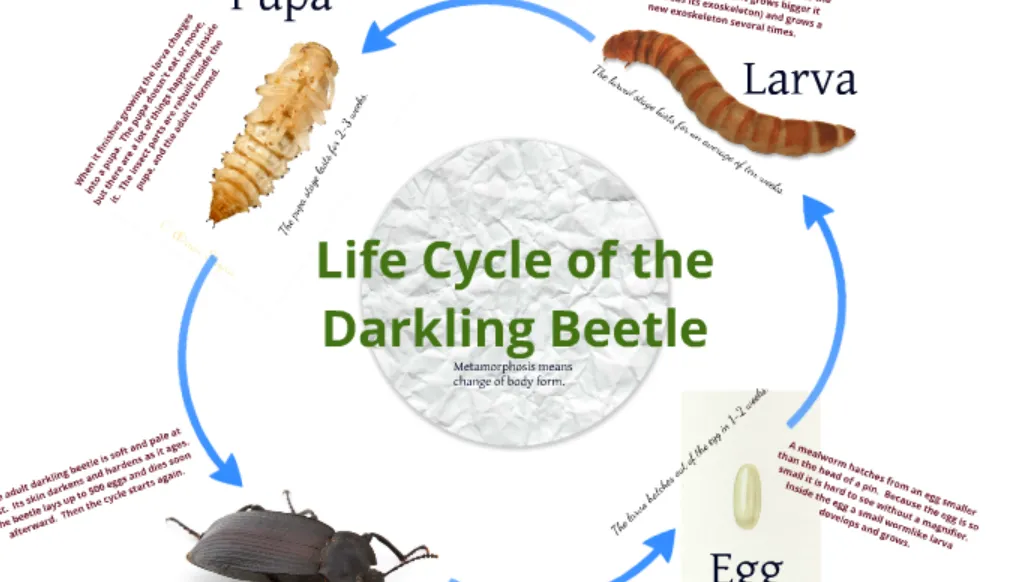
The darkling beetle life cycle is a complete metamorphosis process that includes four main stages: egg, larva, pupa, and adult beetle. Darkling beetles belong to the insect family Tenebrionidae, one of the largest families of beetles, with about 20,000 species worldwide. Many people know them through their larval stage, commonly called mealworms.
Darkling beetles are usually found in soil, leaf litter, decaying wood, bark, fungi, grain stores, poultry litter, barns, gardens, and dry habitats. Their larvae are active crawlers that burrow through the material where they grow. Adults are often dark brown, black, or reddish brown, and many species are more active at night.
The full life cycle length depends on species, temperature, humidity, food quality, water availability, and habitat. Some stored-product species develop faster, while many wild species develop slowly and may live longer as adults.
Q: What are the four stages of the darkling beetle life cycle?
A: The four stages are egg, larva, pupa, and adult.
Q: Are darkling beetle larvae the same as mealworms?
A: Yes. The term mealworm usually refers to the larval stage of certain darkling beetles, especially Tenebrio molitor.
Q: How long does a darkling beetle live?
A: It varies. Common mealworm beetles may live a few months as adults, while some darkling beetle species can live a year or even several years, depending on the species and environment.
Quick Life Cycle Table
| Stage | Mobile-Friendly Quick Facts |
| Egg | Tiny, pale, often hidden in soil, grain, litter, or substrate. Hatching time depends on conditions. |
| Larva | Known as darkling beetle larvae or mealworms. They eat, grow, and molt many times. |
| Pupa | Resting transformation stage. The beetle does not feed while the adult body forms. |
| Adult | Mature beetle mates lay eggs, scavange, hide in dark places, and continue the cycle. |
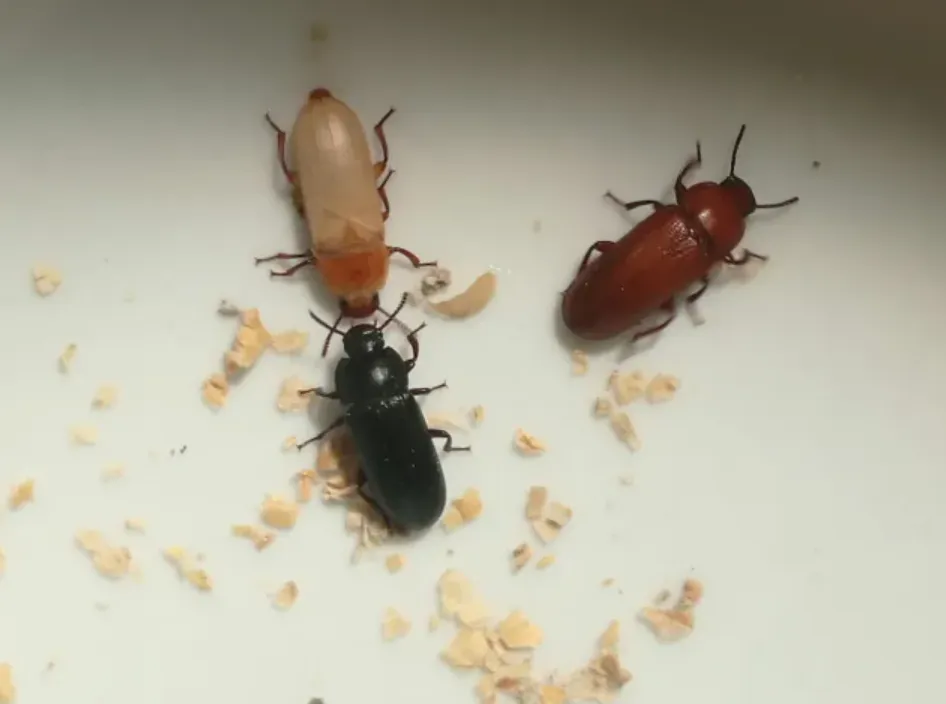
Important Things That You Need To Know
The darkling beetle is not one single insect species. It is a common name for many beetles in the family Tenebrionidae. This is why the darkling beetle’s lifespan, size, diet, and life cycle timing can change from one species to another.
The most familiar type is the mealworm beetle, where the darkling beetle larvae are called mealworms. These larvae are widely used as food for birds, reptiles, amphibians, and fish. They are also used in biology classrooms because their life stages are easy to observe.
Many people also search for darkling beetle bite. In general, darkling beetles are not considered dangerous to humans. Some species do not bite or sting, but they may release a foul-smelling defensive secretion when threatened.
Darkling beetle eggs are usually small, pale, and hidden in soil, grain, bedding, or organic material. Because they are hard to see, people often notice the larvae first.
The darkling beetle size also varies widely. Virginia Cooperative Extension notes that most adult darkling beetles measure about 2–19 mm, while some larger species can reach about an inch.
The History of Their Scientific Naming, Evolution, and Origin
Scientific Naming
Darkling beetles belong to the family Tenebrionidae under the order Coleoptera, which means beetles. The word “darkling” refers to their dark color and their habit of hiding in dark, protected places.
The well-known mealworm beetle is scientifically called Tenebrio molitor. The larvae of this species are commonly called yellow mealworms.
Evolution
Darkling beetles belong to a very successful beetle group. Their hard body, protective wing covers, strong chewing mouthparts, and ability to survive in dry habitats helped them spread across many environments.
Some species are adapted to deserts, while others live in forests, on farms, in grain stores, in poultry houses, and in leaf litter.
Origin
Darkling beetles have a broad global distribution. Their exact origin differs by species. For example, the yellow mealworm is now found globally and has long been associated with stored grain and human food storage systems.
This long association with natural decay, dry habitats, and stored plant material makes them among the most adaptable beetle families.
Their Reproductive Process, Giving Birth, And Rising Their Children
Mating Process
Adult darkling beetles reproduce sexually. After reaching adulthood, males and females mate when conditions are suitable. In commonly reared mealworm beetles, adults may begin mating after about one to two weeks of adult life.
Mating usually happens in hidden areas such as soil, grain, litter, bedding, or decaying organic material.
Egg Laying, Not Giving Birth
Darkling beetles do not give birth to live young. Females lay darkling beetle eggs in a safe material where the larvae will find food after hatching.
These eggs are very small and can be hidden by dust, soil, or substrate. This makes them difficult to see with the naked eye.
No Parental Care
Darkling beetles do not raise their young as mammals or birds do. After laying eggs, the female does not feed, protect, or teach the larvae.
The larvae survive by feeding on available organic matter, grain products, fungi, plant material, or dead insects, depending on the species and habitat.
High Reproductive Capacity
Darkling beetles can reproduce quickly when food, warmth, and shelter are available. In stored food areas or poultry litter, this can lead to large populations.
That is why darkling beetles can be helpful decomposers in nature but troublesome pests in grain storage or poultry facilities.
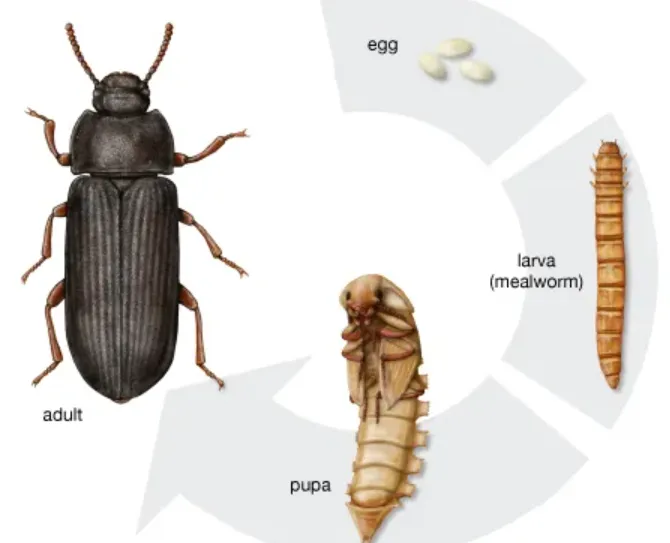
Stages of Darkling Beetle Life Cycle
Egg Stage
The egg stage begins when the female beetle deposits tiny eggs in soil, grain, litter, or another protected substrate. Eggs are usually pale, small, and difficult to notice.
In some species and warm conditions, eggs can hatch within a few days. UC IPM notes that in Blapstinus darkling beetles, eggs may hatch in 3 to 6 days during summer conditions.
Larva Stage
The larva stage is the feeding and growth stage. These larvae are often called mealworms or false wireworms. They are usually long, cylindrical, and brownish or yellowish.
During this stage, the larva eats actively and molts several times. The hard outer skin must be shed because the body grows larger inside it.
Pupa Stage
The pupa stage is the stage of transformation. The larva stops feeding and becomes a pale, soft pupa. It may look inactive, but inside, major body changes are happening.
Legs, wings, antennae, and adult body structures develop during this period. In some species, the pupal stage can last about a week or longer, depending on temperature and conditions.
Adult Stage
The adult darkling beetle emerges after pupation. At first, it may look pale and soft, but its outer body hardens and darkens.
Adults search for food, shelter, and mates. They are often active at night and hide during the day under debris, bark, soil clods, stones, grain, or litter.
Their main diet, food sources, and collection process are explained
Main Diet
The diet of a darkling beetle depends on the species. Many are scavengers, feeding on dead plant material, dead insects, fungi, decaying wood, leaf litter, and organic debris.
Some species also feed on stored grain products such as flour, cereals, rice, beans, crackers, pasta, dry pet food, birdseed, and broken grain.
Food Sources in Nature
In the wild, darkling beetles often collect food from the ground layer of the ecosystem. They may feed under bark, under rocks, in fungi, in leaf litter, or inside decaying wood.
This behavior helps them recycle nutrients back into the soil.
Food Sources in Captivity
In captivity, mealworm beetles are often reared on bran, oats, grain-based bedding, vegetables, potato slices, carrots, or other moisture sources.
Fresh vegetables help provide moisture, as dry grain alone may not provide enough water.
Collection Process
Darkling beetles usually find food through ground movement and smell. Larvae burrow through their food substrate, while adults walk and search in dark areas.
They do not hunt like large predators. Instead, many species collect soft, decaying, or stored organic food that is easy to chew with their mouthparts.
How Long Does A Darkling Beetle Live
The rkling beofariesdarkling beetle varies among. It depends on biology, habitat, food, moisture, temperature, and whether the beetle lives in the wild or captivity.
- Egg stage: Eggs may hatch in a few days to several weeks, depending on species and temperature. In some crop-field species, eggs hatch in 3–6 days, while common mealworm eggs may take around 1–4 weeks.
- Larva stage: The larval stage is usually the longest and most active feeding stage. Mealworm larvae may spend about 8–10 weeks growing under common rearing conditions, but timing can vary greatly.
- Pupa stage: The pupal stage may last about 1–3 weeks in common mealworm beetles. During this time, the insect does not feed.
- Adult stage: Common mealworm beetle adults may live around 1–3 months, but some darkling beetle species may live much longer.
- Wild species: Some wild darkling beetles develop slowly and may live about a year as adults. Virginia Cooperative Extension notes that many species have slow development and may live for a year as adults.
- Long-lived species: Some species can live several years, especially desert-adapted or captive species with stable food and shelter.
- Fast-developing species: Stored-product or warm-condition species may develop faster because food and shelter are constant.
- Temperature effect: Warm conditions usually speed up development, while cold conditions slow it down.
- Food effect: Better food quality helps larvae grow faster and pupate successfully.
- Moisture effect: Too little moisture can slow growth or kill eggs and larvae, while too much moisture can encourage mold and disease.
Darkling Beetle Lifespan in the Wild vs. in Captivity
Lifespan in the Wild
In the wild, the darkling beetle’s lifespan is shaped by predators, weather, food shortages, parasites, disease, and seasonal changes. Birds, reptiles, amphibians, small mammals, and other insect-eating animals may feed on them.
Wild darkling beetles often hide under stones, bark, litter, or soil during the day. This helps them avoid predators and reduce water loss.
Lifespan in Captivity
In captivity, darkling beetles often live longer because they receive stable food, shelter, and protection from predators. Mealworms are commonly raised in containers with grain bedding and moist food.
However, overcrowding, mold, poor ventilation, and dirty substrate can shorten their life.
Key Difference
The wild offers natural freedom but more danger. Captivity offers safety but depends fully on proper care.
This is why some darkling beetles may survive only a short time in harsh wild conditions but live much longer in a controlled setup.
Importance of Darkling Beetle Life Cycle in this Ecosystem
Natural Decomposers
Darkling beetles are important decomposers and scavengers. They help break down dead plant material, fungi, dead insects, and organic waste.
By feeding on these materials, they support nutrient recycling in soil and natural habitats.
Food for Other Animals
Many animals eat darkling beetles and their larvae. Birds, reptiles, amphibians, small mammals, and other insectivores may use them as a food source.
Mealworms are also raised as feeder insects for pet reptiles, amphibians, birds, and fish.
Soil and Habitat Support
Their movement through litter, soil, and decaying material helps mix organic matter. This supports healthier soil structure in many ecosystems.
Balance Between Helpful and Harmful
In nature, darkling beetles are useful. But in grain stores, barns, poultry houses, or crop fields, some species can become pests.
This means their role depends on location. They are helpful in ecosystems but need management when they damage food, crops, or farm structures.
What to do to protect them in nature and save the system for the future
Protect Natural Leaf Litter
- Keep some leaf litter, old wood, and natural ground cover in gardens or wild areas.
- These materials give darkling beetles shelter and food.
- Avoid removing every piece of organic matter from natural spaces.
Reduce Unnecessary Pesticide Use
- Avoid spraying pesticides without a proper reason.
- Many beetles live hidden in soil and litter, so that broad-spectrum spraying can harm beneficial insects.
- Use targeted pest management only when beetles are causing real damage.
Keep Soil Healthy
- Add compost, protect soil moisture, and reduce erosion.
- Healthy soil supports insects, fungi, microbes, and plant roots.
- Darkling beetles are part of this small but important soil community.
Protect Native Habitats
- Save dry grasslands, forests, scrublands, and desert habitats.
- Many darkling beetles are specially adapted to local environments.
- Habitat loss can reduce their populations.
Manage Pest Populations Responsibly
- In homes, grain stores, or poultry houses, focus on sanitation, sealed containers, and removing spilled feed.
- This controls pest outbreaks without destroying natural beetle populations outside.
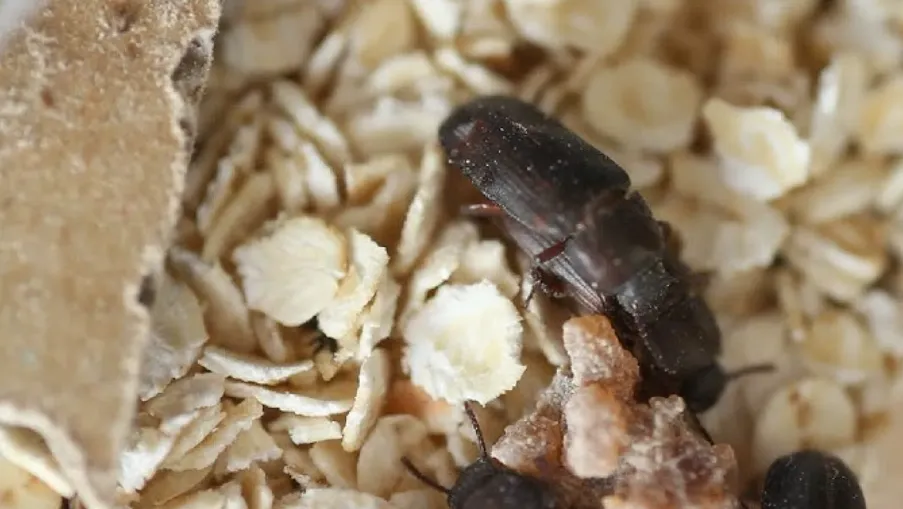
Fun & Interesting Facts About Darkling Beetle Life Cycle
- Darkling beetles go through complete metamorphosis, just like butterflies.
- Their larval stage is commonly known as the mealworm.
- Many adult darkling beetles are active at night and avoid bright light.
- Some species play dead when threatened.
- Some desert darkling beetles can lift their rear end as a defense posture.
- Certain species release a bad-smelling chemical when disturbed.
- The common mealworm beetle is widely used in classrooms to teach insect life cycles.
- Some darkling beetles are stored-product pests and can infest flour, cereal, rice, pasta, and dry pet food.
- Darkling beetle larvae molt many times before pupating.
- Some species are important in scientific research because they are easy to rear and observe.
- Darkling beetles are not usually dangerous to humans, pets, children, or houseplants when found indoors.
- Their family includes thousands of species with a wide range of shapes, sizes, colors, and habitats.
Frequently Asked Questions (FAQs)
Q: What is the darkling beetle’s life cycle?
A: The darkling beetle life cycle has four stages: egg, larva, pupa, and adult. This is called complete metamorphosis.
Q: What are darkling beetle larvae called?
A: Darkling beetle larvae are often called mealworms, especially when referring to species like Tenebrio molitor.
Q: Do darkling beetles bite?
A: Most darkling beetles are not dangerous to humans. Some species do not bite or sting, but they may release a foul smell when threatened.
Q: How big is a darkling beetle?
A: The darkling beetle size varies by species. Many adults are around 2–19 mm, while some larger species may reach about 1 inch.
Q: Where do darkling beetles lay eggs?
A: Darkling beetle eggs are usually laid in soil, grain, litter, bedding, or other hidden substrates where larvae can find food after hatching.
Conclusion
The darkling beetle life cycle is a fascinating example of complete metamorphosis. From tiny darkling beetle eggs to active darkling beetle larvae, quiet pupae, and mature adults, each stage has a clear purpose.
These beetles are more than simple insects hiding in dark places. They are decomposers, food for wildlife, classroom study insects, pet-feed insects, and important parts of soil and litter ecosystems.
At the same time, some species can become pests in stored grain, poultry houses, or young crop fields. Understanding their life cycle helps us respect their ecological value while managing them responsibly when needed.
A balanced approach is best: protect them in nature, support healthy habitats, and use clean storage and sanitation practices where they become a problem.
Also Read: moss life cycle