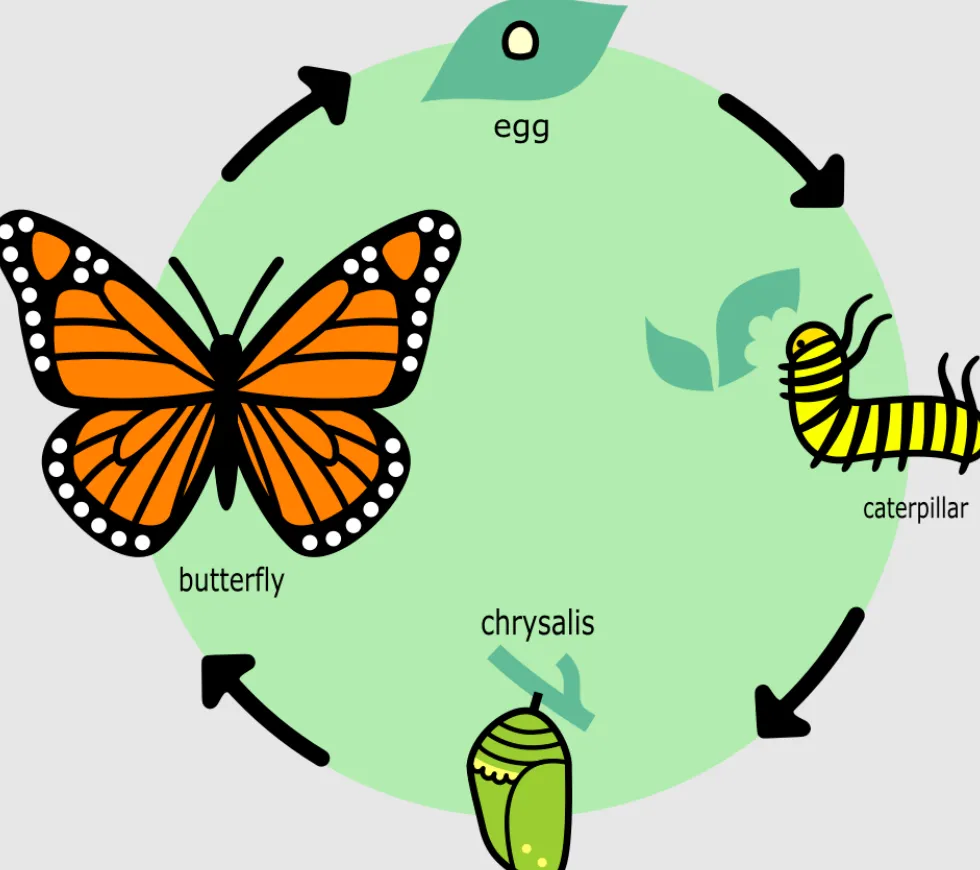
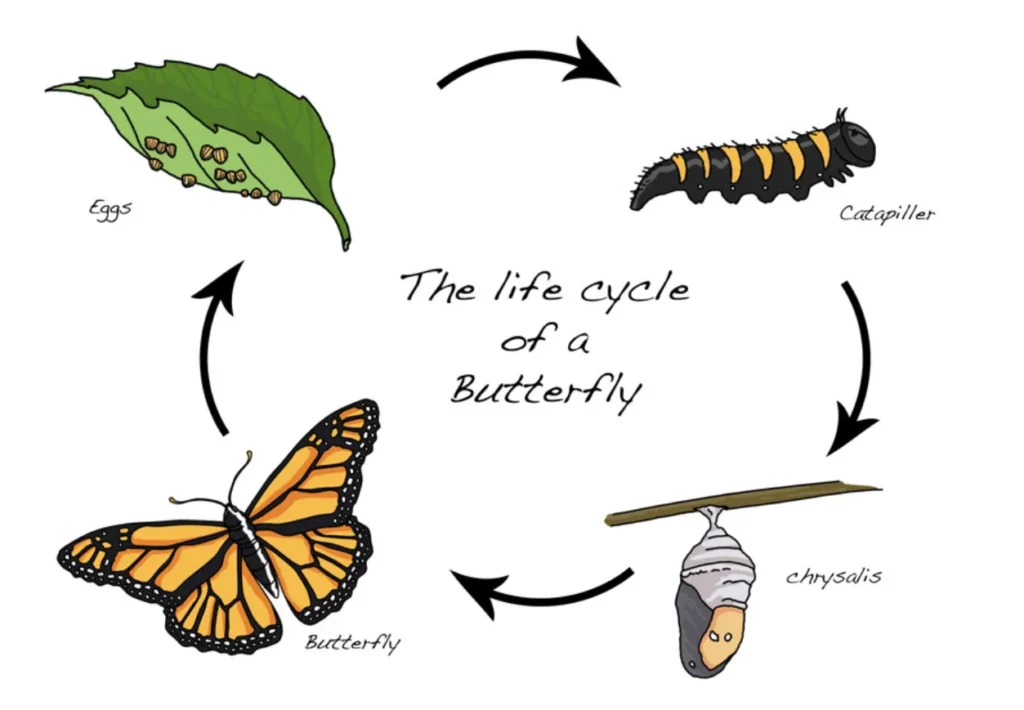
The butterfly life cycle for kids is one of nature’s most fascinating transformations. It shows how a tiny egg turns into a colorful butterfly through four amazing stages. This process, called metamorphosis, is both educational and exciting for children to learn.
Butterflies are not just beautiful insects; they play an important role in nature. From helping plants grow to adding beauty to gardens, butterflies are essential to our ecosystem. Kids especially love watching them flutter around flowers in a butterfly garden or drawing their favorite butterfly drawing.
Quick Answers (Most Common Questions)
1. What are the 4 stages of a butterfly’s life cycle?
Egg → Caterpillar (Larva) → Pupa (Chrysalis) → Adult Butterfly.
2. How long does the butterfly life cycle take?
It usually takes about 3–6 weeks, depending on the species and environment.
3. What do butterflies eat?
Adult butterflies drink nectar from flowers, while caterpillars eat leaves.
Quick Life Cycle Table
| Stage | Name | What Happens | Duration |
| 1 | Egg | A female butterfly lays eggs on leaves | 3–7 days |
| 2 | Larva (Caterpillar) | Eats leaves and grows rapidly | 1–2 weeks |
| 3 | Pupa (Chrysalis) | Transforms inside a protective shell | 1–2 weeks |
| 4 | Adult Butterfly | Emerges, flies, and reproduces | 2–4 weeks |
The History Of Their Scientific Naming
The scientific naming of butterflies has a rich and fascinating history rooted in biology and taxonomy.
- Butterflies belong to the order Lepidoptera, which means “scaly wings” in Greek.
- The name was given because butterfly wings are covered in tiny scales.
- Scientists like Carl Linnaeus played a major role in classifying butterflies in the 18th century.
- Each butterfly species has a unique scientific name using the binomial system (Genus + Species).
- For example, the monarch butterfly is called Danaus plexippus.
- This naming helps scientists identify species worldwide without confusion.
- Over time, new species have been discovered and added to scientific records.
- Modern research uses DNA analysis to refine classification and understand relationships between species.
This system ensures that butterflies are studied, protected, and understood globally.
Their Evolution And Their Origin
Butterflies have existed on Earth for millions of years, evolving alongside flowering plants. Scientists believe butterflies first appeared around 100–150 million years ago, when dinosaurs still roamed the planet.
Early butterflies evolved from moth-like ancestors. Over time, they developed brighter colors and became more active during the day, unlike moths, which are mostly active at night. This change helped butterflies attract mates and avoid predators.
One major factor in their evolution was the rise of flowering plants. Butterflies and plants formed a mutual relationship: butterflies help pollinate flowers, while flowers provide nectar. This co-evolution shaped the diversity of butterfly species we see today.
Different species adapted to various environments, from tropical rainforests to cold mountain regions. For example, the blue butterfly has developed unique wing colors to blend into its surroundings and communicate with other butterflies.
Natural selection also played a role. Butterflies with better camouflage, faster flight, or stronger resistance to predators survived and reproduced. This led to the wide variety of shapes, sizes, and colors we see today.
Today, butterflies continue to evolve as they adapt to climate change and human impact. Understanding their origin helps us protect them and preserve Biodiversity for future generations.
Important Things That You Need To Know
Butterflies are not just pretty insects; they have unique features and roles that make them special.
🌼 Key Facts About Butterflies
- A butterfly has four wings covered in tiny, colorful scales.
- Kids often enjoy making a butterfly drawing to learn about their shapes and patterns.
- The blue butterfly is one of the most popular species due to its bright and shiny wings.
- The bugaboo butterfly is often used in children’s stories and toys to represent fun and imagination.
- A butterfly garden is a special place where flowers are planted to attract butterflies.
Butterflies use their long, tube-like tongue called a proboscis to drink nectar. Their wings are fragile but powerful enough for long-distance travel.
Creating a butterfly-friendly environment at home helps children connect with nature. Planting flowers, avoiding pesticides, and providing water sources can attract these beautiful creatures.
Their Main Food and Its Collection Process
Butterflies and caterpillars have very different diets, and their feeding process is quite interesting.
🥬 Caterpillar Feeding
- Caterpillars mainly eat leaves.
- They prefer specific plants called “host plants.”
- They eat constantly to grow quickly.
- Their strong jaws help them chew leaves efficiently.
🌸 Adult Butterfly Feeding
- Adult butterflies drink nectar from flowers.
- They use a long tube called a proboscis to suck nectar.
- Nectar provides energy for flying and reproduction.
🐝 Food Collection Process
- Butterflies land on flowers and unroll their proboscis.
- They sip nectar while collecting pollen on their bodies.
- As they move from flower to flower, they help in Pollination.
💧 Additional Food Sources
- Some butterflies drink tree sap, fruit juice, or mineral-rich water.
- They may also feed on mud puddles to get essential nutrients.
This feeding process makes butterflies important pollinators, helping plants grow and reproduce.
Their Life Cycle and Ability to Survive in Nature
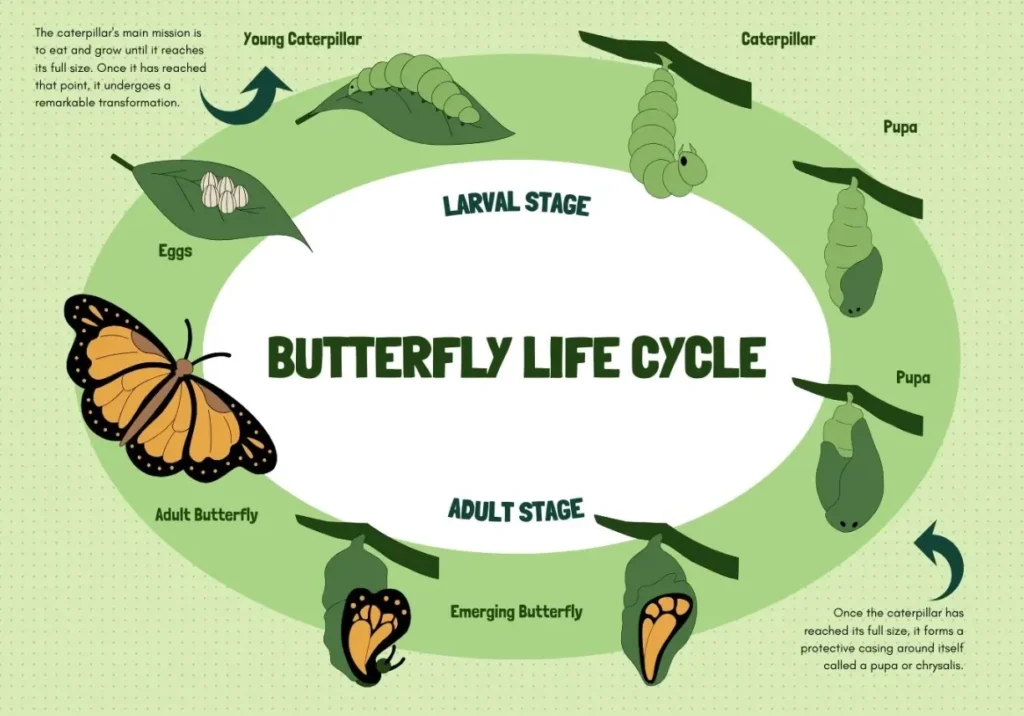
🥚 Egg Stage
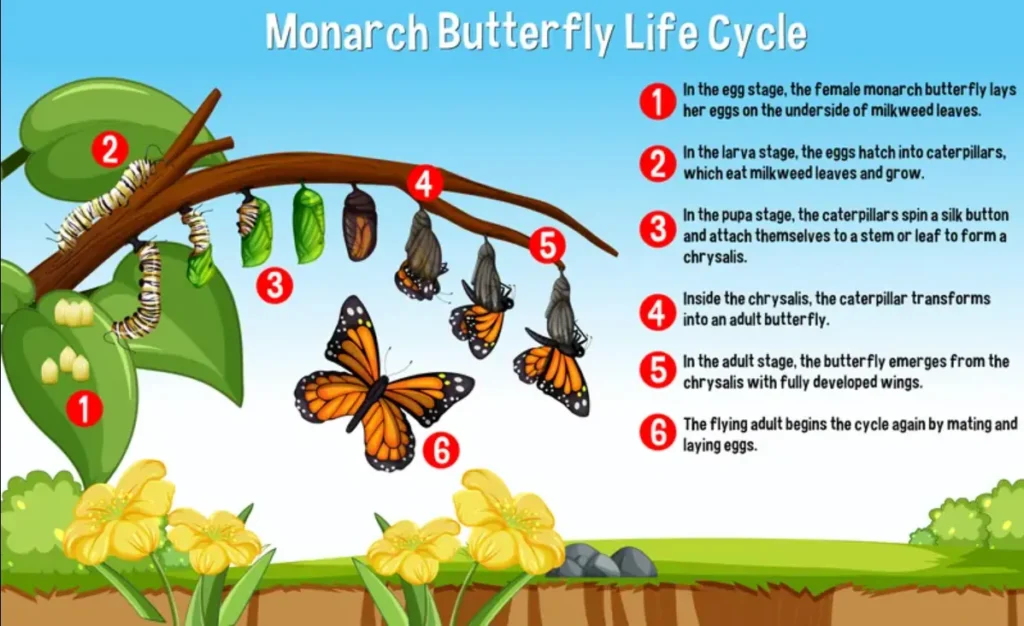
The life cycle begins when a female butterfly lays eggs on leaves.
These eggs are tiny and carefully placed on host plants.
🐛 Caterpillar Stage
Once the egg hatches, a caterpillar emerges.
It eats continuously and grows rapidly, shedding its skin multiple times.
🧊 Pupa Stage
The caterpillar forms a chrysalis.
Inside, it undergoes a complete transformation into a butterfly.
🦋 Adult Stage
The adult butterfly emerges with wings.
It dries its wings, learns to fly, and begins its life cycle again.
🌿 Survival Strategies
- Camouflage helps them avoid predators.
- Bright colors warn predators of toxicity.
- Some butterflies mimic other species to protect themselves.
- Migration helps them survive seasonal changes.
These abilities allow butterflies to survive in different environments.
Their Reproductive Process and Raising Their Children
Butterflies follow a unique reproductive process that ensures the survival of their species.
- Male butterflies attract females using colors and scents.
- After mating, females search for the right Plant to lay eggs.
- Eggs are laid on host plants to ensure food for caterpillars.
- Females can lay hundreds of eggs at once.
🐛 Raising the Young
- Butterflies do not directly care for their young.
- Instead, they choose safe locations for egg-laying.
- Caterpillars are independent from birth.
- They rely on instinct to find food and grow.
🛡️ Protection Strategies
- Eggs are hidden under leaves.
- Some species lay eggs in clusters for protection.
- Toxic chemicals in caterpillars deter predators.
This natural process ensures that at least some offspring survive to adulthood.
Importance of Them in this Ecosystem
🌸 Pollination
Butterflies help pollinate flowers, which is essential for plant reproduction.
🌱 Biodiversity
They support plant diversity and ecosystem balance.
🐦 Food Chain
Butterflies serve as food for birds and other animals.
🌍 Environmental Indicators
Butterflies indicate a healthy environment.
A decline in butterfly population signals ecological problems.
🌼 Gardening Benefits
Butterflies improve the beauty and health of gardens.
What to Do to Protect Them in Nature and Save the System for the Future
- 🌱 Plant native flowers to create butterfly habitats
- 🚫 Avoid using harmful pesticides
- 💧 Provide water sources like shallow dishes
- 🌿 Grow host plants for caterpillars
- 🏡 Create a butterfly garden at home
- 🌍 Support conservation programs
- 📚 Educate children about the importance of butterflies
- 🌳 Protect forests and natural habitats
- 🧪 Reduce pollution and climate change effects
- 🦋 Encourage eco-friendly practices
Frequently Asked Questions (FAQs)
1. Why is the butterfly life cycle important for kids?
It teaches transformation, growth, and nature’s beauty.
2. What is metamorphosis?
It is the process of changing from one form to another.
3. How do butterflies protect themselves?
Through camouflage, bright colors, and mimicry.
4. Can butterflies live in cold weather?
Some migrate, while others hibernate.
5. What is a chrysalis?
It is the protective stage where transformation happens.
6. Do all butterflies look the same?
No, they come in different colors, shapes, and sizes.
7. How can kids help butterflies?
By planting flowers and avoiding chemicals.
8. What is the role of butterflies in nature?
They help pollinate plants and maintain ecosystems.
Conclusion
The butterfly life cycle for kids is a wonderful example of nature’s magic. From a tiny egg to a flying butterfly, each stage is full of learning and excitement. This transformation teaches children about growth, patience, and the beauty of life.
Butterflies are not just insects; they are important pollinators and indicators of a healthy environment. By understanding their life cycle, kids can develop a deeper connection with nature and learn how to protect it.
Creating butterfly-friendly spaces, like a butterfly garden, and encouraging activities like butterfly drawing can make learning fun and interactive. Protecting butterflies today ensures that future generations can enjoy their beauty.
By caring for butterflies, we are also caring for our planet. 🦋
Also Read About: cicada bug life cycle