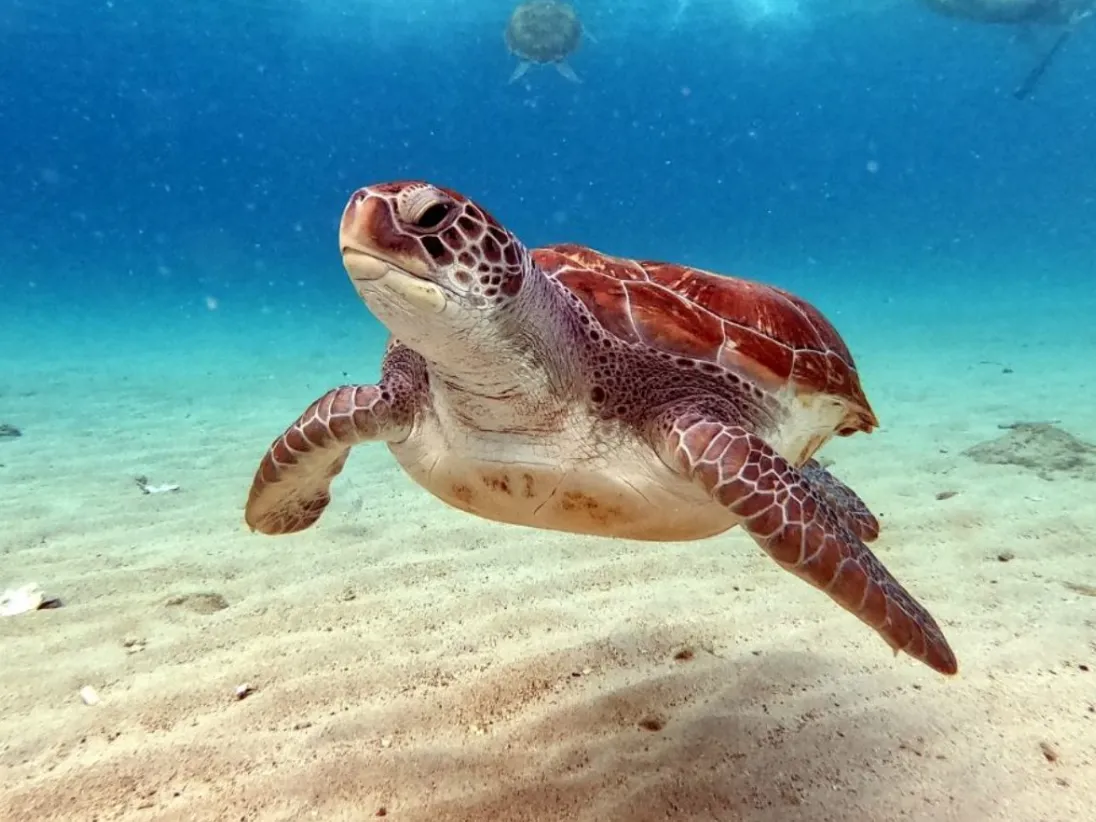
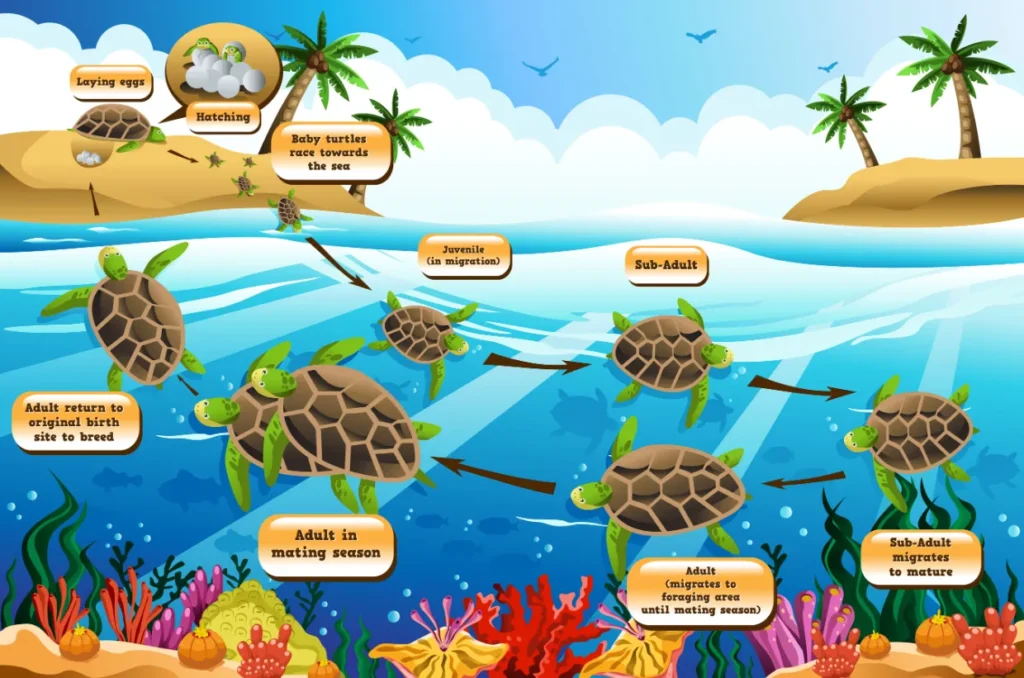
The life cycle of the sea turtle is one of the most amazing journeys in the ocean. A sea turtle begins life as a tiny egg buried in warm beach sand, breaks out as a fragile baby sea turtle, races toward the sea, survives years in open-ocean currents, grows into a juvenile, and finally becomes a mature adult that may migrate hundreds or thousands of miles between feeding grounds and nesting beaches.
Sea turtles are marine reptiles, not fish. They breathe air, have lungs, lay eggs on land, and depend on both healthy oceans and safe sandy beaches. Seven living sea turtle species exist worldwide: green sea turtle, leatherback sea turtle, hawksbill sea turtle, loggerhead sea turtle, olive ridley, Kemp’s ridley, and flatback. Their exact diets, sizes, nesting timing, and ages of maturity vary by species, but most follow a common life cycle: egg, hatchling, juvenile, and adult.
Scientists know that sea turtles are ancient animals. NOAA notes that sea turtles have existed since the dinosaur age, about 110 million years ago, and most species take decades to reach sexual maturity. Hatchling survival is very low, with estimates ranging from about 1 in 1,000 to 1 in 10,000 surviving to adulthood.
Q: What are the main stages in the life cycle of a sea turtle?
A: The main stages are egg, hatchling, juvenile, and adult. Many young turtles also pass through an open-ocean “lost years” stage before moving to coastal feeding areas.
Q: How long does it take a sea turtle egg to hatch?
A: Most sea turtle eggs hatch after about 45 to 65 days, depending on the species, sand temperature, and nest conditions.
Q: Do sea turtles return to the beach where they were born?
A: Adult females usually return to the same general nesting area where they hatched, a behavior called natal homing.
Quick Life Cycle Table
| Stage | Mobile-Friendly Quick Explanation |
| Egg Stage | Female sea turtles dig nests in sand and lay soft-shelled eggs. Incubation often lasts 45–65 days. |
| Hatchling Stage | A baby sea turtle breaks the shell with a temporary egg tooth, climbs out, and heads toward the ocean. |
| Juvenile Stage | Young turtles drift or swim in open-ocean habitats, then later move to coastal feeding areas as they grow. |
| Adult Stage | Mature turtles feed, migrate, mate, and, for females, return to beaches to lay eggs, continuing the life cycle. |
Important Things That You Need To Know
The phrase life cycle of sea turtle includes several species, so details can change depending on which turtle you mean. A green sea turtle is famous for becoming mostly herbivorous as an adult, feeding heavily on seagrass and algae. A leatherback sea turtle is different because it has a flexible, leathery shell and feeds mainly on jellyfish and other soft-bodied prey. A hawksbill sea turtle is closely linked with coral reefs because it eats sponges, while a loggerhead sea turtle has a large head and strong jaws for crushing hard-shelled prey like conchs and whelks.
Search terms like “sea turtle tattoo” are popular because sea turtles often symbolize patience, longevity, protection, and an ocean connection. However, a tattoo’s meaning should not be confused with real turtle biology or conservation.
Another common search is for a leatherback sea turtle bite. Leatherbacks are not animals people should approach, touch, feed, or disturb. NOAA advises keeping distance from sea turtles, not touching or feeding them, and avoiding disturbance of nesting turtles, nests, and hatchlings. This protects both people and turtles.
The most important point is simple: every sea turtle depends on two worlds. It needs the beach for nesting and the ocean for feeding, migration, and survival. Damage to either place can break the life cycle.
The History Of Their Scientific Naming, Evolution, and Their Origin
Scientific Classification And Naming
Sea turtles belong to the order Testudines, the reptile group that includes turtles, tortoises, and terrapins. Most living sea turtles are in the family Cheloniidae, while the leatherback sea turtle belongs to the separate family Dermochelyidae. The green turtle’s scientific name is Chelonia mydas; the loggerhead, Caretta caretta; the hawksbill, Eretmochelys imbricata; and the leatherback, Dermochelys coriacea.
Ancient Evolutionary Origin
Sea turtles are ancient marine reptiles. NOAA describes them as having been around since the dinosaur age, about 110 million years ago. Smithsonian Ocean explains that one early turtle ancestor with sea-turtle-like features, Desmatochelys padillai, lived about 120 million years ago during the Cretaceous period.
How They Adapted To Ocean Life
Over millions of years, sea turtles developed strong front flippers, streamlined shells, salt-handling glands, and navigation abilities. Modern females can migrate across oceans and return to nesting beaches, guided partly by Earth’s magnetic field and possibly by beach-specific cues such as smell.
Their Reproductive Process, Giving Birth And Rising Their Children
Sea turtles lay eggs; they do not give live birth.
Sea turtles do not give birth like mammals. Female sea turtles mate in the water, then crawl onto sandy beaches to lay eggs. During nesting, a female digs a body pit with her front flippers and an egg chamber with her rear flippers. Depending on the species, a clutch may contain 50 to 200 eggs.
Nesting Happens In Repeated Clutches
Many females lay more than one nest in a single season. SWOT reports that females may lay 2 to 7 clutches per season, often one every 7 to 15 days. After laying eggs, the female covers and camouflages the nest with sand before returning to the sea.
No Parental Care After Nesting
Sea turtles do not raise their children. Once the eggs are buried, the mother leaves. The eggs develop in the sand, and hatchlings must climb out, cross the beach, enter the surf, and begin life alone.
Temperature Can Influence Sex
Sea turtle sex is influenced by nest temperature. Warmer nests tend to produce more female hatchlings, while cooler nests tend to produce more males. This makes climate change a serious concern for future population balance.
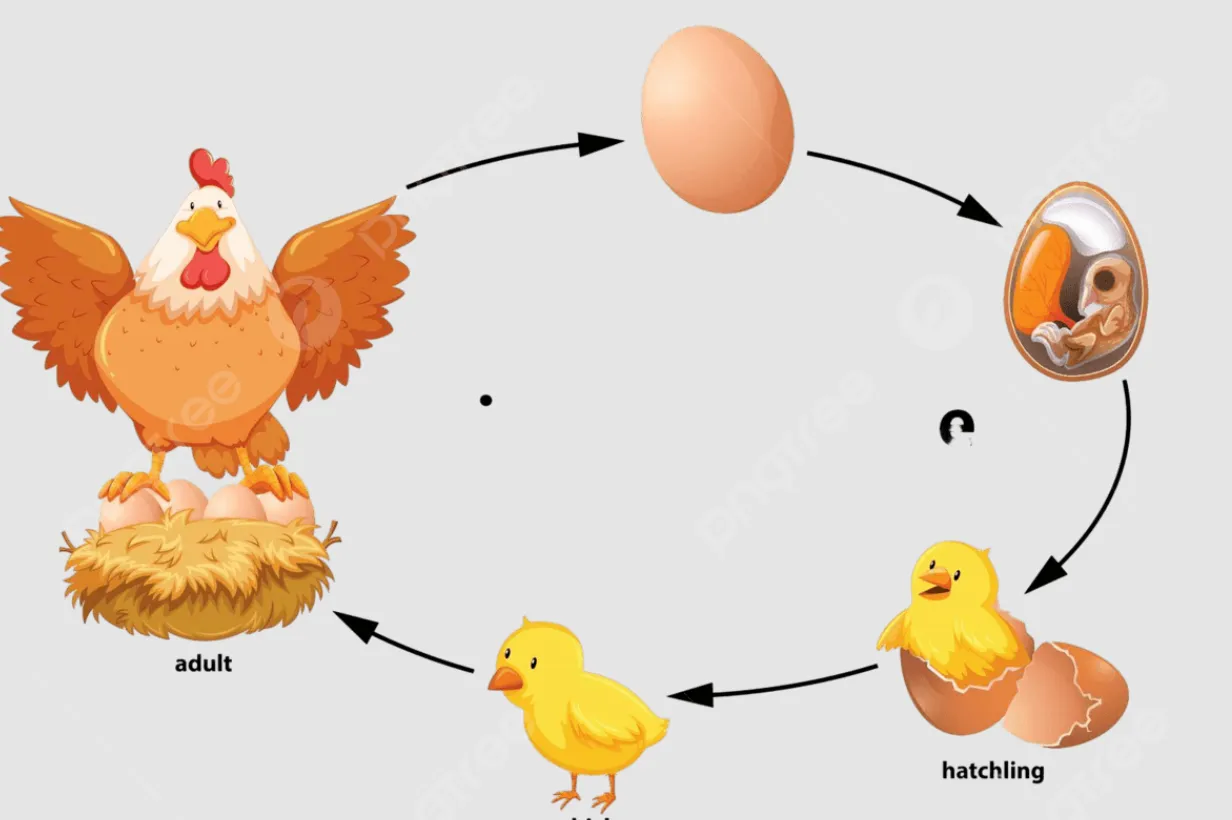
Stages of the Life Cycle of the Sea Turtle
1. Egg Stage
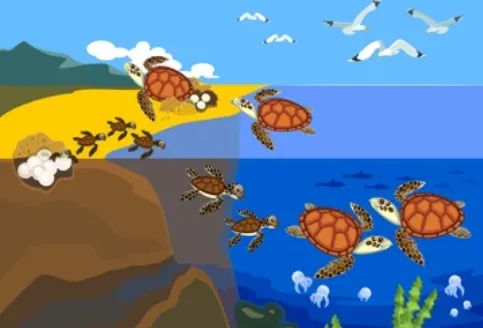
The first stage of the life cycle of a sea turtle begins when a female comes ashore, usually at night, to dig a nest above the high-tide line. She lays soft-shelled eggs, covers them with sand, camouflages the area, and returns to the ocean.
Inside the nest, embryos grow using warmth from the surrounding sand. Incubation commonly lasts 45–65 days, although it can vary by species and temperature. Too much heat, flooding, erosion, predators, or human disturbance can reduce hatching success.
2. Hatchling Stage
When development is complete, hatchlings break their shells using a temporary egg tooth called a caruncle. They move upward together through the sand and usually emerge at night, when cooler temperatures and darkness reduce the risk of predation.
Once on the beach, a baby sea turtle moves toward the brightest natural horizon, which is usually the ocean. Artificial lights from buildings, roads, or beachfront properties can confuse hatchlings and lead them away from the water.
3. Juvenile Stage
After reaching the sea, hatchlings enter a high-energy swimming period sometimes called the “frenzy” stage. Many species then spend years in open-ocean habitats, often associated with floating seaweed or debris fields. This difficult-to-track period is commonly called the lost years.
As they grow larger, many juveniles move from open-ocean habitats into coastal feeding grounds. There, they find richer food sources but also face more predators, fishing gear, boat traffic, and pollution.
4. Adult Stage
Adults continue feeding and building energy reserves until they are ready to reproduce. Many sea turtles take 20 to 30 years or more to mature, and some species can take even longer. Adult turtles may migrate long distances between feeding areas and breeding beaches.
Their Main Diet, Food Sources, And Collection Process Explained
Sea turtle diets vary strongly by species and life stage. This is why the phrase sea turtle diet must be understood carefully.
A green sea turtle is the only sea turtle species that becomes mainly herbivorous as an adult. It grazes on seagrasses and algae, helping keep seagrass beds productive and healthy. Juvenile green turtles are more flexible and may eat both plant and animal material before settling into coastal feeding grounds.
A loggerhead sea turtle is more carnivorous. Its large head and powerful jaws help it crush hard-shelled animals such as whelks, conchs, mollusks, crustaceans, and horseshoe crabs. During the open-ocean juvenile stage, loggerheads may also eat floating prey and sometimes mistakenly consume plastic fragments.
A leatherback sea turtle mainly eats jellyfish and salps. Its flexible body and diving ability enable it to reach deep-feeding areas. NOAA notes that leatherbacks can dive nearly 4,000 feet, deeper than most marine mammals.
A hawksbill sea turtle is strongly connected to coral reefs. It uses its narrow beak to feed on sponges and other reef organisms. NOAA also warns that hawksbill meat can become toxic due to sponge-based diets, making harvest dangerous for humans and harmful to turtle populations.
Sea turtles do not “collect” food in one place like a storage bin. They forage by grazing, biting, crushing, diving, or searching across large feeding areas.
How Long Does A Sea Turtle Live
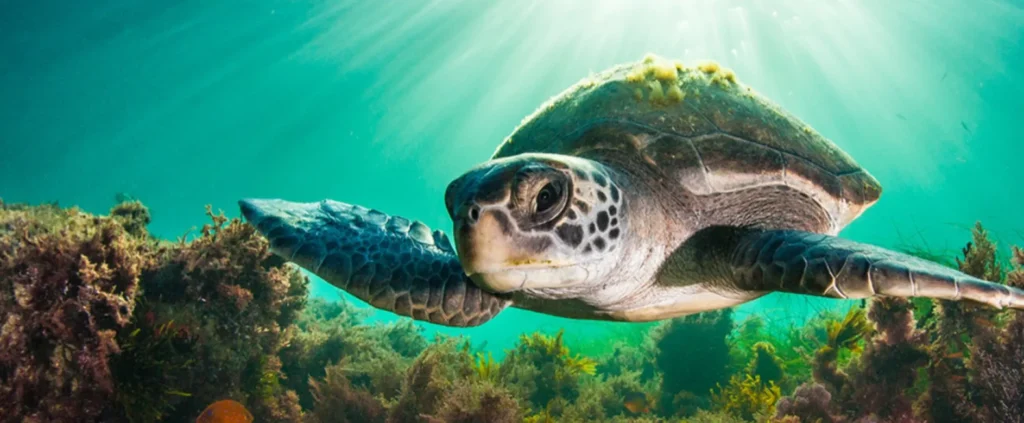
Sea turtles are long-lived animals, but their exact ages are difficult to determine because they spend most of their lives in the ocean and migrate over long distances. Scientists usually estimate lifespan from growth, tagging, nesting records, and long-term monitoring.
WWF states that a sea turtle’s natural lifespan is generally 50 to 100 years, and most marine turtles take 20 to 30 years to mature. NOAA gives species-specific estimates, such as 70 years or more for green turtles and 50 years or more for leatherbacks.
Key lifespan points:
- Most sea turtles live for decades, not just a few years.
- Green sea turtles may live 70 years or more, with females often reaching maturity at 25 to 35 years.
- The leatherback sea turtle‘s lifespan is still uncertain, but NOAA estimates 50 years or more.
- Loggerhead sea turtle young may spend 7 to 15 years in open-ocean habitats, then another decade or more in coastal areas before maturity.
- Hawksbill sea turtle survival is heavily affected by illegal wildlife trade, nesting habitat loss, reef decline, bycatch, and pollution.
- Baby sea turtle survival is extremely low. NOAA reports that only about 1 in 1,000 to 1 in 10,000 hatchlings may survive to adulthood.
- Lifespan does not mean safety. A species can live a long time, but still decline if adults are killed faster than new turtles can mature.
- Late maturity makes recovery slow. If nesting females are lost to fishing gear, poaching, boat strikes, or habitat destruction, it can take decades for populations to rebuild.
- Climate change can indirectly affect lifespan by increasing nest temperatures, flooding nests, altering food availability, and shifting ocean conditions.
Sea Turtle Lifespan in the Wild vs. in Captivity
Lifespan In The Wild
In the wild, sea turtles may live 50 to 100 years, depending on species and survival conditions. Wild turtles face natural predators at the egg and hatchling stages, but adult turtles have fewer natural enemies. Their biggest modern threats are human-related, including bycatch in fishing, plastic pollution, vessel strikes, egg collection, beach development, and climate change.
Lifespan In Captivity
Sea turtles are not ordinary captive pets. Many sea turtles in human care are rescued, injured, sick, or non-releasable individuals in rehabilitation centers and aquariums. Captivity may protect them from predators and fishing gear, but it cannot fully replace ocean migration, natural foraging, or nesting behavior.
Which Is Better For Sea Turtles?
The best place for a healthy sea turtle is the wild. Captivity is useful mainly for rescue, medical treatment, education, and scientific monitoring. Conservation success means protecting wild habitats so turtles can complete their natural life cycle in the ocean and on nesting beaches.
Importance of Sea Turtles in This Ecosystem
They Help Keep Seagrass Beds Healthy
Adult green sea turtles graze on seagrass and algae. This grazing can help maintain healthier seagrass beds, which are important nursery habitats for fish, shellfish, and other marine animals. Healthy seagrass also supports coastal protection and carbon storage.
They Support Coral Reef Balance
Hawksbill sea turtles feed heavily on sponges. By eating sponges, they can help prevent sponge overgrowth on coral reefs, giving corals more space and light to grow. This makes hawksbills especially important in reef ecosystems.
They Influence Jellyfish Populations
Leatherback sea turtles feed mainly on jellyfish and salps. Because jellyfish can bloom in large numbers, leatherbacks are part of the natural system that helps move energy through open-ocean food webs.
They Move Nutrients Between the Ocean and the Beach
When females nest, eggs and eggshells add nutrients to beach ecosystems. Even unhatched eggs can feed beach plants and small animals. In this way, sea turtles connect ocean productivity with coastal habitats.
What To Do To Protect Them In Nature And Save The System For The Future
1. Protect Nesting Beaches
- Keep beaches dark during nesting and hatching season.
- Avoid disturbing nesting females, nests, or hatchlings.
- Fill holes and flatten sandcastles before leaving the beach.
NOAA specifically recommends turning out lights near nesting beaches and leaving nests alone.
2. Reduce Plastic And Marine Debris
- Use reusable bags and bottles.
- Dispose of fishing line safely.
- Never release balloons outdoors.
- Pick up trash before it reaches the ocean.
Sea turtles may mistake plastic bags, balloons, and other floating debris for food.
3. Support Turtle-Safe Fishing
- Encourage the use of turtle excluder devices and safer fishing practices.
- Choose seafood from responsible fisheries.
- Support policies that reduce bycatch.
Bycatch is one of the biggest threats to sea turtles worldwide.
4. Keep Distance From Wild Sea Turtles
- Do not touch, chase, ride, feed, or crowd turtles.
- Slow boats in turtle areas.
- Observe from a respectful distance.
NOAA warns that feeding or touching sea turtles can change their natural behavior and increase harm.
5. Support Conservation And Education
- Volunteer with approved nesting beach programs.
- Report stranded or injured turtles to local authorities.
- Teach others why sea turtles matter.
- Avoid buying tortoiseshell jewelry or illegal wildlife products.
Fun & Interesting Facts About Sea Turtle
- Sea turtles are ancient animals that have existed for about 110 million years.
- The leatherback sea turtle is the largest and can weigh hundreds of pounds; NOAA lists typical adults at 750-1,000 pounds.
- The green sea turtle is named for the color of its fat, not the color of its shell.
- Female sea turtles can return to the same general nesting beach after decades away.
- A baby sea turtle usually heads toward the brightest natural horizon, which should be moonlight and starlight over the ocean.
- The loggerhead sea turtle gets its name from its large head and strong jaws.
- The hawksbill sea turtle has a narrow, bird-like beak that helps it reach food in coral reef cracks.
- Sea turtles cannot pull their entire bodies into their shells like many land turtles.
- Female sea turtles come ashore to nest, but males usually remain at sea after hatching.
- Some leatherbacks migrate more than 10,000 miles a year between nesting and feeding grounds.
Frequently Asked Questions (FAQs)
Q: What is the life cycle of a sea turtle in simple words?
A: The life cycle of a sea turtle starts with eggs in a beach nest. The eggs hatch into baby turtles, the babies enter the ocean, grow as juveniles, mature into adults, and females later return to nesting beaches to lay eggs.
Q: How many eggs does a sea turtle lay?
A: It depends on the species. Many sea turtles lay dozens to more than 100 eggs per nest. SWOT reports a range of about 50 to 200 eggs per clutch, depending on species.
Q: What does a baby sea turtle eat?
A: Many hatchlings and young juveniles eat small floating animals, algae, and organisms found in open-ocean drift habitats such as Sargassum mats. Diet changes as turtles grow and move into new habitats.
Q: Which sea turtle lives the longest?
A: Exact ages are difficult to prove, but sea turtles generally live for decades. Many are estimated to live 50 to 100 years, with green turtles estimated at 70 years or more.
Q: Why are sea turtles important?
A: Sea turtles help maintain seagrass beds, coral reefs, jellyfish balance, beach nutrients, and ocean food webs. They are also important for ecotourism, education, and coastal culture.
Final Word
The life cycle of the sea turtle is a powerful story of survival, migration, and the balance of the ocean. From a hidden egg under warm sand to a long-distance adult traveler, every stage is full of danger and purpose. A single baby sea turtle must survive predators, bright lights, plastic pollution, fishing gear, storms, and a changing climate before it can become an adult.
Protecting sea turtles means protecting beaches, coral reefs, seagrass beds, open oceans, and coastal communities. Species such as the green sea turtle, leatherback sea turtle, hawksbill sea turtle, and loggerhead sea turtle all play different roles, but they share one need: safe habitats where their natural cycle can continue.
When people reduce plastic use, keep beaches dark, respect nesting sites, support responsible fishing, and protect coastal ecosystems, they help one of Earth’s oldest marine reptiles survive for future generations.
Also Read: life cycle of enterobiasis