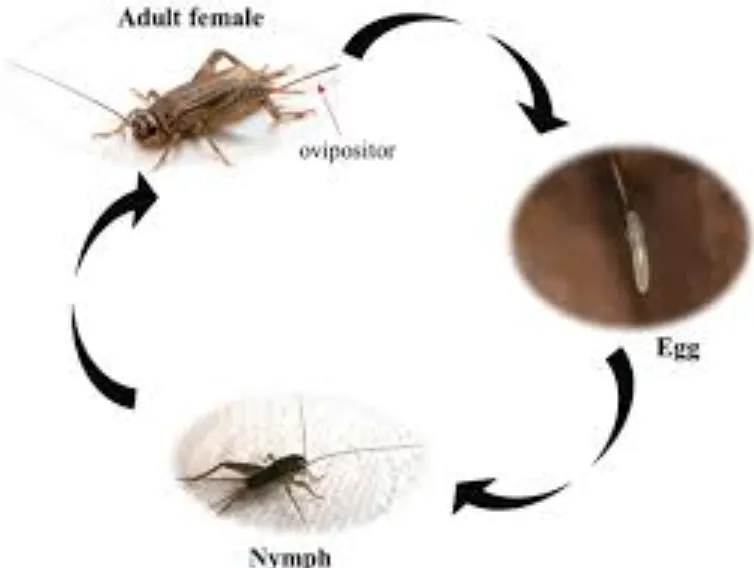
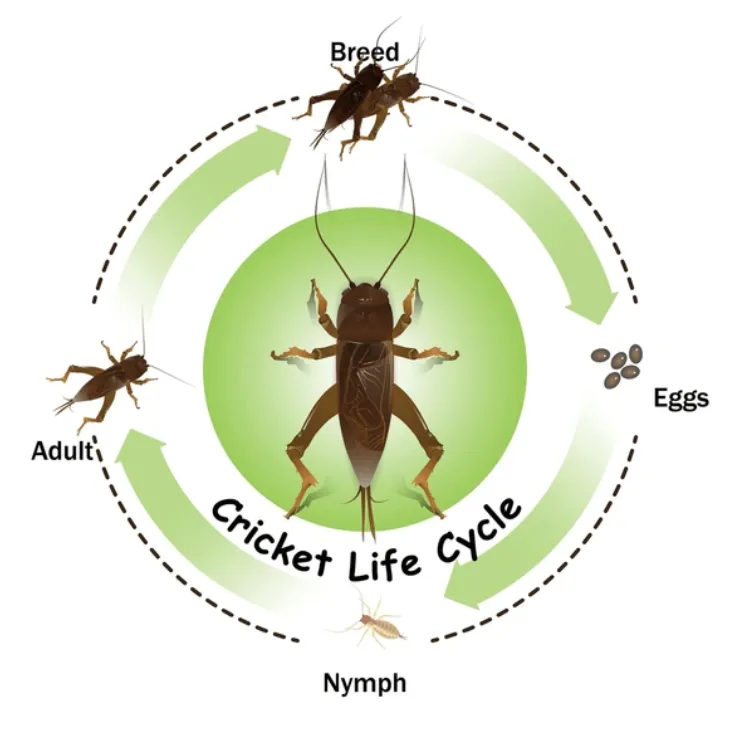
The cricket‘s life cycle is a fascinating example of incomplete metamorphosis, in which the insect passes through three main biological stages: egg, nymph, and adult. Unlike butterflies or beetles, a cricket insect does not pass through a pupal stage. Instead, baby crickets hatch as tiny nymphs that look like smaller, wingless versions of adults.
Crickets belong to the insect order Orthoptera, the same broad group that includes grasshoppers and katydids. True crickets are usually linked with the family Gryllidae or the broader cricket-related group Grylloidea. They are known for long antennae, strong jumping legs, cylindrical bodies, and the familiar cricket insect sound made mainly by males rubbing their forewings together.
Most crickets are active at night and hide during the day under leaves, logs, stones, soil cracks, or human structures. Their life cycle is strongly affected by temperature, humidity, food quality, and habitat safety. In warm conditions, some species, such as the house cricket insect, can complete their life cycle in about two to three months, while many field crickets follow a more seasonal pattern. Crickets develop through egg, nymph, and adult stages, with nymphs resembling adults but lacking mature wings and reproductive organs.
Q: What are the main stages in the life cycle of the cricket insect?
A: The main stages are egg, nymph, and adult. For easier learning, the nymph period can be divided into early and late nymphs, yielding four practical growth phases.
Q: How long does a cricket insect live?
A: Many common crickets live around two to three months, but the exact lifespan changes with species, temperature, food, moisture, and predator pressure.
Q: Why do cricket insects chirp?
A: The famous cricket insect sound is mostly produced by males to attract females and communicate with other males.
Quick Life Cycle Table
| Stage | What Happens | Key Feature | Time Range |
| Egg | Females lay eggs in soil, plant tissue, or moist material | Hidden and protected | Days to months |
| Early Nymph | Tiny cricket hatches and starts feeding | Wingless, very small | First few weeks |
| Late Nymph | Repeated molting and body growth | Wing pads appear | Several weeks |
| Adult | Wings and reproductive organs mature | Mating and egg-laying | Often 6–8 weeks in adults |
The History Of Their Scientific Naming, Evolution, and Their Origin
Scientific Naming and Classification
The cricket insect is commonly placed in the order Orthoptera, a group known for jumping legs, chewing mouthparts, and sound-producing behavior in many species. True crickets are often associated with the family Gryllidae, although modern classification also uses broader groups such as Grylloidea.
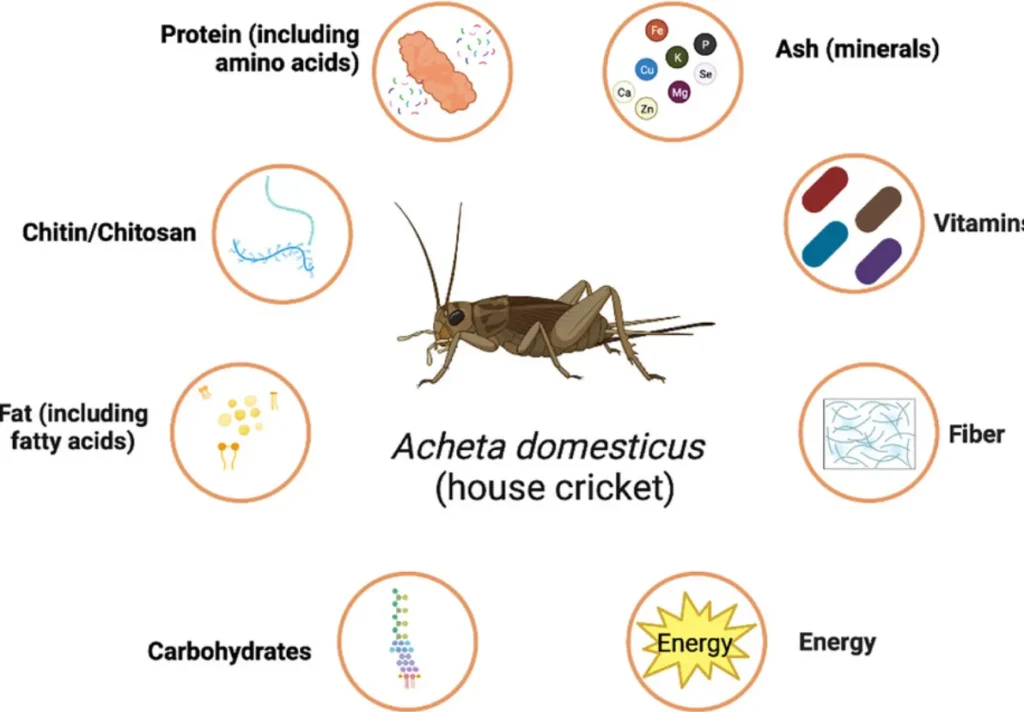
The well-known house cricket is scientifically known as Acheta domesticus. The name is widely used in research, farming, pet-feed production, and biology education.
Evolutionary Background
Crickets are ancient insects. Their relatives evolved long before many modern animals appeared. Fossil and classification records show that orthopteran insects have a long evolutionary history, and cricket-like insects became adapted to ground living, nighttime activity, plant feeding, scavenging, and sound communication.
Their long antennae helped them survive in dark or hidden spaces. Their powerful hind legs helped them escape predators quickly.
Origin and Spread
Crickets are found across many regions of the world. They live in grasslands, forests, farms, gardens, houses, caves, and leaf litter. The house cricket became especially successful because it can survive near humans, in warm buildings, in food waste, in stored materials, and in sheltered spaces.
Important Things That You Need To Know
Before studying the cricket’s life cycle, it is helpful to understand several related terms. The phrase cricket insect usually refers to small jumping insects with long antennae and strong back legs. They are not the same as the sport cricket; they are living insects that play important roles in nature.
The term’ insect cricket‘ is sometimes searched by people who want to confirm whether crickets are truly insects. Yes, crickets are insects because they have six legs, three main body parts, antennae, and an external skeleton.
The phrase cricket insect sound refers to the chirping noise made mostly by male crickets. This sound is created through stridulation, where one wing rubs against the other. The mouth does not make it. The sound can attract females, mark territory, and signal species identity.
Searches for cricket insect images and cricket insect close-ups are popular because crickets have interesting body features: long antennae, compound eyes, wing covers, spiny legs, and a female egg-laying organ called an ovipositor. A close-up image also shows that many crickets are brown, black, yellowish, or greenish, depending on species and habitat.
The house cricket is one of the most familiar species because it often enters warm indoor places. It may live in kitchens, basements, garages, animal-feed areas, bakeries, or other warm shelters.
Their Reproductive Process, Giving Birth And Rising Their Children
Mating Begins with Sound and Contact
The reproductive process of a cricket insect usually begins when an adult male produces a calling song. This cricket insect sound helps females locate males of the same species. Male crickets produce sound by rubbing specialized parts of their forewings together.
After a female approaches, courtship may continue with softer sounds, body movement, and antennal contact. In many species, females choose males based on the quality of their calls, body condition, or territory.
Egg-Laying Instead of Live Birth
Crickets do not give birth to live young. They reproduce by laying eggs. The female uses a long, narrow structure called an ovipositor to place eggs into soil, plant stems, cracks, or moist organic material.
This helps protect the eggs from drying out, predators, and sudden environmental changes.
No Parental Care in Most Species
Most cricket species do not raise their young after hatching. Once the eggs are laid, the nymphs must survive by themselves. They immediately begin searching for soft plant material, organic matter, fungi, or tiny food particles.
However, a few unusual cricket species show limited parental care. In common field and house crickets, the normal pattern is simple: mate, lay eggs, hatch, grow, and reproduce.
Reproductive Success Depends on Habitat
Warmth, moisture, and food availability strongly affect reproduction. If the soil is too dry, eggs may fail. If the habitat has too many predators, fewer nymphs survive. In protected environments, survival is usually higher.
Stages of the Life Cycle of the Cricket Insect
Although some people list four stages, the scientific life cycle of the cricket insect has three true biological stages: egg, nymph, and adult. To make the growth process easier to understand, the nymph stage can be divided into early and late nymph stages. That gives four practical learning stages.
Egg Stage
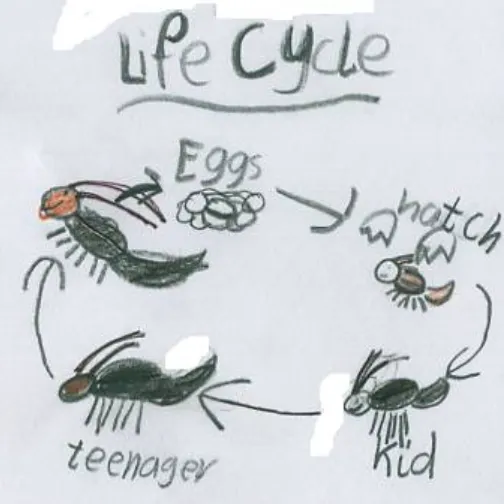
The egg is the first stage of the cricket insect life cycle. Female crickets usually place eggs in moist soil, plant stems, organic matter, or safe cracks. The egg stage is delicate because temperature and moisture decide whether the embryo develops properly.
Eggs are small, pale, and difficult to see without close observation. In warm conditions, eggs may hatch faster. In colder climates, some cricket eggs remain in the soil through winter and hatch when conditions improve.
Early Nymph Stage
After hatching, the young cricket is called a nymph. Early nymphs are tiny, soft-bodied, and wingless. They look like miniature adults but cannot reproduce.
At this stage, survival is risky. Ants, spiders, birds, frogs, lizards, and larger insects can eat early nymphs. They must hide often and feed on small, soft food sources.
Late Nymph Stage
As the nymph grows, it sheds its outer skin several times. This process is called molting. Each molt allows the cricket to become larger and more adult-like.
Late nymphs develop visible wing pads and stronger legs. They also become better at jumping, hiding, and finding food. Depending on the species, nymphs may molt around 6 to 12 times before adulthood.
Adult Stage
The adult stage begins after the final molt. Adult crickets have mature reproductive organs, and many have fully developed wings. Males begin producing sound, and females become capable of laying eggs.
This stage focuses mainly on mating and reproduction. Adult crickets usually live for several weeks, though survival varies by species and environment.
Their Main Diet, Food Sources, and Collection Process Explained
Crickets are generally omnivorous, which means they can eat both plant-based and animal-based materials. Their diet changes depending on species, age, habitat, and available food.
Many crickets eat leaves, grass, seeds, fruit, flowers, fungi, decaying plant material, and small organic particles. Some also eat tiny insects, insect eggs, dead animals, or weak invertebrates. BioKIDS notes that many crickets eat fruit, nectar, seeds, small insects, leaves, and even dead animal matter.
Their food collection process is simple but effective. A cricket uses its long antennae to sense its surroundings. These antennae help detect smell, touch, vibration, and nearby objects.
Once it finds food, the cricket uses its chewing mouthparts to bite and grind the material. Unlike butterflies, crickets do not sip nectar with a long tube. They chew solid food.
At night, crickets leave hiding places to search for food. This reduces their risk from daytime predators. In homes, the house cricket insect may feed on crumbs, pet food, fabric, paper, stored food particles, and organic debris.
In nature, crickets help break down plant waste. By feeding on decaying matter, they support nutrient cycling and soil health.
How long does the life cycle of a cricket last
The lifespan of a cricket depends on the species and the environment. There is no single lifespan for all crickets, but common species often live from several weeks to a few months.
Key points include:
- House crickets often complete their full life cycle in about two to three months under warm conditions.
- Adult crickets commonly live around 6 to 8 weeks, although some may live shorter or longer depending on temperature, diet, moisture, and stress. Britannica notes that adult crickets ordinarily live about 6 to 8 weeks.
- In a laboratory study, Acheta domesticus had a short lifespan of about 120 days at 30°C, demonstrating that controlled warm conditions can shape development and longevity.
- Temperature is one of the strongest factors. Warmer temperatures often speed up growth and reproduction, but they may also shorten adult lifespan.
- Cooler conditions may slow development. In some seasonal species, eggs remain dormant during winter and hatch in spring.
- Food quality matters. Crickets with steady access to balanced food usually grow faster and survive better.
- Moisture is also important. Eggs and nymphs can dry out if the habitat is too dry.
- Predators greatly reduce wild lifespan. Birds, spiders, frogs, lizards, rodents, and other insects feed on crickets.
- Captive crickets may survive longer if they receive safe shelter, proper temperature, enough moisture, and clean food.
- Overcrowding can reduce lifespan. When too many crickets are kept together, stress, fighting, disease, and cannibalism may increase.
In simple words, a cricket may live only a few weeks in harsh outdoor conditions, but under safe and warm conditions, it may complete a longer and more stable life cycle.
Life Cycle of Cricket Insect Lifespan in the Wild vs. in Captivity
Lifespan in the Wild
In the wild, crickets face many challenges. Predators, weather, drought, flooding, disease, and food shortages can shorten their lives. Many eggs and nymphs never reach adulthood.
Wild field crickets often follow seasonal timing. In some regions, eggs overwinter in soil, nymphs hatch in spring or early summer, and adults mate later in the season. Field crickets may develop into adults within about 90 days in some seasonal patterns.
Lifespan in Captivity
In captivity, crickets may live under more controlled conditions. They are protected from most predators and may receive regular food and moisture.
However, captivity is not always safer. Poor ventilation, dirty containers, overcrowding, mold, or lack of water can quickly kill crickets.
Main Difference
The biggest difference is control. In nature, crickets depend on the weather and the balance of their ecosystem. In captivity, survival depends on human care, hygiene, temperature, space, and diet.
Importance of the Life Cycle of the Cricket Insect in this Ecosystem
Food Source for Many Animals
Crickets are an important food source for birds, frogs, reptiles, spiders, fish, small mammals, and predatory insects. Their eggs, nymphs, and adults all support different parts of the food web.
Without insects like crickets, many insect-eating animals would lose an important seasonal food supply.
Natural Decomposers
Crickets help break down plant waste and organic matter. This supports nutrient cycling in soil. Decomposers are important because they return nutrients to the environment, making them available to plants again.
Soil and Habitat Support
By moving through leaf litter, soil cracks, and ground cover, crickets contribute to small-scale soil movement. Their feeding and waste also add organic material back into the ground.
Ecological Indicator
A healthy cricket population can suggest that a habitat has enough ground cover, moisture, food, and shelter. A sudden decline may indicate pesticide pressure, habitat loss, or environmental imbalance.
Cultural and Scientific Value
Crickets are also useful in science education, animal behavior research, sound research, and discussions of sustainable protein production. Their simple life cycle makes them easy to observe and study.
What to Do to Protect Them in Nature and Save the System for the Future
Protect Natural Ground Cover
- Keep leaf litter, grass patches, logs, and small stones in suitable garden or natural areas.
- These provide shelter for eggs, nymphs, and adult crickets.
- Avoid making every outdoor space completely bare or overly clean.
Reduce Unnecessary Pesticide Use
- Avoid broad-spectrum insecticides when they are not needed.
- Pesticides can kill crickets along with harmful pests.
- Use targeted pest control only when there is real damage or risk.
Maintain Moist Microhabitats
- Crickets need safe moisture, especially during egg and nymph stages.
- Protect soil, compost areas, and shaded plant beds from extreme dryness.
- Avoid destroying all natural damp corners in gardens.
Support Native Plants
- Native plants provide food, shelter, and balanced insect communities.
- A mixed garden with grasses, shrubs, and flowering plants supports more wildlife.
- More plant diversity means better habitat for crickets and their predators.
Protect the Food Web
- Do not remove every insect from the ecosystem.
- Crickets feed birds, frogs, reptiles, and spiders.
- Saving crickets also helps protect the animals that depend on them.
Fun & Interesting Facts About the Life Cycle of the Cricket Insect
- Male crickets usually make the famous chirping sound; females are mostly silent.
- A cricket’s ears are not on its head. Many crickets hear through special structures on their front legs.
- Crickets do not have a pupal stage, so their life cycle is different from that of butterflies.
- Newly hatched nymphs look like tiny adults, but they have no mature wings.
- Crickets molt several times before becoming adults.
- The cricket insect sound can change with temperature, species, and mating behavior.
- Some crickets live in houses, while others live in fields, forests, caves, trees, or underground.
- A female cricket uses an ovipositor to place eggs into soil or plant material.
- Cricket insect close-up photos often show long antennae, strong jumping legs, and intricate wing patterns.
- Crickets are eaten by many animals, making them a key part of natural food webs.
- Some people raise crickets as feeder insects for reptiles, amphibians, birds, and fish.
- In several cultures, crickets are considered symbols of luck, music, patience, or seasonal change.
Frequently Asked Questions (FAQs)
Q: What is the life cycle of a cricket?
A: The life cycle of the cricket insect includes egg, nymph, and adult stages. The nymph stage can be divided into early and late nymph phases for easier understanding.
Q: Does a cricket insect have four life stages?
A: Scientifically, no. A cricket has three true stages because it goes through incomplete metamorphosis. However, many guides explain four practical phases: egg, early nymph, late nymph, and adult.
Q: How long does a house cricket insect live?
A: A house cricket insect often lives around two to three months in warm conditions, though adults commonly survive several weeks after maturity.
Q: What causes the cricket insect sound at night?
A: The cricket insect sound is usually made by male crickets rubbing their forewings together. This sound helps attract females and communicate with other males.
Q: What do cricket insects eat?
A: Crickets eat many foods, including leaves, seeds, fruit, fungi, decaying plants, small insects, and organic waste. They are generally omnivores.
Conclusion
The cricket‘s life cycle is simple, efficient, and important to nature. Crickets begin as eggs, hatch into active nymphs, grow through repeated molts, and finally become adults capable of mating and producing the next generation. Although they lack a pupal stage, their gradual transformation demonstrates how well they are adapted for survival.
Crickets are more than noisy insects. They are food for many animals, natural recyclers of organic matter, and useful indicators of habitat health. Their chirping, jumping, feeding, and breeding all connect them to the wider ecosystem.
Understanding the cricket insect, its diet, lifespan, sound, and growth stages helps us appreciate a small but valuable creature. Protecting natural ground cover, reducing unnecessary pesticides, and maintaining healthy habitats can support crickets and the many species that depend on them.
Also Read: life cycle of a bed bug