The life cycle of fungi is one of the most interesting natural processes on Earth. Fungi are not plants, animals, or bacteria. They belong to their own kingdom called Kingdom Fungi. This group includes mushrooms, molds, yeasts, mildews, rusts, and many microscopic species that we cannot see without a microscope.
Unlike plants, fungi do not make food through photosynthesis. Instead, they live in or on their food source and release enzymes to break it down. After that, they absorb the nutrients through their body. This feeding method makes fungi very important for nature because they help recycle dead plants, dead animals, fallen leaves, wood, and other organic matter.
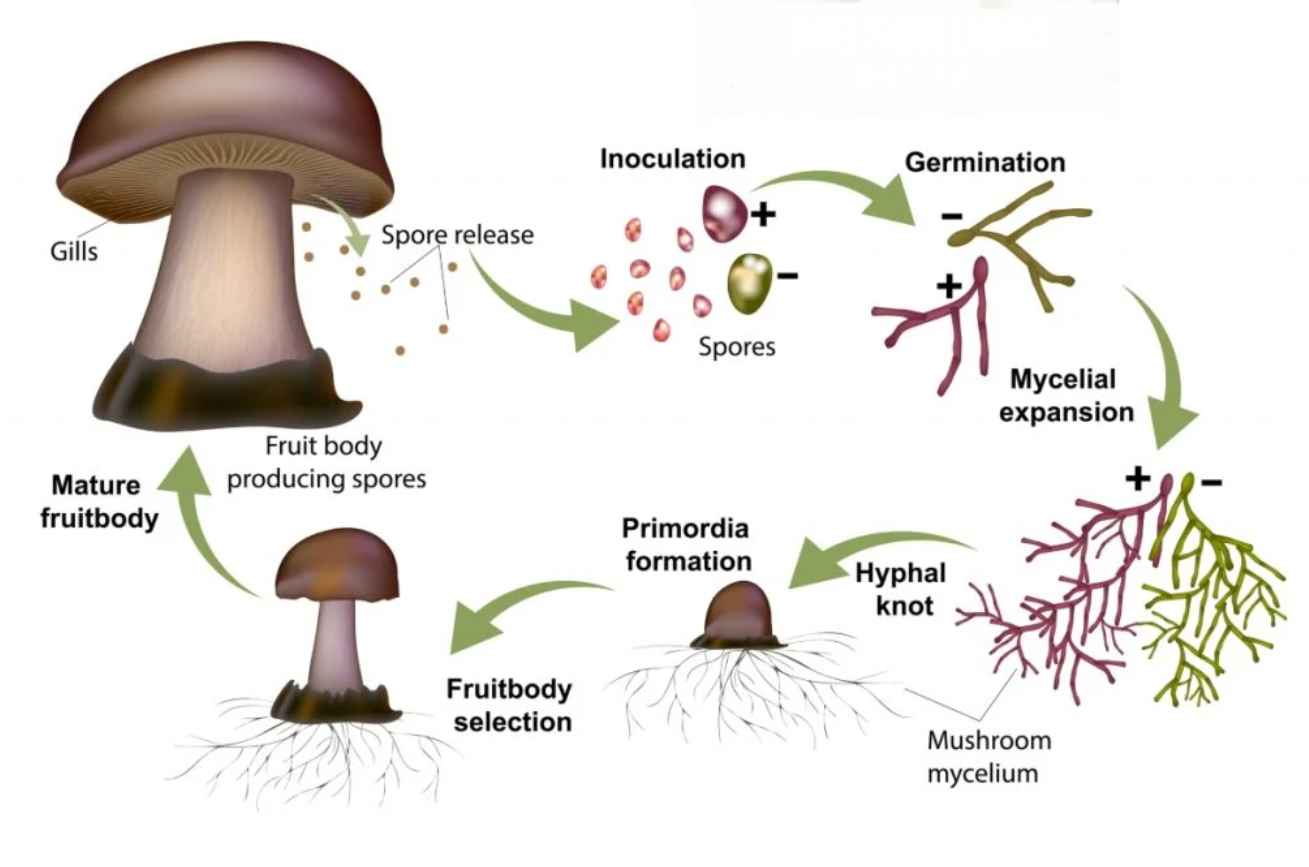
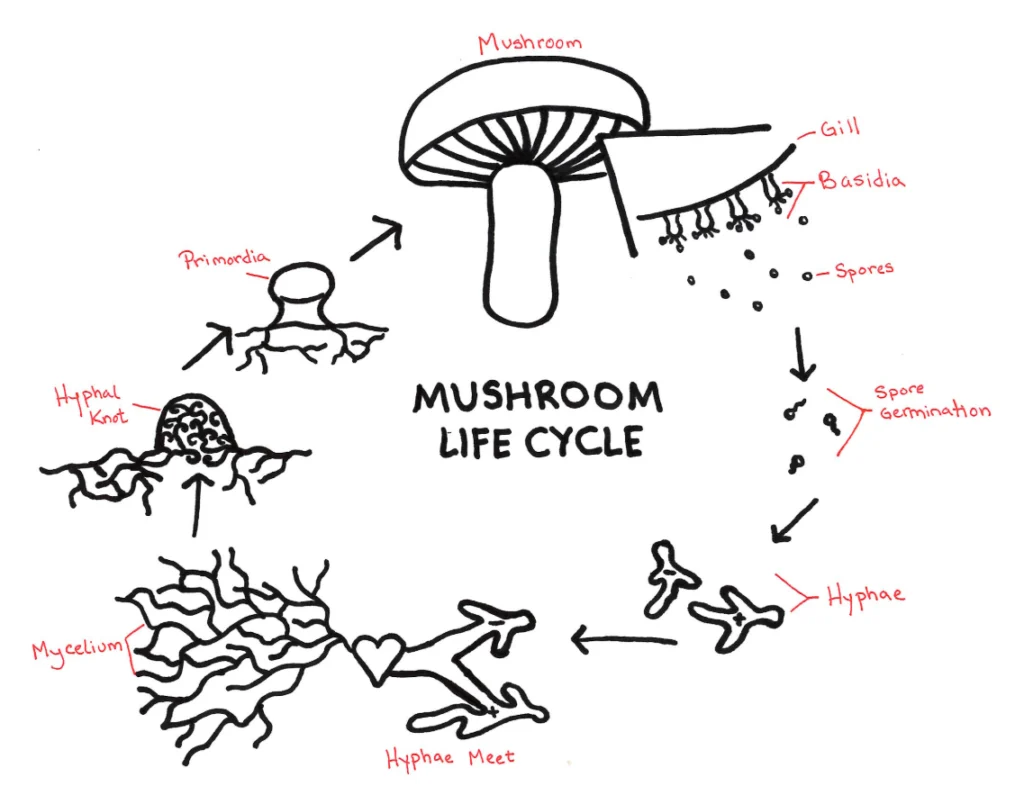
The fungal life cycle usually begins with a spore. When the spore lands in a suitable place with moisture, food, and the right temperature, it germinates. Then it forms thin, thread-like structures called hyphae. A group of hyphae forms a larger network called mycelium. Later, the fungus may produce new spores through asexual reproduction or sexual reproduction.
Q: What is the life cycle of fungi?
A: The life cycle of fungi usually follows this order: spore → germination → hyphae → mycelium → fruiting body → new spores.
Q: Do fungi reproduce by seeds?
A: No. Fungi reproduce by spores, not seeds. Spores are tiny reproductive cells that can spread by air, water, animals, insects, or direct contact.
Q: Why are fungi important in nature?
A: Fungi are important decomposers. They break down dead organic matter and return nutrients to soil, helping plants, forests, crops, and entire ecosystems survive.
Quick Life Cycle Table
| Stage | What Happens | Simple Meaning |
| 1. Spore | The fungus releases tiny spores into the environment. | Like a starting cell for a new fungus. |
| 2. Germination | A spore lands in a good place and starts growing. | The fungus “wakes up.” |
| 3. Hyphae Formation | Thin thread-like filaments begin to grow. | The fungus builds its body. |
| 4. Mycelium Growth | Many hyphae join and spread through soil, wood, food, or a host. | The main hidden body grows. |
| 5. Feeding Stage | The fungus releases enzymes and absorbs nutrients. | It digests food outside its body. |
| 6. Fruiting Body | Some fungi form visible parts, such as mushrooms. | This is the spore-making structure. |
| 7. Spore Release | New spores are produced and spread. | The cycle begins again. |
| 8. Survival Stage | Spores or resting structures survive harsh conditions. | The fungus waits for better conditions. |
The History of Their Scientific Naming
The scientific study of fungi is called mycology. The word fungus comes from Latin, where it was used for mushrooms. Over time, scientists began to understand that mushrooms were only one visible part of a much larger group of organisms.
Earlier, fungi were often placed with plants because they grow from the ground and do not move like animals. However, modern biology shows that fungi are not plants. They do not have chlorophyll, they do not photosynthesize, and their cell walls contain chitin, a strong material also found in the outer skeleton of insects.
The scientific name Kingdom Fungi is now used for true fungi, including yeasts, molds, mushrooms, rusts, and smuts. Scientists classify fungi based on their body structure, spore type, reproduction method, DNA, and ecological role.
Important naming points:
- Mycology means the scientific study of fungi.
- Mycelium means the main thread-like body of a fungus.
- Hyphae are the tiny threads that form mycelium.
- Spores are the reproductive units of fungi.
- Fruiting body means the visible spore-producing structure, such as a mushroom.
Today, fungal classification continues to change as DNA research discovers new relationships among different types of fungi.
Their Evolution And Their Origin
The origin of fungi goes very deep into Earth’s history. Fungi are ancient organisms, and scientists believe their evolutionary line separated from other eukaryotic life long before many modern plants and animals appeared. Modern research also shows that fungi are more closely related to animals than to plants because both fungi and animals are heterotrophs, meaning they depend on organic food rather than making their own food through sunlight.
Fungi likely began as simple microscopic organisms in water or moist environments. Over millions of years, they developed special features such as hyphae, mycelium, and spores. These features helped them spread, feed, and survive in many habitats.
Fossil evidence for fungi is difficult to find because many fungal bodies are soft and decompose quickly. However, important fossil records, such as the Rhynie Chert in Scotland, show early fungi and their interactions with plants from ancient land ecosystems.
Fungi became extremely important when life moved onto land. Early plants needed help absorbing nutrients from poor soils. This is where mycorrhizal fungi became important. These fungi formed partnerships with plant roots, helping plants take up water and minerals.
This relationship may have helped early land plants survive. Even today, many plants depend on fungal partners for healthy growth. The success of forests, grasslands, crops, and wild ecosystems is closely linked with fungal evolution.
So, the origin of fungi is not only a story about mushrooms. It is also a story about soil formation, plant survival, nutrient cycling, and the rise of complex ecosystems on Earth.
Important Things That You Need To Know
Understanding the life cycle of fungi becomes easier when we know a few related terms and examples. The word fungi encompasses a wide range of organisms, from tiny yeast cells to large underground fungal networks.
One important group is mycorrhizal fungi. These fungi live in association with plant roots in a mutually beneficial relationship. The plant provides the fungus with sugars produced through photosynthesis, while the fungus helps the plant absorb water, nitrogen, phosphorus, and other nutrients. The U.S. Forest Service explains that mycorrhizae improve tree growth and vigor by increasing water and nutrient uptake.
Many people also know fungi through the documentary Fantastic Fungi, which made fungal networks, mushrooms, and mycelium more popular among general audiences. While the film is not a scientific textbook, it sparked curiosity among many people about the hidden role of fungi in forests and soil.
Common examples of fungi include mushrooms, bread mold, Penicillium, yeast, truffles, puffballs, and bracket fungi growing on trees. Some fungi are useful in food, medicine, farming, and fermentation.
There are also harmful fungi. For example, fungal nail problems, medically called fungal nail infections (onychomycosis), can be caused by dermatophytes, yeasts, or other fungi. The CDC notes that fungal infections can affect the skin, scalp, and nails, and that nail infections may cause nails to become thick, discolored, or brittle.
The major types of fungi include Ascomycota, Basidiomycota, Chytridiomycota, Glomeromycota, and others. Each group has different structures, habitats, and reproduction styles.
In simple terms, fungi are organisms that absorb nutrients from organic matter and reproduce mainly through spores.
Their main food and its collection process
Fungi do not eat like animals, and they do not make food like plants. Their feeding process is different. They digest food outside their body and then absorb the broken-down nutrients.
Most fungi live directly on or inside their food source. This may be dead wood, fallen leaves, soil organic matter, fruit, bread, living plants, animal tissue, or another organism.
Their main food sources include:
- Dead plants: Many fungi break down fallen leaves, branches, tree trunks, and roots.
- Dead animals: Some fungi help decompose animal remains and return nutrients to the soil.
- Soil organic matter: Soil fungi feed on tiny pieces of dead material mixed in the soil.
- Living plants: Parasitic fungi take nutrients from living plant tissues and may cause diseases.
- Animal and human tissue: Some fungi can infect skin, nails, or lungs, depending on the species.
- Sugars and starches: Yeasts feed on sugars and are used in bread, beer, and other fermented foods.
- Keratin: Some fungi can feed on keratin found in skin, hair, and nails.
The collection process is based on external digestion. First, the fungus grows hyphae into or over the food source. Then it releases digestive enzymes. These enzymes break down large materials such as cellulose, proteins, and carbohydrates into smaller molecules. After that, the fungus absorbs the nutrients through its cell walls.
This process is slow but powerful. Without fungi, dead leaves, wood, and other waste materials would pile up in nature. Fungi act like natural recyclers, turning waste into nutrients that plants can use again.
Their life cycle and ability to survive in nature
Spore Stage
The life cycle of fungi usually begins with a spore. A spore is a tiny reproductive cell. It may be produced sexually or asexually. Spores are often very light, allowing them to spread through the air, water, and insects, as well as by contact with surfaces.
Germination Stage
When a spore lands in a suitable place, it begins to germinate. It needs moisture, oxygen, food, and the right temperature. If conditions are poor, many spores can stay inactive until the environment improves.
Hyphae and Mycelium Stage
After germination, the spore produces hyphae. These are thin, thread-like structures. Many hyphae join together and form mycelium, which is the main body of the fungus.
The mycelium spreads through soil, wood, food, or a living host. It absorbs nutrients and keeps the fungus alive.
Fruiting Body Stage
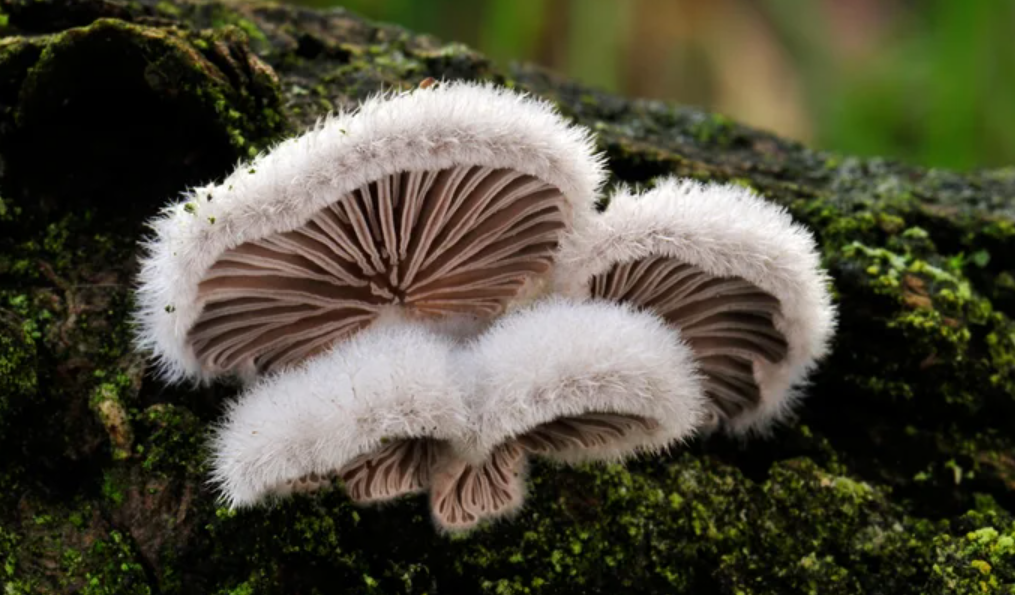
In many fungi, the mycelium later produces a fruiting body. A mushroom is one example. The mushroom is not the whole fungus. It is only the visible reproductive structure that makes and releases spores.
Survival Ability
Fungi are excellent survivors. Their spores can spread widely and remain dormant during dry, cold, or unfavorable conditions. Some fungi also form thick-walled resting spores.
Their hidden mycelium helps them survive underground or inside wood, even when the visible mushroom disappears. This is why fungi can return after rain, fire, seasonal changes, or environmental stress.
Their Reproductive Process and raising their children
Fungi do not raise children like animals. They do not build nests, feed babies, or protect young ones. Instead, they produce many spores, and each spore can grow into a new fungus if conditions are suitable.
Their reproductive process includes:
- Asexual reproduction: One parent fungus produces spores or new cells without genetic mixing.
- Sexual reproduction: Two compatible fungal cells or hyphae combine genetic material.
- Fragmentation: A piece of mycelium breaks off and grows into a new fungal colony.
- Budding: Common in yeasts, where a small bud grows from the parent cell and separates.
- Spore formation: The most common method of fungal reproduction.
In asexual reproduction, fungi can multiply quickly. This is useful when conditions are favorable. For example, bread mold can spread quickly in warm, moist environments where food is stored.
In sexual reproduction, fungi create genetic variation. This helps them adapt to new environments, diseases, climate stress, or competition. Britannica explains that sexual reproduction in fungi involves nuclear fusion and meiosis, while many fungi also repeat asexual spore production before entering the sexual stage.
The “early” stage of fungi begins when a spore germinates. Instead of being cared for by a parent, the young fungus survives by finding food, moisture, and space.
This strategy works because fungi produce large numbers of spores. Most spores will not survive, but a few may land in the right place and continue the cycle.
The importance of them in this Ecosystem
Natural Decomposers
Fungi are among the most important decomposers in nature. They break down dead leaves, wood, dead plants, and dead animals. This returns nutrients such as carbon, nitrogen, and phosphorus to the soil.
Without fungi, forests would not properly recycle nutrients. Dead material would collect, and plants would struggle to get the minerals they need.
Soil Health Builders
Fungi improve soil structure. Their hyphae bind soil particles together and help create healthy soil spaces. These spaces hold air and water, improving soil conditions for plant roots.
Plant Partners
Mycorrhizal fungi form partnerships with plant roots. They help plants absorb nutrients and water, while plants provide fungi with sugars. This relationship supports forests, crops, grasslands, and many wild plants.
Food and Medicine
Fungi are also important for humans. Yeast is used in bread and fermentation. Penicillium played a key role in the development of penicillin. Edible mushrooms provide food, flavor, and nutrients.
Balance in Nature
Some fungi are parasites, but even they play a role in controlling populations. They may attack weak plants, insects, or other organisms, helping maintain ecological balance.
Biodiversity Value
Kew’s global work on plants and fungi shows that fungal diversity remains poorly understood. Only a small fraction of predicted fungal species have been formally assessed for conservation status, meaning many fungi may be at risk before scientists fully understand them.
What to do to protect them in nature and save the system for the future
Protecting fungi means protecting soil, forests, plants, water systems, and biodiversity. Since many fungi live underground or inside dead wood, people often ignore them. But they are essential for ecosystem survival.
- Protect natural forests: Old forests contain rich fungal networks. Cutting forests destroys both visible mushrooms and hidden mycelium.
- Avoid unnecessary soil disturbance: Deep digging, heavy machinery, and repeated soil damage can break fungal networks.
- Reduce chemical overuse: Excessive use of fungicides, pesticides, and chemical fertilizers can harm beneficial soil fungi.
- Keep dead wood in natural areas: Fallen logs and dead branches provide food and habitat for many fungi.
- Support organic matter in soil: Compost, leaf litter, and natural mulch help soil fungi grow.
- Protect wetlands and grasslands: Fungi are not confined to forests. Many species live in grasslands, wetlands, farms, and coastal areas.
- Use responsible mushroom harvesting: Do not destroy the mycelium when collecting mushrooms. Take only what is needed.
- Learn to identify fungi safely: Some mushrooms are poisonous. Identification should be done carefully, preferably with expert help.
- Support fungal research: Many fungal species are still unknown. Research helps scientists understand their roles in medicine, farming, conservation, and climate resilience.
- Include fungi in conservation policy: Biodiversity protection often focuses on animals and plants, but fungi also need legal and environmental protection.
Saving fungi means saving the natural recycling system that keeps ecosystems alive.
Frequently Asked Questions (FAQs)
Q1: What is the life cycle of fungi?
A: The life cycle of fungi usually includes spore formation, germination, hyphae growth, mycelium development, fruiting body formation, and new spore release.
Q2: What are fungi?
A: Fungi are living organisms that belong to the Kingdom Fungi. They include mushrooms, molds, yeasts, mildews, and many microscopic organisms.
Q3: What is the definition of fungi in simple words?
A: The simple fungi definition is: fungi are organisms that do not make their own food but absorb nutrients from organic matter after breaking it down with enzymes.
Q4: What are common fungi examples?
A: Common fungi examples include mushrooms, bread mold, yeast, Penicillium, truffles, puffballs, and bracket fungi.
Q5: What are mycorrhizal fungi?
A: Mycorrhizal fungi are fungi that live with plant roots. They help plants absorb water and nutrients, while plants give them sugars.
Q6: Do fungi reproduce sexually or asexually?
A: Many fungi can reproduce both ways. Asexual reproduction helps them spread quickly, while sexual reproduction creates genetic variety.
Q7: Is a fungal nail related to fungi?
A: Yes. Fungal nail, or fungal nail infection, happens when certain fungi infect the fingernails or toenails. It can cause nails to become thick, discolored, or brittle.
Q8: What are the main types of fungi?
A: Major types of fungi include Ascomycota, Basidiomycota, Chytridiomycota, Glomeromycota, and other groups. They differ in structure, reproduction, and habitat.
Conclusion
The life cycle of fungi is simple in pattern but powerful in impact. It begins with tiny spores, grows through hyphae and mycelium, and continues when new spores are produced. This cycle allows fungi to survive in soil, forests, water, food, plants, animals, and even extreme environments.
Fungi are not just mushrooms growing after rain. They are hidden workers of nature. They break down dead matter, improve soil, support plant roots, produce food, aid inaid in medicine, and maintain ecological balance.
From mycorrhizal fungi helping forests grow to yeasts supporting human food systems, fungi are deeply connected with life on Earth. Protecting them means protecting soil health, biodiversity, and the future of natural ecosystems. Understanding fungi helps us respect the invisible networks that sustain the planet.
Also Read: mushroom life cycle