The honey bee’s life cycle is an extraordinary process that reflects nature’s ingenuity. Honey bees, primarily Western honey bees, are vital pollinators that support biodiversity and agriculture. Their lifecycle involves several stages, from egg to adult, each crucial for their role in nature.
Q1: What is the life cycle of a honey bee?
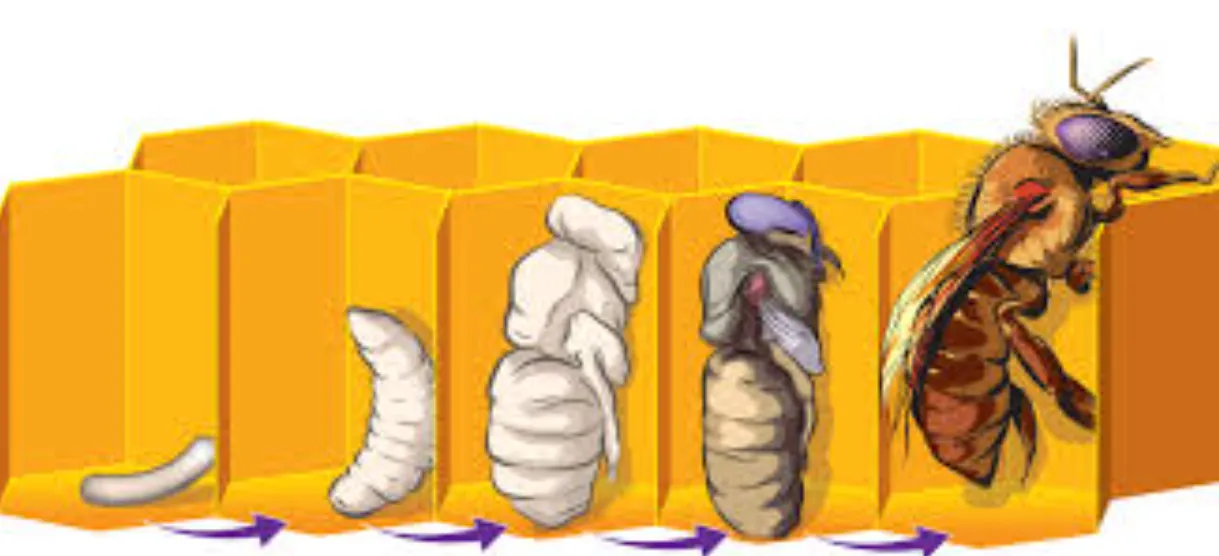
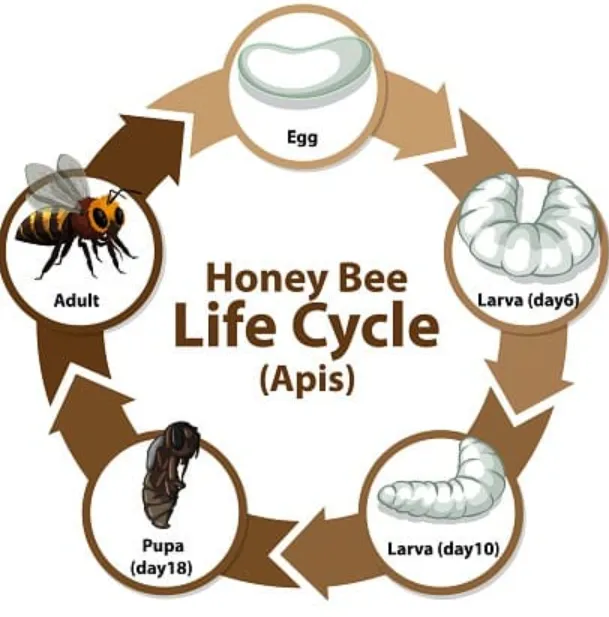
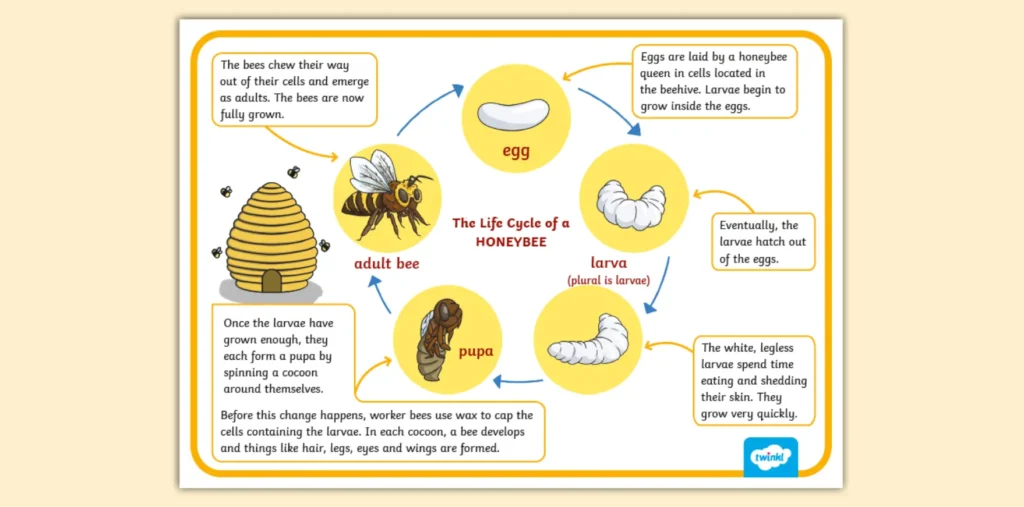
A1: The life cycle of a honey bee includes four main stages: egg, larva, pupa, and adult. The duration of each stage varies depending on the bee’s role—queen, worker, or drone.
Q2: How long do honey bees live?
A2: The lifespan of a honey bee depends on its role. Worker bees live for several weeks, drones for a few months, and the queen can live for several years.
Q3: Why is the life cycle of honey bees important?
A3: Honey bees are crucial for pollination, which helps produce a significant portion of the world’s food. Their life cycle ensures the continuation of their species and supports global plant reproduction.
Quick Life Cycle Table of the Honey Bee:
| Stage | Duration | Description |
| Egg | 3 Days | The queen lays eggs, which hatch into larvae. |
| Larva | 5-9 Days | Worker bees feed larvae until they become pupae. |
| Pupa | 6-12 Days | The transformation stage where the larva changes into an adult bee. |
| Adult | 4-6 Weeks (for workers), Years (for queens) | Worker bees carry out various tasks, drones mate with queens, and queens lay eggs. |
The History of Their Scientific Naming:
The scientific name of the honey bee is Apis mellifera, which means “honey-bearing bee.” The genus name “Apis” comes from the Latin word for “bee,” and “mellifera” means “honey-bearing,” reflecting their role in honey production.
This species was classified by Carl Linnaeus in 1758 in his work Systema Naturae. Over time, various subspecies of the Western honey bee have been identified, each adapted to different climates and ecosystems.
Their Evolution and Origin:
Honey bees belong to the family Apidae, which includes over 20,000 species of bees worldwide. The honey bee’s lineage dates back approximately 130 million years, to the Cretaceous period.
The evolution of honey bees is deeply intertwined with flowering plants, particularly during the emergence of angiosperms (flowering plants). Bees helped pollinate these plants, and in turn, the plants adapted to attract bees for reproductive purposes.
Honey bees evolved to live in colonies, unlike most other bees that are solitary. This social behavior is essential for their survival, allowing them to share tasks such as foraging, nest protection, and brood care.
The queen bee plays a pivotal role, as the sole fertile female responsible for laying all eggs within the colony. This cooperative system ensures the colony’s sustainability and strength.
Their Main Food and Collection Process:
Honey bees are primarily herbivores, feeding on nectar, pollen, and water. They gather nectar from flowers, which they store in their honey stomach. The nectar is then taken back to the hive, where worker bees process it into honey by evaporating water and adding enzymes.
Pollen is collected to provide protein for the colony, especially for the growing larvae. The collection process is a delicate balance, requiring bees to visit hundreds of flowers to gather the resources they need.
Key Points:
- Nectar is collected by the proboscis and stored in the honey stomach.
- Pollen is collected on the hind legs and returned to the hive.
- Water is essential for honey dilution and hive maintenance.
Their Life Cycle and Ability to Survive in Nature:
Honey bees are resilient creatures, capable of surviving in diverse environments. The life cycle of honey bees is a finely tuned process that supports the colony’s needs. Workers maintain the hive, forage for food, care for the queen and larvae, and defend against predators. Drones exist solely to mate with a queen, and the queen lays eggs throughout the year, ensuring a continuous supply of bees.
The survival of honey bees is dependent on their ability to adapt to environmental changes. They regulate hive temperature, control moisture levels, and work collaboratively to find food sources. Honey bees’ survival is often threatened by pesticides, habitat loss, and climate change, making their protection critical.
Reproductive Process and Raising Their Children:
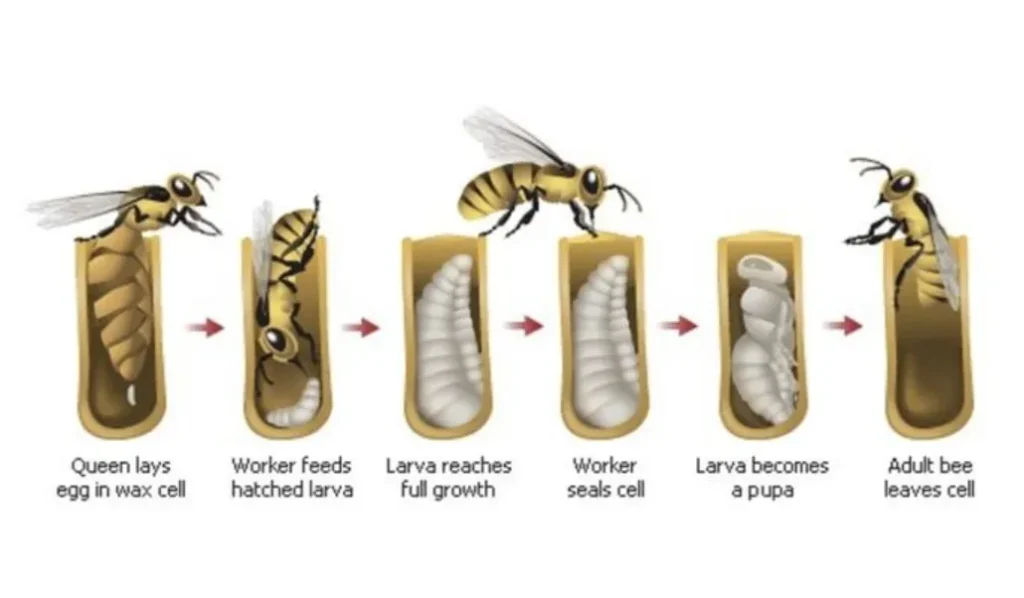
Honey bee reproduction is highly structured. The queen is the only female in the colony capable of mating and laying eggs. At the beginning of the season, the queen mates with several drones during a mating flight. She stores the sperm in her spermatheca for future use, enabling her to lay fertilized eggs throughout her life.
Worker bees are the result of fertilized eggs, while drones (males) are produced from unfertilized eggs. Once the eggs hatch into larvae, they are cared for by nurse bees, fed royal jelly, and placed in hexagonal wax cells. The process of raising the young is a collective effort involving all members of the colony.
Importance of Honey Bees in This Ecosystem:
Honey bees play a critical role in the ecosystem through their pollination activities. Approximately one-third of the food consumed by humans relies on pollination, and honey bees are among the most efficient pollinators. Beyond agriculture, they help sustain wild plants, supporting entire ecosystems and wildlife.
Key Ecological Roles:
- Pollinating crops and wild plants.
- Supporting biodiversity by facilitating plant reproduction.
- Contributing to the production of honey, beeswax, and other hive products.
What to Do to Protect Honey Bees and Save the System for the Future:
Protecting honey bees is vital for sustaining ecosystems and food sources. Several actions can be taken to ensure their survival:
- Plant bee-friendly plants such as clover, lavender, and sunflowers.
- Reduce pesticide use or opt for organic alternatives.
- Provide habitats by maintaining wildflower meadows or setting up bee hotels.
- Support local beekeepers and avoid using harmful chemicals on crops.
- Raise awareness about the importance of bees in pollination and ecosystem health.
Important Things That You Need To Know:
Western Honey Bee: This is the most widely known species, responsible for pollinating crops worldwide and producing honey. Its scientific name is Apis mellifera.
Queen Honey Bee: The queen plays a central role in the colony’s reproduction and survival. Without her, the colony cannot thrive.
Honey Bee Hive: A well-organized structure, the hive is where bees live, work, and store honey and pollen. The hive houses thousands of bees, each with specific roles.
Bumble Bee vs Honey Bee: While similar, bumblebees are larger and less efficient at honey production, though they play a role in pollination.
Frequently Asked Questions (FAQs):
Q1: What is the role of a queen bee?
A1: The queen bee is the reproductive female responsible for laying all eggs in the colony.
Q2: How do honey bees produce honey?
A2: Honey bees collect nectar from flowers, which is processed and stored in the hive, turning it into honey.
Q3: How do honey bees communicate?
A3: Honey bees communicate through “waggle dances” to indicate the location of food sources.
Q4: Why are honey bees essential for agriculture?
A4: Honey bees pollinate crops, ensuring the production of fruits, vegetables, and seeds.
Q5: How long do honey bees live?
A5: Worker bees live a few weeks, drones a few months, and queens can live for several years.
Q6: What threats do honey bees face?
A6: Honey bees face threats from pesticides, habitat loss, and diseases like colony collapse disorder.
Q7: Can honey bees sting multiple times?
A7: No, worker honey bees can sting only once, as they die after stinging.
Q8: How do honey bees find flowers?
A8: Honey bees use vision, scent, and their ability to communicate to locate flowers.
Conclusion:
The life cycle of honey bees is a fascinating and essential part of nature. From their meticulous process of pollination to their role in producing honey, bees are integral to ecological health. Their continued survival is critical for agriculture, biodiversity, and human sustenance.
By supporting sustainable practices, reducing environmental harm, and raising awareness, we can ensure that honey bees thrive for generations to come.
Also Read: life cycle of a lady bird