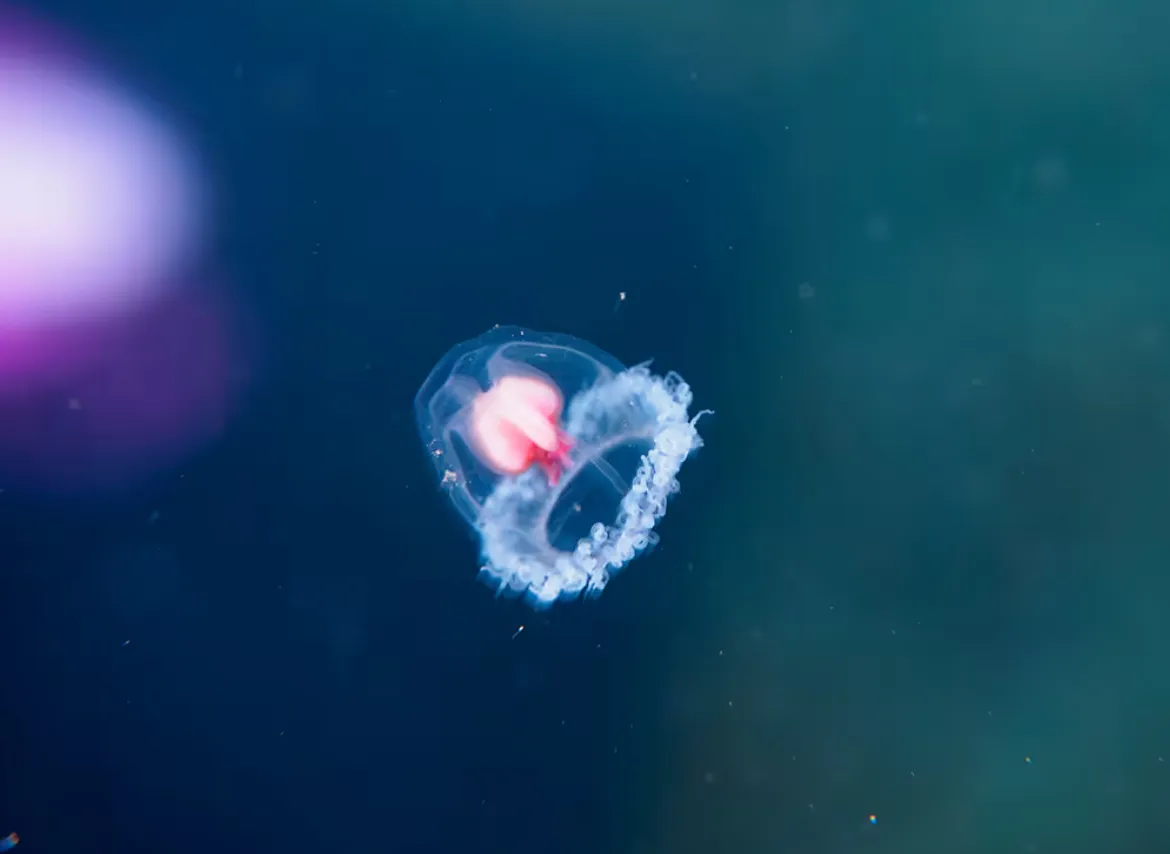
The immortal jellyfish’s life cycle is one of the most fascinating biological phenomena on Earth. Unlike most living organisms that follow a fixed life path—from birth to death—the immortal jellyfish (Turritopsis dohrnii) has the extraordinary ability to reverse its life cycle. This tiny marine creature can essentially revert to its juvenile stage after reaching maturity, making it a subject of immense scientific interest.
Found in oceans around the world, the immortal jellyfish is often considered the only truly “biologically immortal” animal. While it can still die due to predators or disease, its unique cellular transformation allows it to avoid natural aging. This process, known as transdifferentiation, is what sets it apart from other species.
Understanding the life cycle of this jellyfish not only reveals the wonders of marine biology but also provides insights into aging, regeneration, and cellular science.
Quick Answers (Most Common Questions)
1. Why is the immortal jellyfish called immortal?
Because it can revert from its adult stage back to a juvenile polyp stage, effectively restarting its life cycle.
2. What is the lifespan of an immortal jellyfish?
Technically, it has no fixed lifespan due to its ability to reset its biological age.
3. Where is the immortal jellyfish found?
It is commonly found in warm and temperate oceans worldwide.
Quick Life Cycle Table
| Stage | Description | Key Feature |
| Fertilized Egg | Produced through sexual reproduction | Begins life cycle |
| Planula Larva | Free-swimming stage | Moves to a suitable surface |
| Polyp Stage | Attaches to substrate | Asexual reproduction |
| Budding Polyps | Clones form from a parent polyp | Colony growth |
| Juvenile Medusa | Small jellyfish form | Begins free swimming |
| Adult Medusa | Mature jellyfish | Can reproduce sexually |
| Reversal Stage | Reverts to polyp | Unique immortality trait |
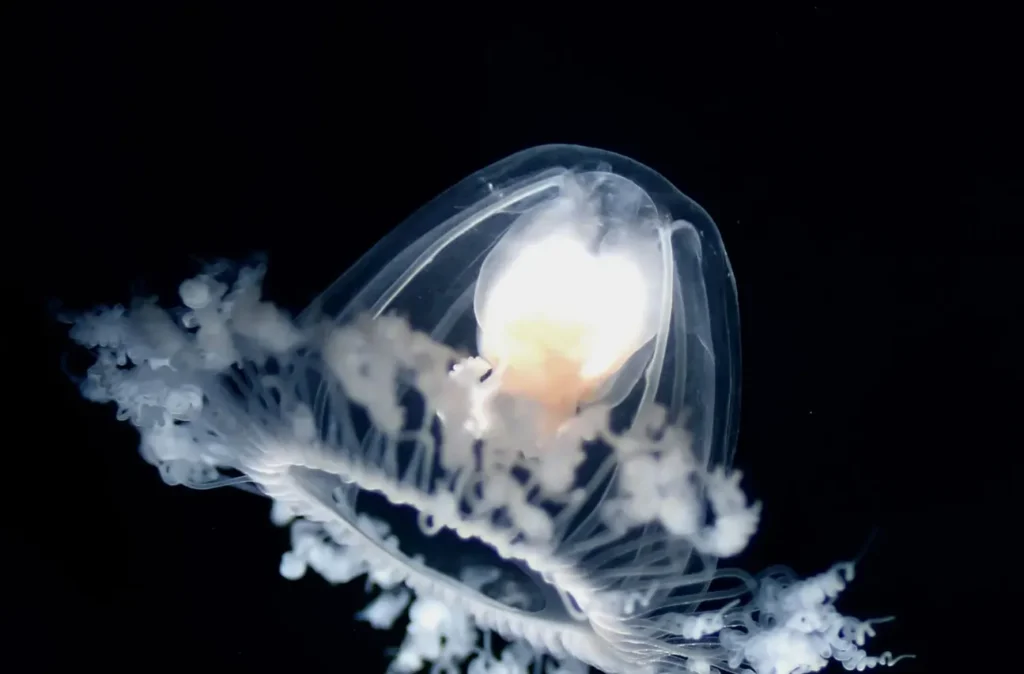
The History Of Their Scientific Naming
The immortal jellyfish was first scientifically described in the late 19th century. Its naming history reflects its unique biological characteristics.
- Originally classified under the genus Turritopsis nutricula, scientists later discovered that the species showing true “immortality” was different.
- It was reclassified as Turritopsis dohrnii, named after German marine biologist August Friedrich Möbius and later refined by researchers.
- The genus name “Turritopsis” refers to its tower-like structure, while “dohrnii” honors Anton Dohrn, a pioneer in marine biology.
- Early researchers did not initially recognize its life-reversal ability. This discovery came much later in the 1990s.
- Since then, the immortal jellyfish has become a key model organism in biological and aging studies.
This scientific naming journey highlights how evolving research can reshape our understanding of even the smallest creatures.
Their Evolution And Their Origin
The immortal jellyfish belongs to the phylum Cnidaria, one of the oldest animal groups on Earth. These organisms have existed for over 500 million years, making them some of the earliest multicellular life forms.
The evolutionary origin of Turritopsis dohrnii is linked to hydrozoan jellyfish, a class known for their complex life cycles involving both sexual and asexual reproduction. Over time, certain species developed advanced cellular plasticity, allowing them to adapt to harsh environments.
Scientists believe that the immortal jellyfish evolved its unique life-reversal mechanism as a survival strategy. In unstable marine environments, the ability to revert to an earlier stage provided a significant advantage. Instead of dying under stress, injury, or starvation, it could restart its life cycle.
This evolutionary trait is powered by transdifferentiation, where specialized cells transform into different types of cells. This process is rare in animals and is a key focus of regenerative medicine research.
The global spread of the immortal jellyfish is largely due to human activities like shipping. Ballast water from ships has transported them across oceans, allowing them to colonize new habitats.
Today, the immortal jellyfish is found in many parts of the world, from the Mediterranean Sea to the Pacific Ocean. Its evolutionary journey demonstrates how adaptability and cellular flexibility can lead to extraordinary survival mechanisms.
Their Main Food and Its Collection Process
The immortal jellyfish is a carnivorous organism that feeds on small marine creatures. Despite its tiny size, it plays an active role in the ocean food chain.
Main Food Sources
- Plankton: The primary food source, including tiny drifting organisms
- Fish Eggs and Larvae: Provides essential nutrients
- Small Crustaceans: Such as copepods
- Microscopic Marine Life: Includes protozoans and organic particles
Food Collection Process
- Tentacle Capture:
- The jellyfish uses its tentacles, which contain specialized stinging cells called nematocysts, to capture prey.
- Paralysis Mechanism:
- These cells release toxins that immobilize prey instantly.
- Transport to Mouth:
- Tentacles move the prey toward the mouth located at the center of the body.
- Digestion:
- Food is digested in a simple gastrovascular cavity, where nutrients are absorbed.
- Continuous Feeding Cycle:
- The jellyfish feed regularly to maintain energy for swimming and cellular regeneration.
This efficient feeding system allows the immortal jellyfish to survive in nutrient-variable environments.
Important Things That You Need To Know
The immortal jellyfish is one of the smallest yet most extraordinary marine creatures. Understanding its key traits helps explain why it fascinates scientists worldwide.
The immortal jellyfish’s lifespan is theoretically unlimited due to its ability to reverse aging. However, it can still fall prey to predators or environmental threats. The immortal jellyfish’s size is extremely small, usually around 4–5 millimeters in diameter, making it difficult to spot in the ocean.
Interestingly, the oldest immortal jellyfish cannot be determined because it can continuously reset its life cycle. This makes tracking age nearly impossible.
The term the immortal jellyfish refers specifically to Turritopsis dohrnii, although related species do not share the same level of regenerative ability.
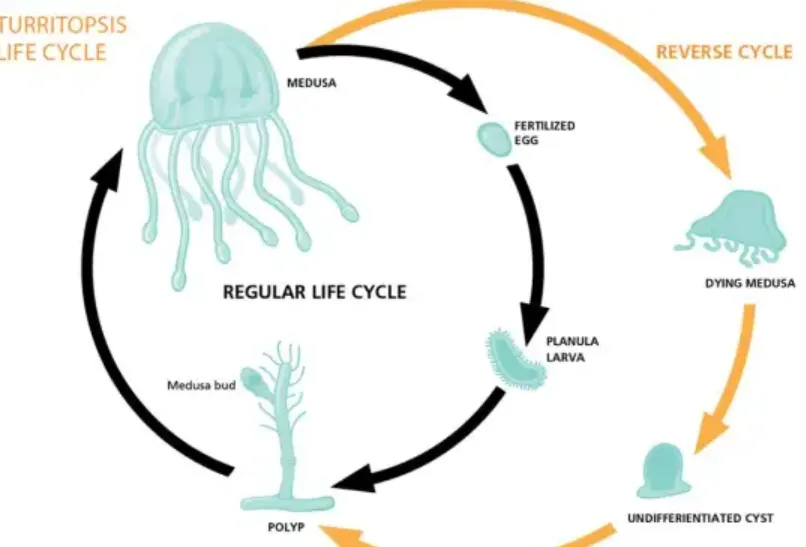
Their Life Cycle and Ability to Survive in Nature
Egg and Planula Stage
The life cycle begins when fertilized eggs develop into planula larvae.
These larvae float freely in the water before settling on a suitable surface.
Polyp Stage
The planula attaches to a substrate and develops into a polyp.
This stage resembles a tiny plant-like structure and can reproduce asexually.
Medusa Stage
Polyps produce juvenile medusae, which grow into adult jellyfish.
At this stage, they can swim freely and reproduce sexually.
Life Cycle Reversal (Immortality)
When faced with stress, injury, or aging, the adult medusa can revert into a polyp.
This process allows it to restart its life cycle entirely.
Survival Advantages
- Ability to escape death from aging
- Adaptation to changing environments
- Rapid reproduction through cloning
This cycle gives the immortal jellyfish a unique edge in survival compared to other marine species.
Their Reproductive Process and Raising Their Children
The immortal jellyfish has both sexual and asexual reproduction methods, making its life cycle highly adaptable.
Reproductive Process
- Sexual Reproduction:
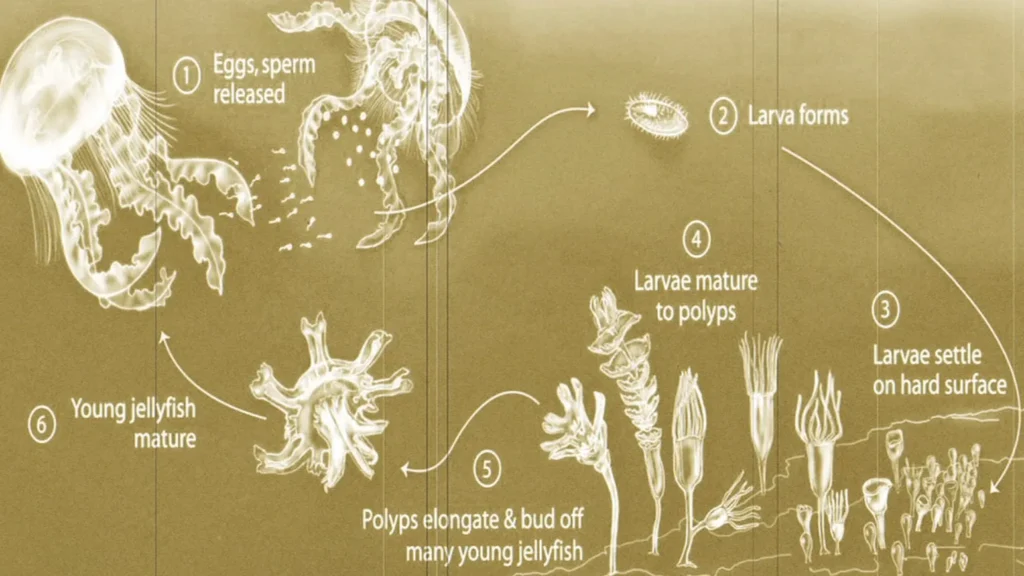
- Adult medusae release sperm and eggs into the water, leading to fertilization.
- Larval Development:
- Fertilized eggs develop into planula larvae.
- Settlement:
- Larvae attach to surfaces and grow into polyps.
- Asexual Reproduction:
- Polyps reproduce by budding, creating genetically identical clones.
Raising Their Offspring
- There is no parental care in the traditional sense.
- Offspring develop independently after the larval stage.
- Survival depends on environmental conditions and food availability.
- Asexual reproduction increases the population quickly.
This dual reproduction strategy ensures the species thrives in diverse conditions.
Importance of Them in this Ecosystem
Role in the Marine Food Chain
The immortal jellyfish acts as both predator and prey.
It helps regulate populations of plankton and small organisms.
Nutrient Cycling
Consuming and being consumed it contributes to nutrient transfer within marine ecosystems.
Scientific Importance
Its unique regenerative ability provides insights into aging and cell biology.
Researchers study it to explore possibilities in human medicine.
Indicator Species
Changes in its population can indicate shifts in ocean health and environmental conditions.
The immortal jellyfish may be small, but its ecological and scientific significance is immense.
What to Do to Protect Them in Nature and Save the System for the Future
- Reduce Ocean Pollution:
- Limit plastic waste and chemical runoff into oceans.
- Support Marine Conservation:
- Protect habitats where jellyfish thrive.
- Promote Sustainable Fishing:
- Avoid disrupting marine ecosystems.
- Control Climate Change:
- Reduce carbon emissions to maintain ocean balance.
- Educate Communities:
- Raise awareness about marine biodiversity.
- Support Scientific Research:
- Encourage studies on marine life and regeneration.
- Protect Coastal Areas:
- Prevent habitat destruction.
- Reduce Overexploitation:
- Maintain balance in ocean species populations.
Frequently Asked Questions (FAQs)
1. What makes the immortal jellyfish unique?
Its ability to reverse its life cycle and avoid aging.
2. Can immortal jellyfish live forever?
Theoretically, yes, but they can still die from predators or disease.
3. How big is an immortal jellyfish?
Usually about 4–5 mm in diameter.
4. What do immortal jellyfish eat?
Plankton, fish eggs, and small marine organisms.
5. Where do they live?
In oceans worldwide, especially in warm and temperate regions.
6. How do they reproduce?
Through both sexual and asexual reproduction.
7. What is transdifferentiation?
A process where cells transform into different types.
8. Why are scientists interested in them?
Because they may provide clues about aging and regeneration.
Conclusion
The immortal jellyfish’s life cycle is a remarkable example of nature’s ingenuity. From its humble beginnings as a tiny larva to its extraordinary ability to reverse aging, Turritopsis dohrnii challenges everything we know about life and death.
Its unique biological processes not only ensure survival but also inspire scientific research into aging and regenerative medicine. Despite its small size, the immortal jellyfish holds enormous importance in both ecological balance and scientific discovery.
Protecting marine ecosystems is essential to preserving such incredible species. As we continue to study this fascinating organism, it may one day unlock secrets that could transform human health and longevity.
Also Read: life cycle for mosquito