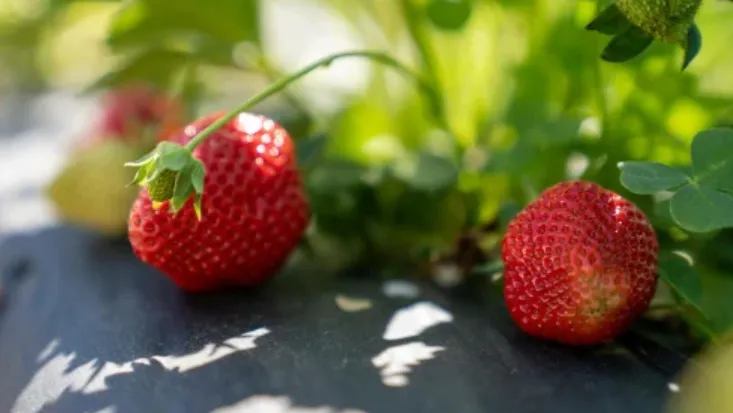
The strawberry life cycle is a fascinating natural process that illustrates how a small seed can transform into a fruit-bearing plant. Strawberries are among the most popular fruits globally, known for their sweet taste, vibrant color, and nutritional value. Understanding their life cycle not only helps gardeners grow better crops but also highlights their ecological importance.
From seed germination to fruit production and propagation through runners, strawberries follow a unique and efficient growth pattern. Unlike many plants, strawberries can reproduce both sexually (via seeds) and asexually (via runners), making them highly adaptable.
Quick Answers (Most Common Questions)
1. How long does the strawberry life cycle take?
Typically, it takes about 4–6 weeks from flowering to fruit maturity, while the full plant cycle can last several months to years, depending on the variety.
2. Do strawberries grow back every year?
Yes, most strawberry plants are perennials, meaning they regrow each year under proper conditions.
3. What are the main stages of the strawberry life cycle?
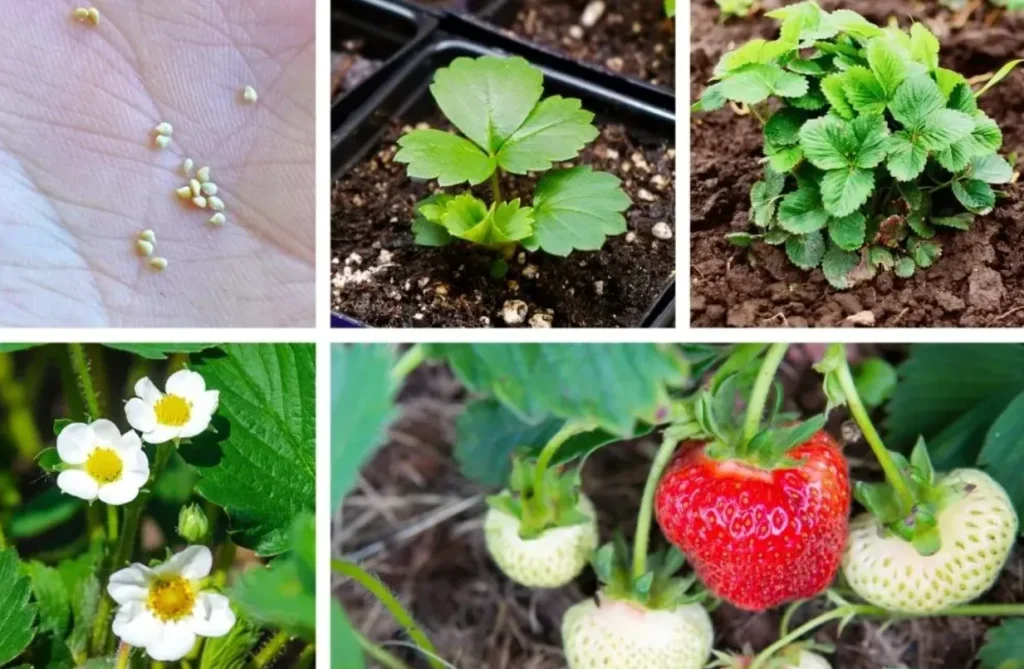
The main stages include seed germination, vegetative growth, flowering, fruiting, and propagation through runners.
Quick Life Cycle Table
| Stage | Description | Duration |
| Seed Germination | Seeds sprout under suitable moisture and temperature | 1–6 weeks |
| Seedling Growth | A small plant develops leaves and roots | 2–4 weeks |
| Vegetative Growth | The plant expands, producing leaves and runners | Several weeks |
| Flowering | White flowers appear and prepare for pollination | 1–2 weeks |
| Fruiting | Pollinated flowers turn into strawberries | 3–5 weeks |
| Propagation (Runners) | New plants grow from runners extending from the main plant | Continuous |
The History Of Their Scientific Naming
The scientific naming of strawberries has an interesting botanical background:
- Strawberries belong to the genus Fragaria, derived from the Latin word fragrans, meaning “fragrant,” due to their sweet aroma.
- The most commonly cultivated species is Fragaria × ananassa, a hybrid developed in Europe during the 18th century.
- Early botanists classified strawberries based on leaf shape, fruit structure, and growth habits.
- The hybrid species originated from crossing Fragaria virginiana (North America) and Fragaria chiloensis (South America).
- Carl Linnaeus, the father of modern taxonomy, played a key role in classifying strawberry species.
- Over time, scientific naming has helped standardize strawberry research, breeding, and global cultivation.
This naming system allows scientists worldwide to identify and study strawberries, thereby improving agricultural practices consistently.
Their Evolution And Their Origin
Strawberries have a long evolutionary history dating back millions of years. Fossil records suggest that wild strawberry species existed in temperate regions of the Northern Hemisphere.
Originally, strawberries were smaller and less sweet than modern varieties. Over time, natural selection and human cultivation led to the development of larger, juicier fruits. Indigenous peoples in North and South America were among the first to cultivate strawberries for food.
The modern strawberry (Fragaria × ananassa) emerged in the 1700s when European gardeners accidentally crossbred two wild species. This hybridization resulted in larger fruits and improved flavor, and the variety quickly gained popularity worldwide.
Strawberries evolved unique adaptations:
- Ability to reproduce through runners (stolons)
- Production of attractive fruits to encourage seed dispersal by animals
- Flexible growth in different climates
Today, strawberries are grown worldwide, from home gardens to large-scale farms, making them among the most economically important fruits.
Their Main Food and Its Collection Process
Strawberry plants produce their own food through photosynthesis, a process where sunlight is converted into energy.
Key Food Sources:
- Sunlight: Essential for energy production
- Carbon dioxide: Absorbed from the air
- Water: Taken from the soil through roots
- Minerals: Nutrients like nitrogen, potassium, and phosphorus
Food Collection Process:
- Leaves contain chlorophyll, which captures sunlight.
- Roots absorb water and minerals from the soil.
- Carbon dioxide enters through tiny leaf pores called stomata.
- The plant converts these into glucose (food) through photosynthesis.
Additional Points:
- Healthy soil improves nutrient absorption.
- Adequate sunlight (6–8 hours daily) boosts fruit production.
- Water management is crucial to avoid root rot.
This efficient system allows strawberries to grow rapidly and produce high yields under optimal conditions.
Their Life Cycle and Ability to Survive in Nature
🌱 Seed Germination
Strawberry seeds require moisture and warmth to sprout.
Once germinated, tiny seedlings begin developing roots and leaves.
🌿 Vegetative Growth
The plant grows leaves and spreads through runners.
This stage ensures rapid expansion and survival.
🌸 Flowering Stage
Flowers attract pollinators like bees.
Pollination is essential for fruit development.
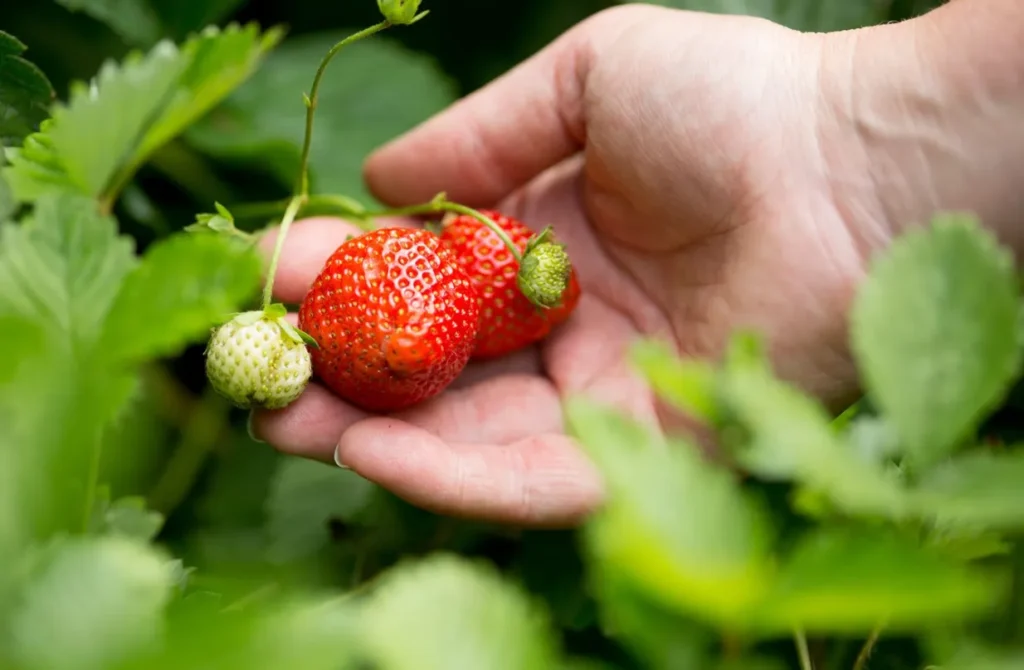
🍓 Fruiting Stage
Fruits develop from fertilized flowers.
Seeds on the outer surface make strawberries unique.
🌍 Survival Ability
Strawberries survive in nature due to:
- Dual reproduction methods (seeds and runners)
- Adaptability to various climates
- Ability to regenerate annually
These traits make strawberries resilient and widely distributed across ecosystems.
Their Reproductive Process
Strawberries reproduce in two main ways:
1. Sexual Reproduction
- Insects pollinate flowers
- Seeds form on the fruit surface
- Seeds can grow into new plants
2. Asexual Reproduction (Runners)
- Plants produce runners (stolons)
- New plants grow at the runner tips
- These clones are genetically identical
Raising New Plants:
- Parent plants supply nutrients through runners
- New plants develop roots and become independent
- This ensures rapid population growth
Key Benefits:
- Faster propagation compared to seeds
- Increased survival rate
- Ability to colonize large areas
Importance of Them in this Ecosystem
🌍 Role in Food Chains
Strawberries provide food for animals like birds, insects, and mammals.
🐝 Pollinator Support
Their flowers attract bees and other pollinators, supporting biodiversity.
🌱 Soil Health
Their roots help prevent soil erosion and improve soil structure.
🌸 Biodiversity Contribution
Strawberries support diverse ecosystems by interacting with various species.
🍓 Human Importance
They are a major agricultural crop with high nutritional value.
Important Things That You Need To Know
Strawberries are not just about their life cycle—they are also connected to various interesting topics and terms.
The term “strawberry cake” is popular worldwide and refers to one of the most beloved desserts made with fresh strawberries. It highlights the fruit’s culinary importance.
Interestingly, the phrase “strawberry legs” refers to a skin condition characterized by dark spots on the legs that resemble strawberry seeds. Though unrelated to the plant, it shows how strawberries influence language and culture.
Another fascinating term is strawberry blonde hair, which describes a unique reddish-blonde hair color. This again shows how strawberries inspire descriptions beyond the agricultural realm.
There’s also the unusual concept of a strawberry elephant, often used in creative storytelling or artistic expressions, symbolizing imagination and uniqueness.
These LSI keywords demonstrate how strawberries extend beyond biology into culture, beauty, and creativity, making them a truly versatile subject.
What to Do to Protect Them in Nature and Save the System for the Future
- 🌱 Promote organic farming to reduce chemical damage
- 💧 Use sustainable irrigation methods
- 🐝 Protect pollinators like bees
- 🌍 Reduce soil erosion through proper land management
- 🚫 Avoid overharvesting wild strawberries
- ♻️ Encourage eco-friendly agricultural practices
- 🌿 Preserve natural habitats
- 📚 Educate farmers and communities about sustainable cultivation
These actions ensure the long-term survival of strawberries and their ecosystems.
Frequently Asked Questions (FAQs)
1. What is the lifespan of a strawberry plant?
Strawberry plants typically live for 3–5 years with proper care.
2. How do strawberries reproduce naturally?
They reproduce through seeds and runners (stolons).
3. Why are strawberry seeds on the outside?
Strawberries are unique among fruits because their seeds develop on the outer surface.
4. Do strawberries need pollinators?
Yes, insect pollination improves fruit quality and size.
5. Can strawberries grow in all climates?
They prefer temperate climates but can adapt to a wide range of conditions.
6. How often should strawberries be watered?
They need consistent moisture but not waterlogged soil.
7. What nutrients do strawberries need most?
Nitrogen, potassium, and phosphorus are essential.
8. Are strawberries annual or perennial plants?
Most strawberries are perennial, returning each year.
Conclusion
The strawberry life cycle is a remarkable example of nature’s efficiency and adaptability. From tiny seeds to vibrant fruits, strawberries undergo a series of well-coordinated stages that ensure their survival and reproduction. Their ability to reproduce both sexually and asexually makes them highly resilient in diverse environments.
Beyond their biological importance, strawberries play a vital role in ecosystems by supporting pollinators, enriching soil, and serving as a food source for many species. They are also deeply integrated into human culture, cuisine, and even language.
By understanding their life cycle and ecological significance, we can take meaningful steps to protect and sustain strawberry plants for future generations. Whether in nature or agriculture, strawberries continue to thrive as one of the most valuable and beloved fruits worldwide.
Also Read About: spider life cycle