Plants are one of the most fascinating living things on Earth, especially for kids who are just beginning to explore nature. Understanding the Plant life cycle for kids is a great way to learn how life grows, changes, and survives over time. From a tiny seed to a fully grown plant, every stage is full of wonder and discovery.
Plants are all around us—whether it’s a colorful flower in the garden, a tall tree in the park, or even a small indoor plant sitting on a windowsill. Each Plant follows a life cycle that helps it grow, reproduce, and continue its species. This cycle is not only important for the Plant itself but also for the environment and all living beings.
When children learn about the plant life cycle, they begin to understand concepts like growth, change, and responsibility. Watching a seed sprout into a plant can teach patience and care. It also helps kids appreciate how food grows and why plants are essential for life on Earth.
In today’s world, where technology often keeps children indoors, learning about plants reconnects them with nature. It encourages curiosity, creativity, and environmental awareness. Whether it’s planting seeds at home or observing nature outside, kids can gain valuable knowledge through simple activities.
This guide will explore everything about plants—from their origin and evolution to their life cycle, reproduction, and importance in the ecosystem. By the end, kids (and even adults!) will have a clear and fun understanding of how plants grow and thrive.
Their Evolution And Their Origin
Plants have a long and incredible history that dates back millions of years. Understanding their origin helps us appreciate how they became the green life forms we see today.
Scientists believe that plants evolved from simple aquatic organisms known as algae. These early life forms lived in water and used sunlight to make food through photosynthesis. Over time, some of these organisms adapted to life on land, which was a major step in evolution.
The first land plants appeared around 470 million years ago. These early plants were small and lacked roots, stems, or leaves. However, they played a crucial role in altering Earth’s atmosphere by producing oxygen, enabling other life forms to survive.
As plants continued to evolve, they developed new features:
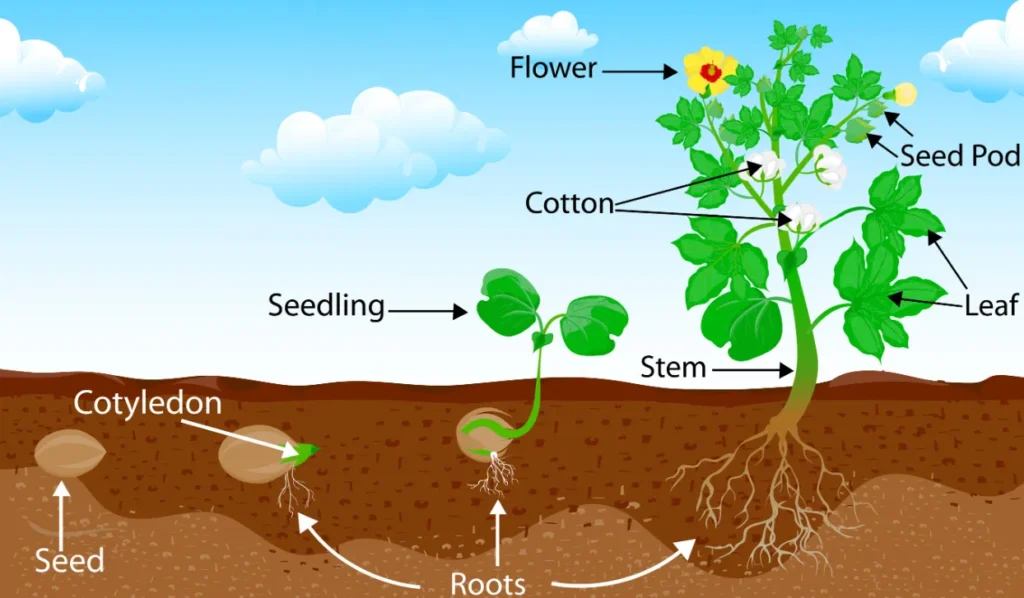
- Roots absorb water and nutrients from the soil
- Stems support the plant and transport nutrients
- Leaves capture sunlight for photosynthesis
Later, plants began to produce seeds instead of relying only on spores. Seeds provided protection and allowed plants to grow in different environments. This led to the development of flowering plants, also known as angiosperms, which are the most common plants today.
Different types of plants evolved to survive in various climates. For example:
- Desert plants adapted to store water
- Tropical plants grew large leaves to capture sunlight
- Cold-region plants developed ways to survive freezing temperatures
Today, there are over 390,000 known plant species on Earth. Each one has adapted in unique ways to survive and grow.
The evolution of plants is not just a story of survival—it’s also a story of transformation. Plants have shaped the planet by providing oxygen, food, and shelter for countless organisms, including humans.
The History of Their Scientific Naming
Scientific naming helps us identify and classify plants clearly and systematically. This system, known as binomial nomenclature, was developed to avoid confusion caused by common names.
Here are key points about the history of scientific naming:
- Carl Linnaeus, a Swedish scientist, introduced the system in the 18th century.
- Each Plant is given a two-part name:
- The first part is the genus (group name)
- The second part is the species (specific name)
- For example:
- Rosa indica (a type of rose)
- Scientific names are written in Latin, making them universal across all countries.
- The genus name is always capitalized, while the species name is lowercase.
- Names are usually written in italics to distinguish them from regular text.
This system helps scientists:
- Identify plants accurately
- Study plant relationships
- Share information globally
Before this system, plants had long and confusing names. Linnaeus simplified everything, making plant study easier and more organized.
Today, scientific naming continues to evolve as new plant species are discovered. It remains a key part of botany and helps us understand the diversity of plant life.
Their life cycle and ability to survive in nature
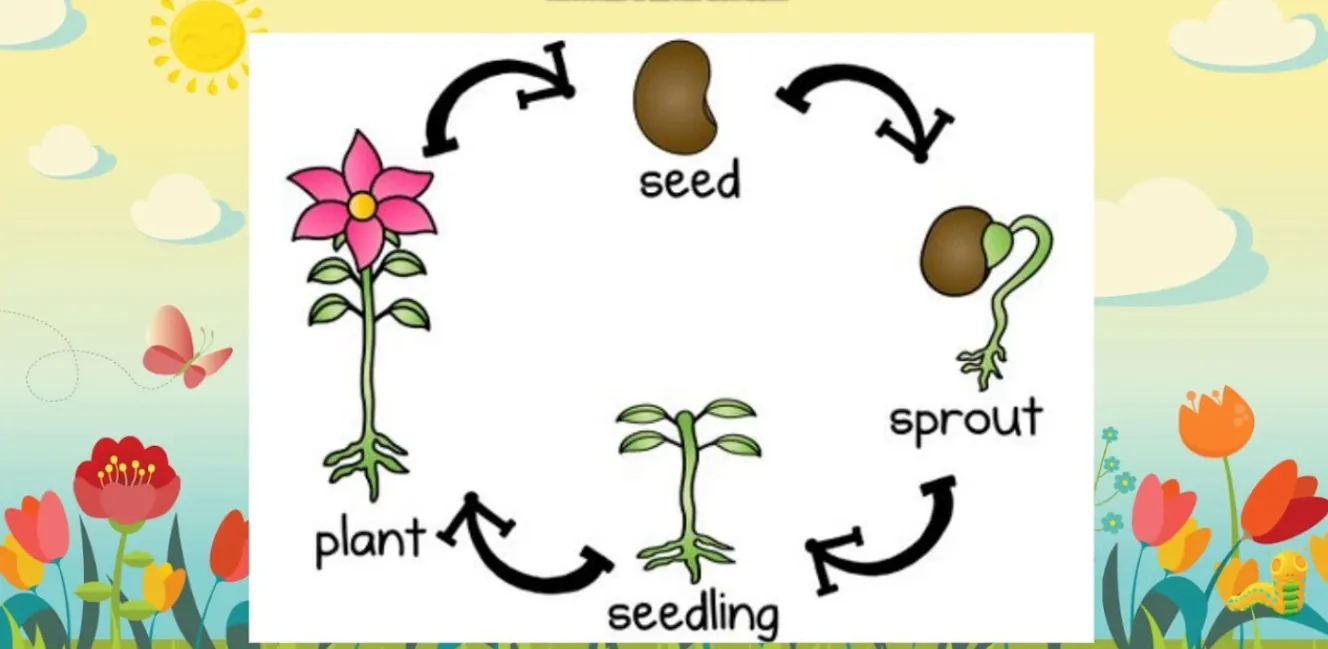
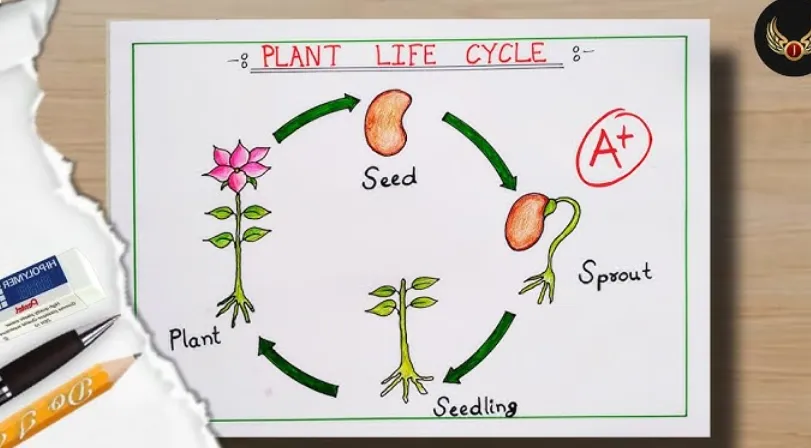
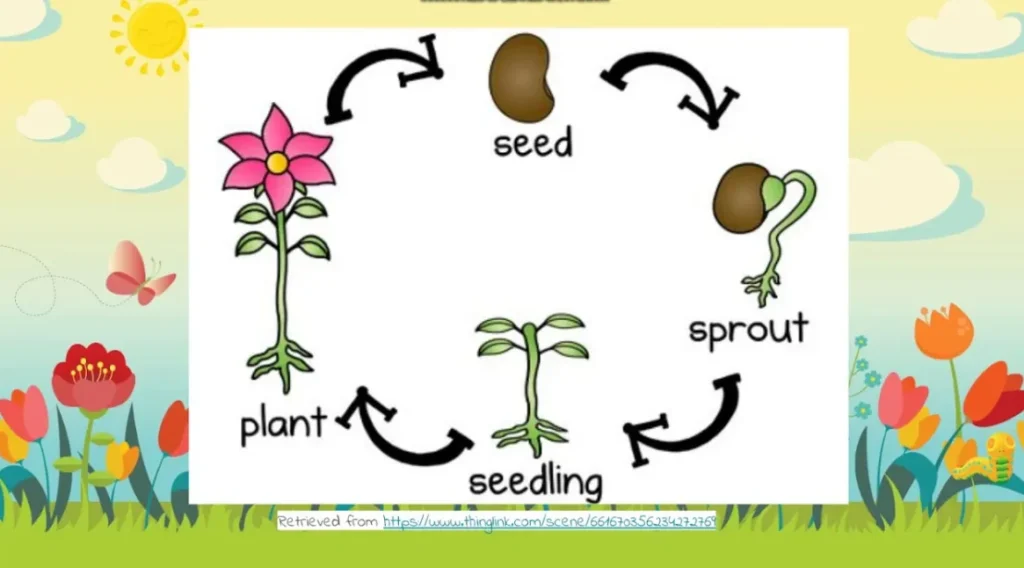
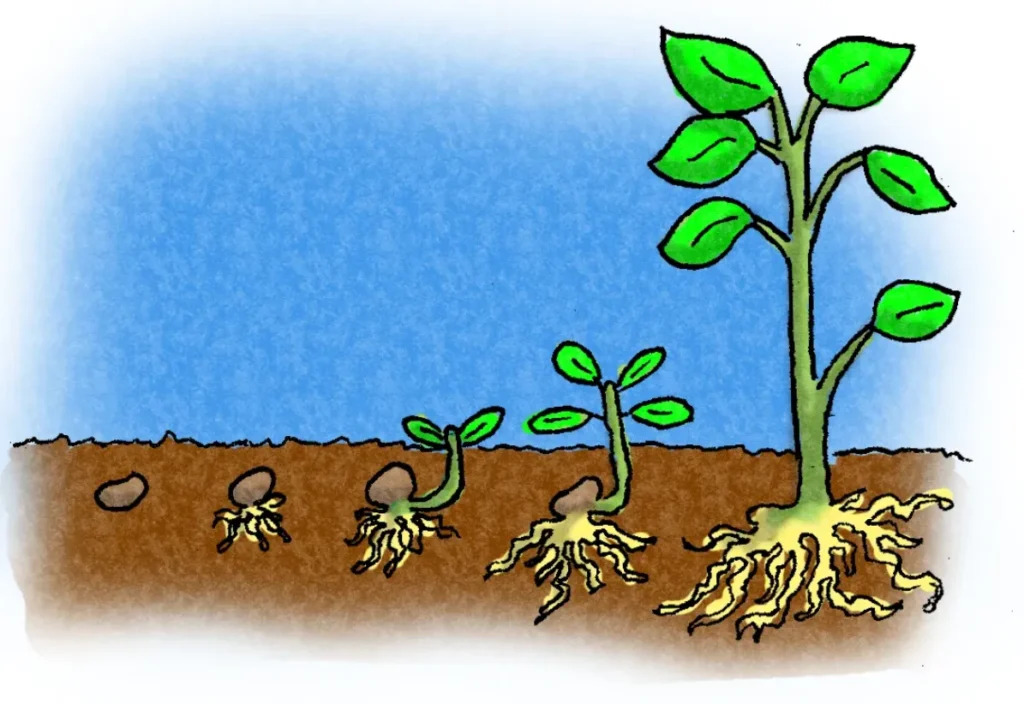
The plant life cycle for kids is simple yet amazing. It shows how plants grow, reproduce, and continue their species.
Here are the main stages of a plant’s life cycle:
- Seed Stage
- A plant begins as a seed. Inside the seed is a tiny baby plant waiting to grow.
- Germination
- When the seed gets water, air, and warmth, it starts to grow. Roots begin to form, and a small shoot appears.
- Seedling Stage
- The young Plant grows leaves and starts making its own food using sunlight.
- Mature Plant
- The Plant reaches full size and can produce flowers or fruits.
- Reproduction
- The Plant produces new seeds, restarting the cycle.
How plants survive in nature:
- They use photosynthesis to make food from sunlight
- Roots help them absorb water and nutrients
- Leaves release oxygen into the air
- Some plants store water to survive drought
- Others grow thick bark to protect against the weather
Plants are incredibly adaptable. Whether in forests, deserts, or underwater, they find ways to survive and grow.
Their Reproductive Process and raising their children
Plants reproduce in different ways to ensure their survival. This process is fascinating and easy to understand.
Types of reproduction:
- Sexual Reproduction
- Involves flowers, pollen, and seeds
- Asexual Reproduction
- Plants grow new ones from stems, roots, or leaves
Steps in plant reproduction:
- Pollination
- Pollen is transferred from one flower to another by wind, insects, or animals.
- Fertilization
- The pollen joins with the ovule to form a seed
- Seed Formation
- The fertilized ovule becomes a seed
- Seed Dispersal
- Seeds are spread by wind, water, or animals
- Growth of New Plants
- Seeds grow into new plants, continuing the cycle
Plants don’t “raise children” as animals do, but they ensure their survival by producing many seeds. Some seeds grow immediately, while others wait for the right conditions.
The importance of them in the ecosystem
Plants are essential for life on Earth. Without them, ecosystems would collapse.
Here are key reasons why plants are important:
- Produce Oxygen
- Plants release oxygen, which humans and animals need to breathe
- Provide Food
- Fruits, vegetables, and grains come from plants
- Support Wildlife
- Animals depend on plants for shelter and food
- Maintain Soil Health
- Roots prevent soil erosion
- Control Climate
- Plants absorb carbon dioxide, and help reduce global warming
- Water Cycle Regulation
- Plants help maintain moisture in the environment
Plants are the foundation of all ecosystems. They support life in ways we often take for granted.
Important Things That You Need To Know
Plants come in many forms, and some are very popular in homes and gardens. Let’s explore a few interesting ones and useful planting knowledge.
🌿 Popular Plants:
- Pothos Plant
- Easy to grow indoors, requires little sunlight, and is perfect for beginners
- Elephant Ear Plant
- Known for its large leaves, adds beauty to gardens
- Prayer Plant
- Leaves fold at night like praying hands
- Lavender Plant
- Fragrant Plant used in oils, medicine, and decoration
🌳 How to plant a tree:
- Choose a sunny location
- Dig a hole twice the size of the root
- Place the tree carefully
- Cover with soil and water regularly
- Protect it from strong winds
These plants are not only beautiful but also teach kids about care and responsibility. Learning about different plants makes the plant life cycle even more exciting.
What to do to protect them in nature and save the system for the future
Protecting plants is essential for a healthy planet. Here are some simple actions everyone can take:
- 🌱 Plant more trees and flowers in your area
- 💧 Water plants regularly, but avoid wasting water
- 🚫 Avoid cutting trees unnecessarily
- ♻️ Use eco-friendly products to reduce pollution
- 🐝 Protect pollinators like bees and butterflies
- 🌍 Reduce plastic use to protect soil and water
- 🌿 Grow plants at home or in school gardens
- 📚 Educate others about the importance of plants
Small steps can make a big difference. Teaching kids these habits ensures a greener future.
Frequently Asked Questions (FAQs)
1. What is the plant life cycle for kids?
It is the process by which plants grow from seeds to mature plants and produce new seeds.
2. How long does a plant’s life cycle take?
It depends on the plant type. Some take weeks, others take years.
3. What is germination?
It is the process where a seed begins to grow into a plant.
4. Why do plants need sunlight?
Plants use sunlight to make food through photosynthesis.
5. Can plants grow without soil?
Yes, some plants grow in water using hydroponics.
6. What helps plants reproduce?
Pollination by insects, wind, or animals helps plants reproduce.
7. Why are plants important for kids to learn?
They teach responsibility, science, and environmental awareness.
8. What is the easiest Plant for kids to grow?
Beans, sunflowers, and pothos plants are easy for beginners.
Conclusion
Understanding the plant life cycle for kids is more than just learning science—it’s about discovering the magic of life itself. From a tiny seed to a flourishing plant, every stage tells a story of growth, survival, and renewal.
Plants are not only beautiful but also essential for life on Earth. They provide oxygen, food, shelter, and balance to ecosystems. By learning how plants grow and reproduce, children develop a deeper appreciation for nature and the environment.
In today’s fast-paced digital world, connecting with plants offers a refreshing and educational experience. It encourages curiosity, patience, and responsibility. Whether planting a tree, caring for a houseplant, or simply observing nature, kids gain valuable life lessons.
Moreover, protecting plants is crucial for the future. Climate change, pollution, and deforestation threaten plant life globally. By teaching young minds the importance of conservation, we can build a generation that values and protects nature.
This guide has covered everything from plant evolution and scientific naming to their life cycle and ecological importance. It also introduced popular plants like pothos, prayer plant, and lavender, making learning fun and practical.
Also Read About: Fruit fly life cycle