The fruit fly life cycle is one of the most fascinating biological processes in the insect world. Despite their tiny size, fruit flies have played a massive role in science, agriculture, and ecosystem balance. These insects are commonly found around ripening fruits, vegetables, and organic waste, which is why they are often noticed in kitchens and gardens.
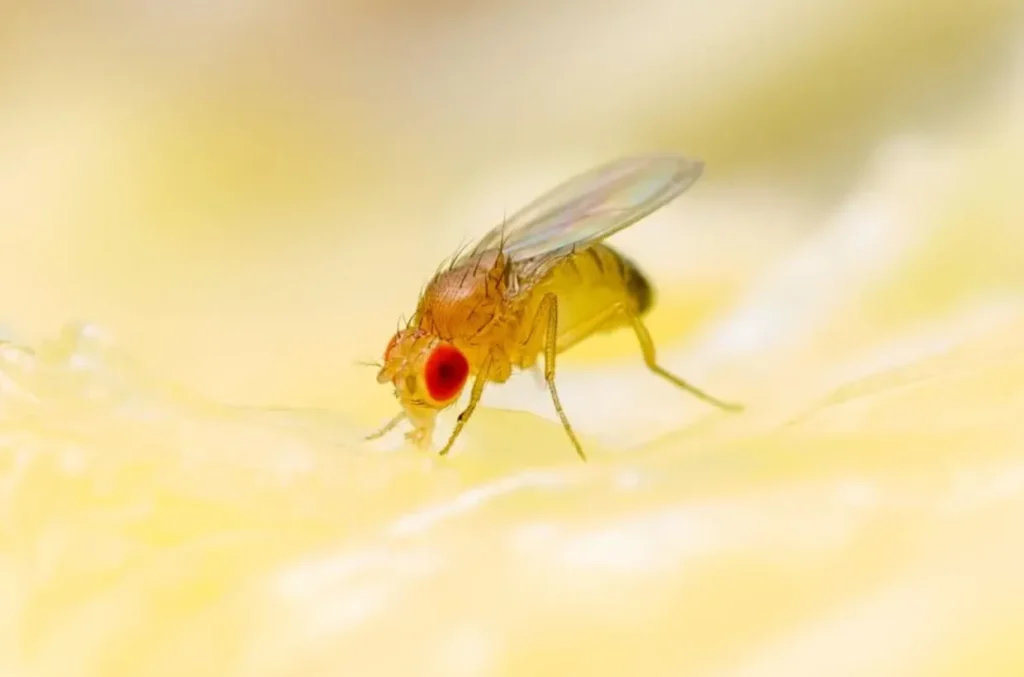
Fruit flies belong to the family Drosophilidae, and the most studied species is Drosophila melanogaster. Scientists have used this species for over a century to understand genetics, evolution, and biological development. In fact, many discoveries in modern biology were made by studying fruit flies because their life cycle is short and easy to observe.
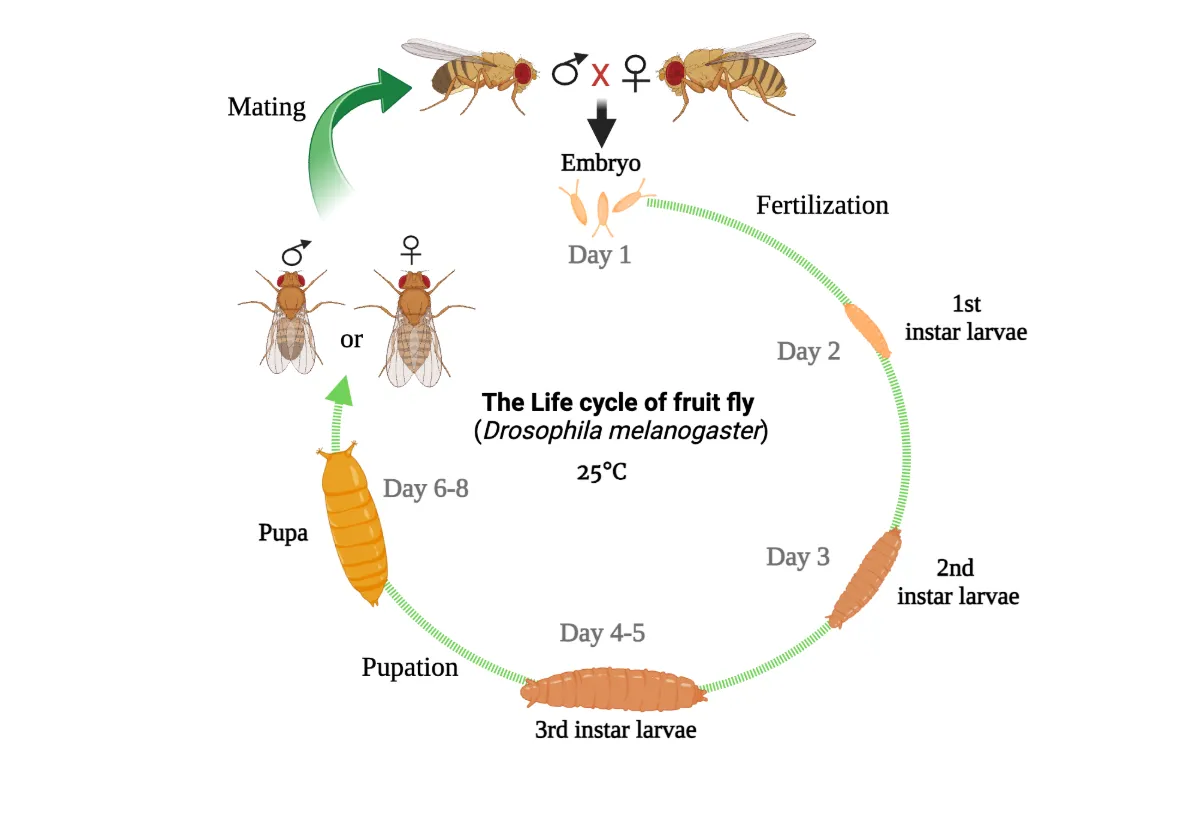
Typically, the entire fruit fly life cycle—from egg to adult—takes about 8 to 10 days, depending on environmental conditions such as temperature and food availability. This rapid development allows fruit flies to reproduce quickly and adapt to different environments.
Although many people consider them a household nuisance, fruit flies also play important roles in nature. They help break down decaying organic matter and contribute to nutrient recycling within ecosystems.
In homes, fruit flies often appear near fruit bowls or garbage bins. Because they reproduce rapidly, people often look for solutions such as a fruit fly trap, a DIY fruit fly trap, or a homemade fruit fly trap made with ingredients like apple cider vinegar.
Understanding the fruit fly life cycle helps us appreciate how these tiny insects survive, reproduce, and interact with their environment. This guide explores their evolution, scientific naming history, reproduction process, ecological importance, and practical ways to manage them responsibly.
Their Evolution And Their Origin
Fruit flies have an evolutionary history that stretches back millions of years. These insects belong to the order Diptera, which includes flies, mosquitoes, and gnats. Fossil evidence suggests that early dipteran insects existed over 200 million years ago, during the Triassic period.
Scientists believe fruit flies evolved as part of the natural ecological process of decomposition. As flowering plants and fruit-bearing trees spread across the planet, insects that could feed on fermenting fruits and plant matter gained an evolutionary advantage.
Early Origins
Fruit flies likely originated in tropical environments, where warm temperatures and abundant plant life provided ideal conditions for survival. Tropical forests offered plenty of decaying fruit, which served as both food and breeding grounds.
Over time, fruit flies diversified into thousands of species across different continents. Today, scientists estimate that there are over 4,000 species of fruit flies worldwide.
Evolutionary Adaptations
Fruit flies developed several traits that helped them thrive:
- Rapid reproduction cycles allow quick population growth
- Strong sense of smell to detect fermenting fruits
- Efficient metabolic systems to survive on sugary and decaying food sources
- Genetic flexibility, enabling quick adaptation to environmental changes
These characteristics allowed fruit flies to spread across almost every region of the world.
Fruit Flies in Scientific Research
The evolutionary simplicity of fruit flies made them ideal for laboratory research. Because they reproduce quickly and have relatively simple genetics, scientists began studying them extensively in the early 1900s.
The famous geneticist Thomas Hunt Morgan used fruit flies to demonstrate how genes are inherited. His research eventually earned him the Nobel Prize in Physiology or Medicine in 1933.
Modern Evolutionary Studies
Today, fruit flies are still used in advanced biological research, including:
- Genetic mutation studies
- Disease modeling
- Aging research
- Neuroscience experiments
Their evolutionary journey from forest insects to essential scientific models highlights their remarkable adaptability.
The History of Their Scientific Naming
The scientific naming of fruit flies has evolved alongside the development of modern biology and taxonomy.
Here are key milestones in the scientific classification of fruit flies:
- 1758 – Linnaean Classification
- Swedish scientist Carl Linnaeus introduced the binomial naming system. This system assigns every species a two-part Latin name, which is still used today.
- 19th Century Discovery of Drosophilidae
- During the 1800s, scientists began identifying different species of small flies associated with fruit and fermentation. This led to the classification of the Drosophilidae family.
- Drosophila melanogaster Identification
- The species Drosophila melanogaster became the most-studied fruit fly. The name comes from Greek words meaning “black-bellied dew lover.”
- Early 1900s Genetic Research
- Scientists adopted Drosophila melanogaster as a model organism for studying genetics. Its small genome and short life cycle made it perfect for laboratory experiments.
- Modern Taxonomy Advances
- With modern DNA analysis, scientists have identified thousands of fruit fly species and more accurately understood their evolutionary relationships.
Today, fruit flies remain among the most important organisms in biological research, with their scientific names reflecting centuries of discovery and classification.
Important Things That You Need To Know
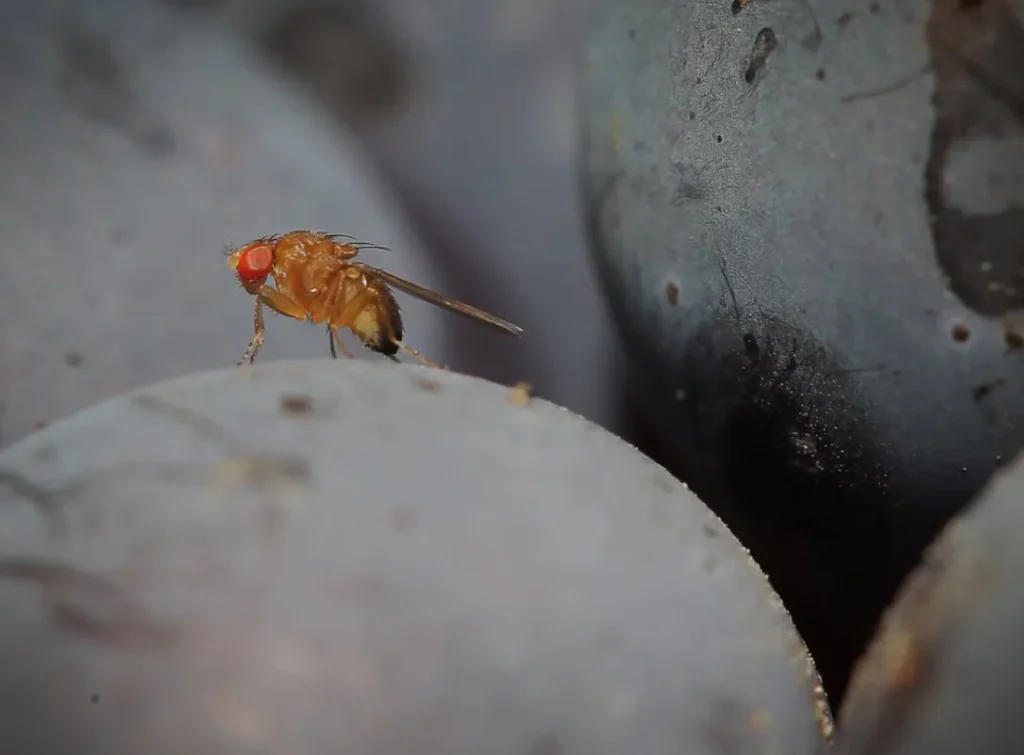
Fruit flies are small insects, but their presence in homes and kitchens often raises questions. People frequently search for effective ways to manage them while understanding their behavior.
One common household issue is the appearance of fruit flies around ripe fruit. This happens because female flies lay fruit fly eggs on fermenting food surfaces. Once the eggs hatch, larvae begin feeding immediately.
Because fruit flies multiply quickly, many people use a fruit fly trap to reduce their population indoors. One of the most popular solutions is a fruit fly trap made with apple cider vinegar, which attracts flies due to its fermented smell.
Another widely used method is a homemade fruit fly trap, which can be created using simple kitchen ingredients. These traps usually involve vinegar, sugar, or fruit juice, placed in a container with a small opening to prevent flies from escaping.
For those who prefer more hands-on solutions, a DIY fruit fly trap made with a jar, plastic wrap, and vinegar is a simple and effective option.
Sometimes people also search for a fruit fly killer, but controlling fruit flies usually works best by removing food sources rather than relying on chemicals.
Understanding these simple methods helps reduce indoor fruit fly populations without harming the broader Ecosystem where they naturally belong.
Their life cycle and ability to survive in nature
The fruit fly life cycle is incredibly fast compared to many other insects. Under ideal conditions, fruit flies can complete their entire life cycle in just over a week.
Here are the four main stages of their development:
1. Egg Stage
- Female fruit flies lay hundreds of tiny eggs on the surface of fermenting fruit or organic material.
- Eggs hatch within 24 hours.
2. Larva Stage
- The larvae, also known as maggots, begin feeding immediately.
- They grow rapidly by consuming yeast and microorganisms found on decaying fruit.
3. Pupa Stage
- After several days of feeding, larvae transform into pupae.
- Inside the pupal case, the insect undergoes complete metamorphosis.
4. Adult Stage
- Adult fruit flies emerge within 7–10 days.
- They become capable of reproduction within 24 hours.
Survival Strategies in Nature
Fruit flies survive successfully because they:
- Adapt quickly to new food sources
- Reproduce rapidly
- Thrive in warm environments
- Detect fermentation smells from long distances
These survival traits allow fruit flies to maintain stable populations in many ecosystems.
Their Reproductive Process and raising their children
Fruit flies are known for their incredibly efficient reproductive system. Their short life span requires rapid reproduction to ensure the species’ survival.
Mating Behavior
- Male fruit flies perform courtship behaviors such as wing vibrations.
- Females choose mates based on scent and sound signals.
Egg Laying
- Female fruit flies can lay 400–500 eggs during their lifetime.
- Eggs are deposited on fermenting fruit surfaces.
Larval Development
- After hatching, larvae feed continuously.
- This stage is critical for growth and energy storage.
Rapid Maturity
- Fruit flies become reproductive adults within one to two days after emerging.
Parental Strategy
Fruit flies do not care for their offspring directly. Instead, they ensure survival by:
- Laying eggs in nutrient-rich environments
- Producing large numbers of offspring
- Choosing safe locations with minimal predators
This strategy allows fruit fly populations to grow quickly when conditions are favorable.
The importance of them in the Ecosystem
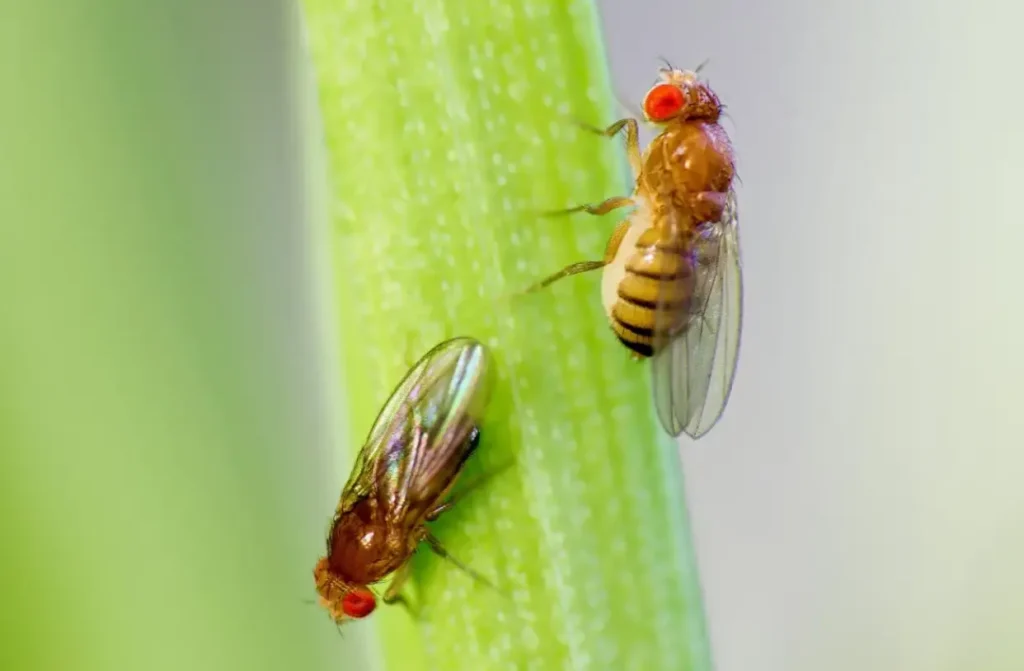
Although fruit flies can be annoying indoors, they serve several important ecological functions.
Nutrient Recycling
Fruit flies help break down decaying fruit and organic matter. This process returns nutrients to the soil.
Food Source for Other Animals
Many animals rely on fruit flies as food, including:
- Birds
- Frogs
- Spiders
- Small reptiles
Pollination Support
Some fruit fly species help with pollination while feeding on plant juices and nectar.
Scientific Contribution
Fruit flies have helped scientists understand:
- Genetic inheritance
- Mutation processes
- Disease mechanisms
- Brain function
Decomposition Process
By feeding on decomposing fruit, fruit flies accelerate natural recycling systems in forests and gardens.
These roles make fruit flies an important part of natural ecosystems.
What to do to protect them in nature and save the system for the future
Although fruit flies are abundant, maintaining balanced ecosystems benefits all species. Here are ways to support ecological health.
- Protect natural habitats
- Forests and natural plant environments support insect biodiversity.
- Reduce pesticide use
- Excessive pesticide application can harm beneficial insects.
- Promote organic farming practices
- Organic agriculture encourages balanced insect populations.
- Encourage composting systems
- Compost piles provide natural habitats for decomposer insects.
- Maintain biodiversity
- Healthy ecosystems depend on diverse insect populations.
- Plant fruit-bearing trees responsibly
- These plants support many insects, including fruit flies.
- Support scientific research
- Continued study of fruit flies contributes to advances in genetics and medicine.
Protecting ecosystems ultimately supports the countless species that depend on each other.
Frequently Asked Questions (FAQs)
1. How long does the fruit fly’s life cycle take?
The entire fruit fly life cycle typically takes 8–10 days under warm conditions.
2. Where do fruit flies lay eggs?
They lay eggs on fermenting fruits, vegetables, and organic waste.
3. How many eggs can a fruit fly lay?
A female fruit fly can lay up to 500 eggs during her lifetime.
4. Why are fruit flies attracted to kitchens?
They are attracted to ripening fruit, sugary liquids, and fermentation odors.
5. What is the most effective fruit fly trap?
Many people use a fruit fly trap filled with apple cider vinegar to attract and trap flies.
6. Are fruit flies harmful to humans?
Fruit flies are generally not dangerous, but they can contaminate food surfaces.
7. Why are fruit flies used in scientific research?
Their short life cycle and simple genetics make them ideal for biological studies.
8. Can fruit flies survive in cold weather?
Fruit flies prefer warm environments, and cold temperatures slow their development.
Conclusion
The fruit fly life cycle demonstrates how even the smallest organisms can have complex biological systems and significant ecological roles. From their rapid development stages to their impressive reproductive capacity, fruit flies represent one of nature’s most efficient survival strategies.
Despite their reputation as kitchen pests, fruit flies play important roles in ecological processes. They help decompose organic material, recycle nutrients, and provide food for many other species. Without decomposer insects like fruit flies, ecosystems would struggle to maintain natural balance.
Their importance goes beyond ecology. Fruit flies have also revolutionized scientific research. Studies involving Drosophila melanogaster have helped scientists understand genetic inheritance, cellular processes, aging, and disease development. Many modern breakthroughs in biology and medicine have roots in fruit fly research.
Understanding how fruit flies live and reproduce also helps humans manage them more effectively in homes and agricultural settings. Simple methods like removing food sources or using natural traps can control indoor populations without harming the environment.
Ultimately, fruit flies are a reminder that every species—no matter how small—plays a meaningful role in the web of life. By learning about their evolution, reproduction, and ecological significance, we gain deeper insight into the delicate systems that support life on Earth.
Also Read About: Fern Life Cycle