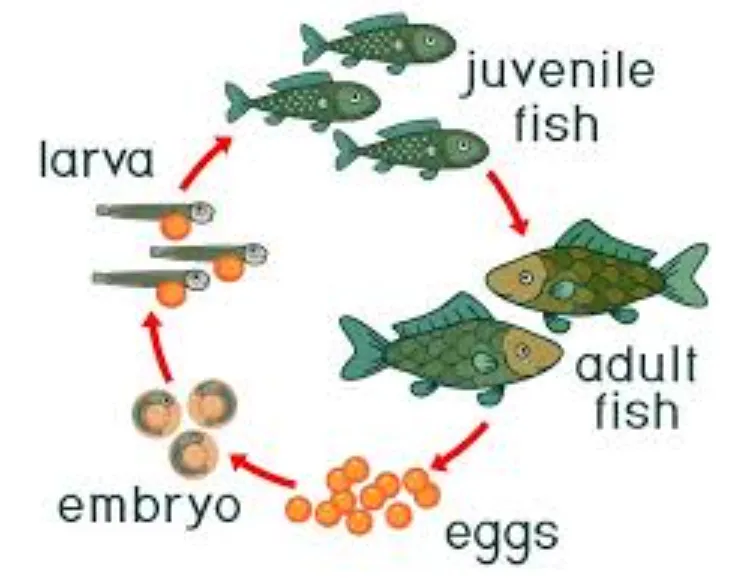
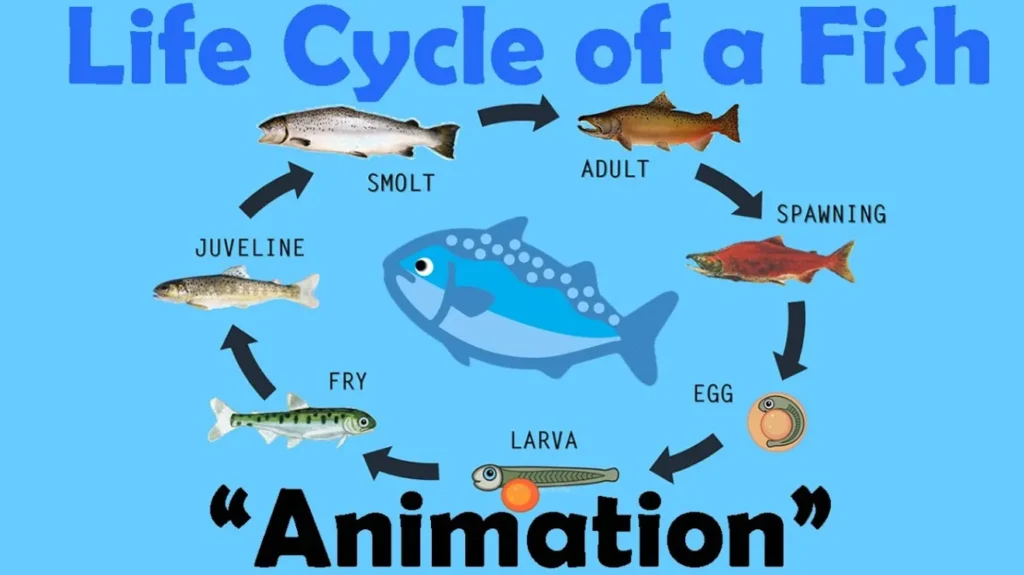
The fish life cycle is a fascinating natural process that shows how aquatic life grows, adapts, and survives in diverse environments. From tiny eggs floating in water to fully developed adult fish swimming freely, each stage plays a crucial role in maintaining ecosystems.
Fish are found in oceans, rivers, lakes, and even in home environments like fish tanks, making them among the most widespread animal groups on Earth. Understanding their life cycle helps us appreciate biodiversity and the importance of conservation.
Quick Answers (Most Common Questions)
1. What are the stages of the fish life cycle?
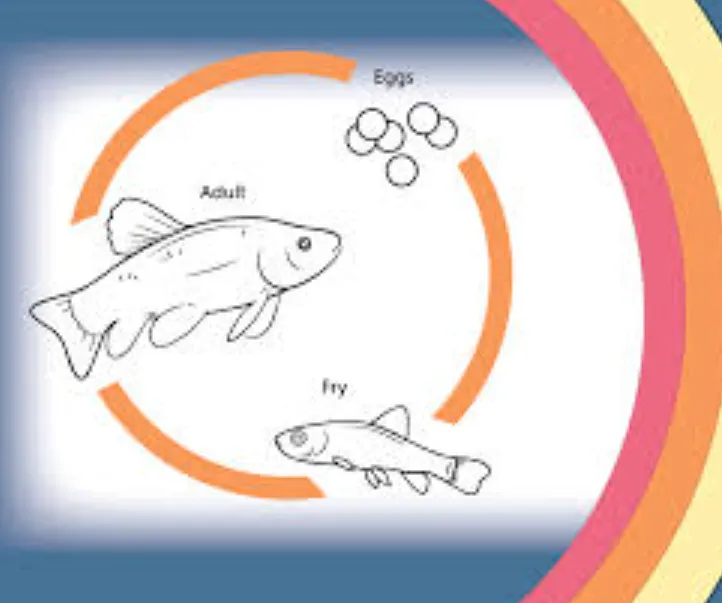
The fish life cycle typically includes four stages: egg, larva, juvenile (fry), and adult.
2. How long does a fish’s life cycle take?
It varies by species. Some fish, like goldfish, grow within months, while others, like cod, may take several years.
3. Where do fish lay eggs?
Fish lay eggs in water—either floating, attached to plants, or buried in sand, depending on the species.
Quick Life Cycle Table
| Stage | Description | Duration (Approx.) | Key Features |
| Egg | Fertilized eggs develop in water | A few days to weeks | Protected by a jelly-like coating |
| Larva | Newly hatched fish with a yolk sac | Days to weeks | Limited movement, dependent on the yolk |
| Juvenile | Growing fish (fry stage) | Weeks to months | Begins feeding independently |
| Adult | Fully developed, capable of reproduction | Months to years | Strong swimmers, reproductive ready |
The History Of Their Scientific Naming
The scientific classification of fish has evolved over centuries through contributions from early naturalists and modern biologists.
- Carl Linnaeus (1707–1778): Introduced the binomial nomenclature system, giving fish species structured scientific names.
- Fish are classified in the kingdom Animalia and the phylum Chordata.
- They are divided into major groups like:
- Osteichthyes (bony fish)
- Chondrichthyes (cartilaginous fish, like sharks)
- Scientific naming helps in identifying species such as:
- Carassius auratus (goldfish)
- Gadus morhua (cod fish)
- Modern taxonomy uses DNA analysis for more accurate classification.
- Naming systems help researchers track evolution, behaviour, and habitat.
This structured approach ensures global consistency in the study of fish species.
Their Evolution And Their Origin
Fish are among the oldest vertebrates on Earth, with origins dating back over 500 million years to the Cambrian period.
Early fish-like organisms lacked jaws and were known as agnathans. These primitive species evolved into more advanced forms with jaws, fins, and skeletons.
During the Devonian period, often called the “Age of Fishes,” fish diversified rapidly. Key evolutionary milestones include:
- Development of bony skeletons for better movement
- Evolution of lungs and swim bladders
- Emergence of lobe-finned fish, ancestors of land vertebrates
Fish adapted to a wide range of aquatic environments, from deep oceans to freshwater rivers. Over time, natural selection shaped their body structures, colours, and behaviours.
Modern fish species show incredible diversity. For example:
- Goldfish evolved through selective breeding
- Deep-sea fish developed bioluminescence
- Tropical fish adapted vibrant colours for communication
This long evolutionary journey highlights how fish became essential components of aquatic ecosystems.
Their Main Food and Its Collection Process
Fish have diverse diets depending on their species, habitat, and size.
Main Food Sources:
- Plankton (common for small fish)
- Algae and aquatic plants
- Insects and larvae
- Smaller fish (predatory species)
- Organic debris (detritivores)
Food Collection Methods:
- Filter Feeding
- Fish, like some species, strain tiny organisms from the water.
- Predation
- Carnivorous fish hunt smaller fish or insects.
- Grazing
- Herbivorous fish feed on algae and plants.
- Scavenging
- Some fish consume dead organic matter.
- Ambush Hunting
- Certain fish remain still and strike suddenly.
Fish living in a fish tank depend on human-provided food, while wild fish adapt their feeding strategies based on availability.
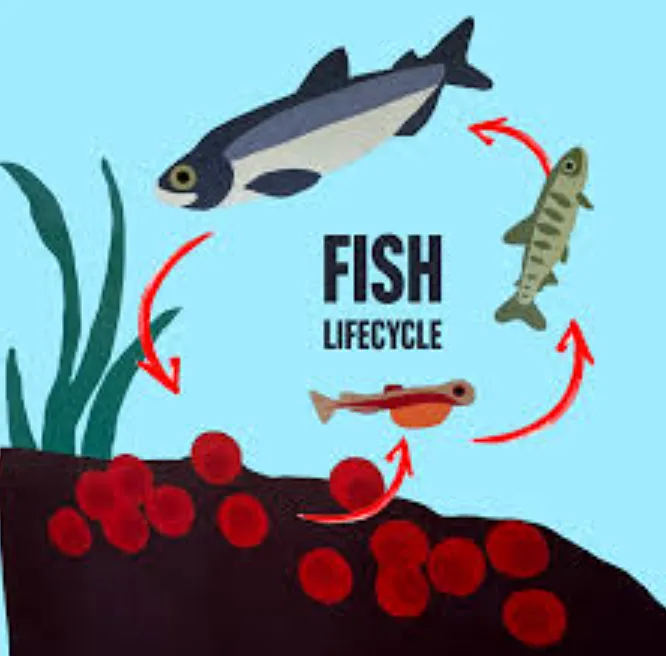
Their Life Cycle and Ability to Survive in Nature
Egg Stage
Fish begin life as eggs. These are often laid in large numbers to increase survival chances.
Larval Stage
After hatching, larvae rely on yolk sacs for nutrition. They are highly vulnerable to predators.
Juvenile Stage
At this stage, fish begin active feeding and develop fins and scales.
Adult Stage
Adult fish can reproduce and adapt to environmental changes.
Survival Abilities
- Camouflage to avoid predators
- Schooling behavior for protection
- Rapid reproduction rates
- Adaptation to temperature and salinity
These survival mechanisms help fish thrive in both natural waters and in controlled environments such as aquariums.
Their Reproductive Process and Raising Their Children
Fish reproduction varies widely across species.
Key Points:
- External Fertilization
- Most fish release eggs and sperm into water.
- Spawning Behavior
- Fish gather in groups during the breeding season.
- Egg Protection
- Some species guard eggs (e.g., cichlids).
- Nest Building
- Certain fish create nests for eggs.
- Live Birth (Rare)
- Some species give birth to live young.
Raising Their Young:
- Many fish do not care for their offspring
- Some species protect and feed their young
- Fry quickly becomes independent
Reproductive strategies ensure population sustainability.
Importance of Them in this Ecosystem
Food Chain Balance
Fish play a vital role as both predators and prey.
Nutrient Cycling
They help distribute nutrients across aquatic systems.
Biodiversity Support
Fish maintain ecological diversity.
Human Benefits
- Food source (e.g., cod fish)
- Economic value in fisheries
- Recreational activities
Habitat Maintenance
Fish help maintain coral reefs and aquatic vegetation.
Important Things That You Need To Know
Fish are not only biologically fascinating but also culturally and economically significant.
Key Insights About LSI Keywords
- Fish are one of the most diverse vertebrates, with over 34,000 species worldwide.
- Fish and chips are a famous dish that highlights the importance of fish in human diets.
- A fish tank provides a controlled environment for studying fish behaviour and care.
- Goldfish are popular pets known for their adaptability and beauty.
- Fish drawing is widely used in education and art to teach anatomy and creativity.
Understanding these aspects helps connect scientific knowledge with daily life.
Fish are present in cuisines, hobbies, and ecosystems, making them essential in multiple dimensions of life.
What to Do to Protect Them in Nature and Save the System for the Future
- Reduce water pollution
- Avoid overfishing
- Support sustainable fishing practices
- Protect aquatic habitats
- Limit plastic waste in oceans
- Promote conservation awareness
- Maintain clean rivers and lakes
- Support marine protected areas
- Avoid releasing invasive species
- Educate communities about ecosystem balance
These steps ensure the long-term survival of fish populations.
Frequently Asked Questions (FAQs)
1. What is the life cycle of a fish?
It includes egg, larva, juvenile, and adult stages.
2. Do all fish lay eggs?
Most do, but some species give birth to live young.
3. How do fish breathe?
Fish use gills to extract oxygen from water.
4. What do baby fish eat?
They consume plankton and small particles.
5. How long do fish live?
It varies from a few months to several decades.
6. Can fish survive in a fish tank?
Yes, with proper care and environment.
7. Why are fish important?
They maintain ecological balance and provide food.
8. What is the most common pet fish?
Goldfish are among the most popular.
Conclusion
The fish life cycle is a remarkable journey that reflects nature’s complexity and adaptability. From tiny eggs to fully grown adults, each stage plays a vital role in sustaining aquatic ecosystems.
Fish are not only essential for ecological balance but also deeply connected to human life through food, culture, and recreation. Whether observing a goldfish in a tank or studying wild species in the ocean, understanding their life cycles enhances our appreciation of biodiversity.
However, increasing environmental threats highlight the need for conservation. By protecting habitats, reducing pollution, and promoting sustainable practices, we can ensure that fish continue to thrive for generations to come.
Also Read: strawberry life cycle