The fern life cycle is one of the most fascinating processes in the plant kingdom. Ferns are ancient plants that existed long before flowering plants appeared on Earth. Today, scientists estimate that there are more than 10,000 species of ferns worldwide, thriving in forests, wetlands, mountains, and even urban gardens.
Unlike most plants that reproduce through seeds, ferns reproduce through spores, making their life cycle unique and complex. This reproductive system allows ferns to survive in diverse environments and adapt to changing ecological conditions.
Ferns belong to a group of plants known as pteridophytes, which include plants that reproduce without seeds or flowers. Instead, they rely on microscopic spores that grow into a small structure called a gametophyte, eventually producing a new fern plant. This two-stage life cycle has helped ferns survive for hundreds of millions of years.
Today, ferns are widely appreciated not only for their biological importance but also for their ornamental beauty. A wide variety of ferns, such as asparagus fern, foxtail fern, staghorn fern, and maidenhair fern, are commonly grown in homes and gardens.
Ferns have also inspired literature and culture. A famous example is the classic novel “Where the Red Fern Grows,” which symbolizes loyalty, resilience, and the deep connection between nature and humans.
Beyond their beauty, ferns play a critical role in ecosystems. They help stabilize soil, maintain forest humidity, and provide shelter for many small animals and insects.
Understanding the fern life cycle helps us appreciate how these ancient plants continue to thrive today. In this article, we will explore their evolution, scientific history, reproductive process, ecological importance, and ways to protect them for the future.
Their Evolution And Their Origin
Ferns are among the oldest plants on Earth, with fossil records dating back more than 360 million years to the late Devonian period. During the Carboniferous period, massive fern forests covered large parts of the planet.
These ancient forests later turned into the coal deposits we use today. This means that modern ferns are living descendants of plants that once dominated prehistoric landscapes.
Early Evolution of Ferns
Ferns evolved during a time when Earth’s environment was very different. The planet had higher humidity, dense forests, and fewer flowering plants.
Early ferns developed a unique survival strategy: reproducing through spores rather than seeds. This adaptation allowed them to spread easily in moist environments.
Adaptation Over Millions of Years
As Earth’s climate changed, many ancient plant species went extinct. However, ferns survived by adapting to different habitats.
Today they grow in:
- Tropical rainforests
- Temperate forests
- Mountain regions
- Wetlands and riverbanks
- Urban gardens and homes
Their ability to adapt explains why we still see thousands of fern species today.
Structural Evolution
Ferns gradually developed distinctive features that helped them thrive:
- Fronds: Large leafy structures used for photosynthesis
- Rhizomes: Underground stems that help them spread
- Spores: Tiny reproductive cells for propagation
These adaptations allowed ferns to colonize environments where seed plants could not easily survive.
Modern Fern Diversity
Today’s ferns vary greatly in size and appearance. Some are tiny ground plants, while others grow into large tree-like structures.
Popular species include:
- Asparagus fern
- Foxtail fern
- Maidenhair fern
- Staghorn fern
Scientists continue discovering new fern species, especially in tropical regions.
Because of their long evolutionary history, ferns are often called “living fossils.” Studying them provides valuable insight into how plants evolved and adapted over millions of years.
Important Things That You Need To Know
Understanding Popular Fern Types and Cultural References
When learning about the fern life cycle, it is also helpful to explore some well-known fern varieties and cultural references connected to these plants.
One famous reference is the novel “Where the Red Fern Grows.” Although it is not directly about plant biology, the red fern in the story symbolizes love, loyalty, and the connection between nature and human emotions.
In gardening and horticulture, several fern varieties are widely cultivated for their beauty and resilience.
1. Asparagus Fern
The asparagus fern is not a true fern but resembles one in appearance. It has delicate, feathery foliage and is commonly grown as a decorative indoor plant.
2. Foxtail Fern
The foxtail fern is known for its dense, bushy fronds that resemble a fox’s tail. It is drought-tolerant and popular in landscaping.
3. Staghorn Fern
The staghorn fern is unique because it grows attached to trees or mounted surfaces. Its fronds resemble deer antlers, making it a striking ornamental plant.
4. Maidenhair Fern
The maidenhair fern is famous for its delicate fan-shaped leaves and thin black stems. It thrives in humid environments and is a favorite among indoor plant enthusiasts.
5. Fern-Inspired Media and Culture
Nature documentaries like Fern Gully highlight rainforest ecosystems where ferns and other ancient plants play important ecological roles.
These plants are not just biologically important but also culturally significant in many traditions.
By exploring these examples, we gain a deeper appreciation for the diversity and cultural significance of ferns worldwide.
The History Of Their Scientific Naming
The scientific classification of ferns has evolved significantly over time. Botanists have studied these plants for centuries, gradually refining their naming system.
Here are key points in the history of fern scientific naming:
1. Early Botanical Studies
- Ancient Greek and Roman scholars first documented ferns in botanical texts.
- Early classifications were based mainly on appearance.
2. Carl Linnaeus and Modern Taxonomy
- In the 18th century, Swedish botanist Carl Linnaeus introduced the modern scientific naming system.
- Ferns were classified within the plant kingdom using binomial nomenclature.
3. Development of the Pteridophyte Group
- Botanists later grouped ferns with other seedless vascular plants under the term pteridophytes.
- This group includes plants that reproduce through spores.
4. Advancements Through Microscopy
- With the invention of microscopes, scientists studied spores and reproductive structures in detail.
- This led to more accurate classification of fern families.
5. DNA-Based Classification (Modern Era)
- Modern research uses DNA sequencing to understand fern evolution.
- Genetic studies have revealed previously unknown relationships between species.
6. Current Scientific Classification
Today, ferns belong to several families and genera within the broader classification of vascular plants. Researchers continue refining their taxonomy as new species are discovered.
Their Life Cycle and Ability to Survive in Nature
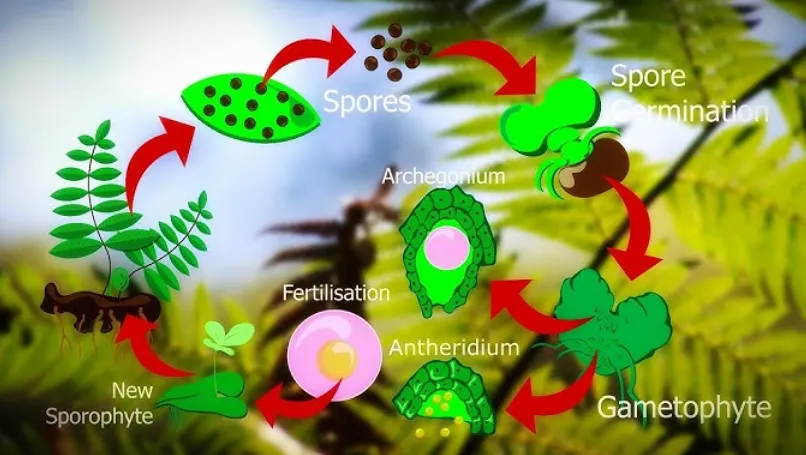
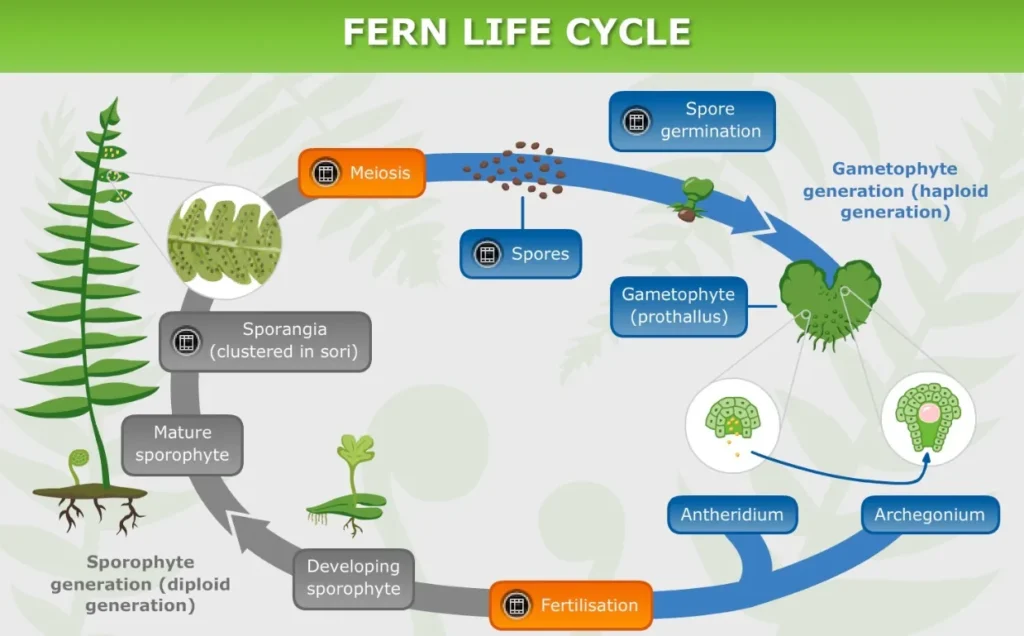
The fern life cycle is unique because it includes two distinct stages: the sporophyte and the gametophyte.
These stages allow ferns to reproduce efficiently and survive in diverse environments.
Key Stages of the Fern Life Cycle
1. Spore Production
Mature ferns produce spores on the underside of their fronds. These spores are stored in clusters called sori.
2. Spore Dispersal
When conditions are suitable, the spores are released and carried by wind or water.
3. Gametophyte Development
A spore grows into a small heart-shaped structure called a prothallus, which represents the gametophyte stage.
4. Fertilization
The gametophyte produces male and female reproductive organs. When water is present, sperm can swim to the egg, resulting in fertilization.
5. New Fern Growth
The fertilized egg grows into a young fern plant called the sporophyte, which eventually becomes a mature fern.
Survival Strategies of Ferns
Ferns have developed several mechanisms that help them survive:
- Ability to reproduce without seeds
- Efficient spore dispersal
- Adaptation to humid environments
- Rhizomes that allow spreading underground
These survival strategies explain why ferns have persisted for hundreds of millions of years.
Their Reproductive Process and Raising Their Children
Ferns reproduce through a complex but fascinating process involving spores and microscopic structures.
Unlike flowering plants, ferns do not produce seeds or fruits.
Key Steps in Fern Reproduction
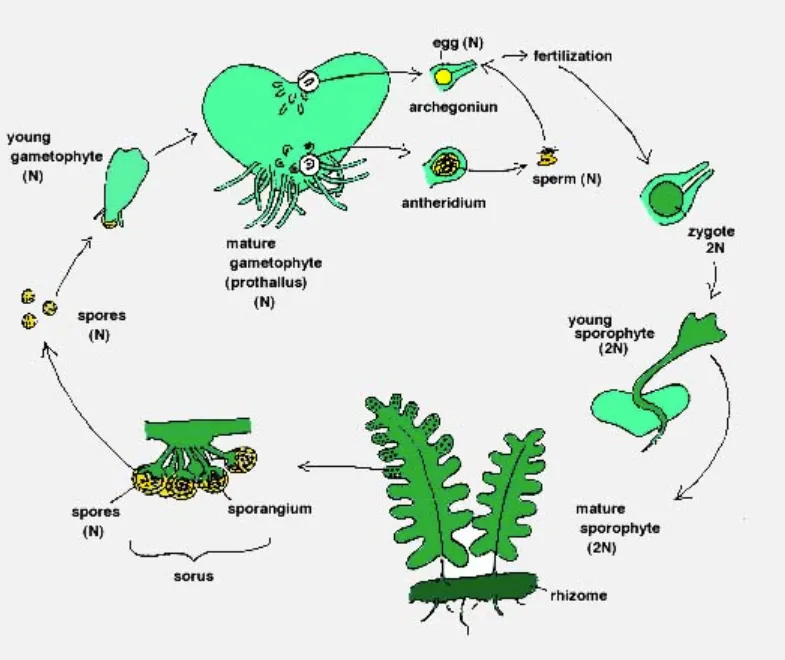
1. Formation of Spores
Spores develop in small structures called sporangia, located within sori on the fronds.
2. Germination of Spores
When spores land in a moist environment, they germinate and form a tiny green structure called the prothallus.
3. Development of Reproductive Organs
The prothallus produces two types of organs:
- Antheridia (male organs)
- Archegonia (female organs)
4. Fertilization Process
Water plays an essential role. Sperm cells swim from the antheridia to the archegonia, where they fertilize the egg.
5. Growth of a New Fern
The fertilized egg develops into a young sporophyte that grows into a mature fern plant.
How Ferns Ensure Survival of New Plants
- Production of thousands of spores
- Ability to grow in shaded areas
- Symbiotic relationships with soil fungi
These strategies increase the chances of successful reproduction.
Importance of Them in the Ecosystem
Ferns play a vital role in maintaining healthy ecosystems.
Key Ecological Contributions
1. Soil Stabilization
Fern roots help prevent soil erosion, especially in forested and mountainous regions.
2. Moisture Regulation
Ferns retain moisture in forest environments, helping maintain humidity.
3. Habitat for Wildlife
Many insects, amphibians, and small animals use ferns as shelter.
4. Nutrient Cycling
As fern leaves decompose, they enrich the soil with nutrients.
5. Air Quality Improvement
Ferns help absorb pollutants and improve air quality in natural and indoor environments.
6. Biodiversity Support
Ferns contribute to plant diversity and provide ecological balance.
Their presence often indicates a healthy ecosystem.
What to Do to Protect Them in Nature and Save the System for the Future
Protecting ferns is essential for maintaining biodiversity and ecological stability.
Here are practical steps we can take:
- Protect natural forests where fern species grow naturally.
- Avoid deforestation and uncontrolled land development.
- Promote sustainable gardening practices that include native ferns.
- Reduce pollution in forest and wetland ecosystems.
- Support conservation programs that protect rare fern species.
- Educate communities about the ecological importance of ferns.
- Prevent illegal plant collection from natural habitats.
- Encourage scientific research on fern conservation and climate resilience.
These efforts help ensure that future generations can continue benefiting from these remarkable plants.
Frequently Asked Questions (FAQs)
1. What is the fern life cycle?
The fern life cycle involves two stages: the sporophyte (adult plant) and the gametophyte (reproductive stage), allowing ferns to reproduce through spores.
2. How long does a fern’s life cycle take?
Depending on the species and environmental conditions, the cycle can take several months to a year.
3. Do ferns produce seeds?
No. Ferns reproduce using spores instead of seeds.
4. Why do ferns need water for reproduction?
Water allows sperm cells to swim to the egg during fertilization.
5. Where do ferns grow best?
Ferns thrive in moist, shaded environments such as forests and wetlands.
6. How many fern species exist?
Scientists estimate there are over 10,000 species worldwide.
7. Are ferns good indoor plants?
Yes. Many species, such as maidenhair fern and asparagus fern, are popular indoor plants.
8. Why are ferns important for ecosystems?
They support biodiversity, improve soil health, and help regulate forest humidity.
Conclusion
The fern life cycle represents one of the most remarkable biological systems in the plant world. Through a two-stage process involving spores and gametophytes, ferns have developed a reproductive strategy that has allowed them to survive for hundreds of millions of years.
These ancient plants originated long before flowering plants and played a major role in shaping early terrestrial ecosystems. Fossil evidence shows that prehistoric fern forests once covered large areas of the Earth, contributing to the formation of coal deposits that still power modern industries today.
Despite dramatic environmental changes throughout Earth’s history, ferns have remained resilient. Their ability to reproduce through spores, adapt to diverse environments, and maintain ecological balance has helped them thrive across continents.
In modern ecosystems, ferns continue to provide essential benefits. They stabilize soil, regulate forest humidity, support wildlife habitats, and contribute to nutrient cycling. Many fern species are also valued as ornamental plants, adding beauty and greenery to homes and landscapes.
However, habitat loss, climate change, and environmental degradation threaten some fern species today. Protecting forests, promoting sustainable gardening, and supporting conservation efforts are crucial steps toward preserving these ancient plants.
Understanding the fern life cycle not only deepens our knowledge of plant biology but also highlights the importance of protecting biodiversity.
As we look toward the future, safeguarding ferns and their habitats will help maintain healthy ecosystems and ensure that these living relics of Earth’s ancient past continue to flourish for generations to come.